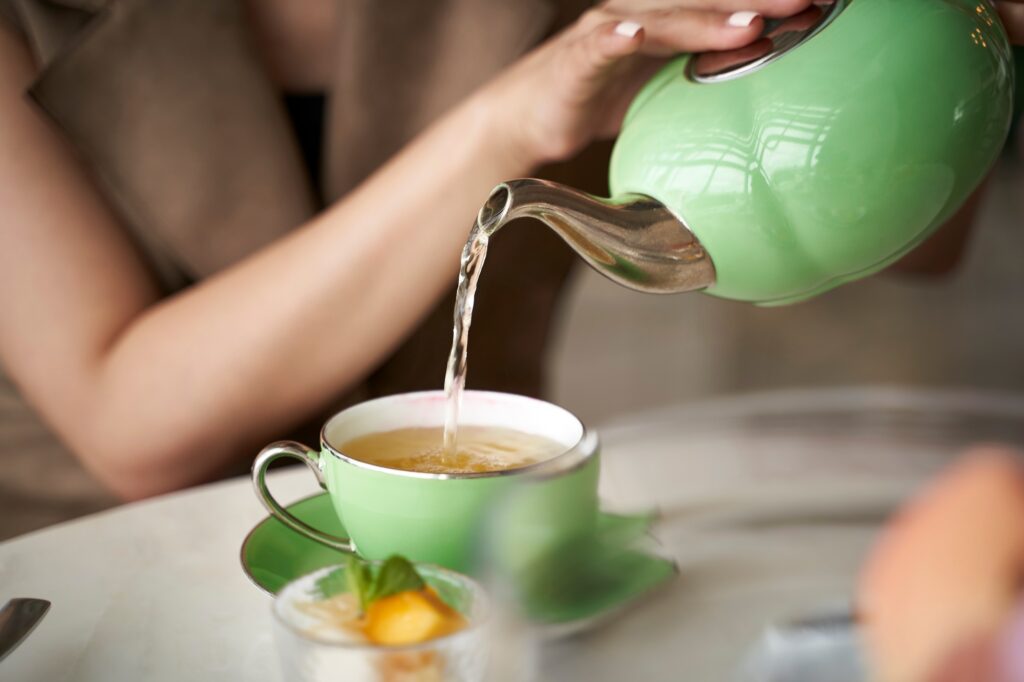
Brewing tea seems simple: add tea to water, wait, and pour. Yet a few small choices can completely change the flavor of your cup.
Water temperature, steeping time, the amount of tea you use, and even the size of your teapot can make the difference between a cup that is smooth and fragrant and one that tastes bitter, weak, or flat.
The good news is that brewing tea does not need to be complicated. Once you understand a few basic principles, you can adjust almost any tea to suit your own taste.
Whether you are brewing black tea for breakfast, delicate green tea, floral oolong, earthy pu-erh, herbal tea, or matcha, this guide will help you get started.
🫖 The Basics of Brewing Tea
Most tea brewing comes down to four things:
- The amount of tea
- Water temperature
- Steeping time
- Water quality
Get those reasonably close and you are already well on your way to a good cup.
Tea recommendations should be treated as starting points rather than rigid rules. Different teas behave differently, and personal preference matters.
If your tea tastes bitter, harsh, or overly astringent, try cooler water, a shorter steep, or slightly less tea. If it tastes thin or bland, use more tea or steep it a little longer.
Over time, you will learn what works best for the teas you drink most often.
🌡️ Tea Brewing Temperature Guide
Different types of tea generally respond best to different water temperatures.
As a useful starting point:
| Tea Type | Suggested Water Temperature | Typical Steeping Time |
|---|---|---|
| White Tea | 160–185°F | 3–5 minutes |
| Green Tea | 160–180°F | 1–3 minutes |
| Oolong Tea | 180–205°F | 2–5 minutes |
| Black Tea | 195–212°F | 3–5 minutes |
| Pu-erh Tea | 195–212°F | 2–5 minutes |
| Herbal Tea | 200–212°F | 5–10 minutes |
| Rooibos | 200–212°F | 5–7 minutes |
These ranges are intentionally broad. Individual teas often come with more specific recommendations from the producer, and some styles are traditionally prepared quite differently.
If you are unsure where to begin, start toward the cooler and shorter end of the range. You can always increase temperature or steeping time if the tea tastes too light.
💚 How to Brew Green Tea
Green tea is one of the easiest teas to make bitter accidentally.
Because green tea is less oxidized than black tea, many varieties respond better to cooler water and shorter steeping times. Boiling water can overwhelm delicate green teas and emphasize bitterness.
A useful starting point is water around 160–180°F and a steep of roughly one to three minutes.
Japanese green teas often have fresh, grassy, vegetal, or savory flavors, while Chinese green teas may be nuttier, sweeter, or more roasted.
If your green tea tastes unpleasantly bitter, try reducing the temperature before changing anything else.
Explore our Green Tea guides for more.
🖤 How to Brew Black Tea
Black tea generally tolerates hotter water and longer steeping than green tea.
Water between roughly 195°F and boiling works well for many black teas, with a steep of around three to five minutes.
Stronger breakfast teas can usually handle milk and sugar, while more delicate black teas may be best enjoyed on their own.
If you plan to add milk, brewing the tea slightly stronger can help prevent the flavor from disappearing.
Explore our Black Tea guides for more.
🤍 How to Brew White Tea
White tea is often associated with delicate flavors, so cooler water is a good place to start.
Try water around 160–185°F and steep for approximately three to five minutes.
Some white teas, especially larger-leaf varieties, can also handle longer steeping surprisingly well.
Rather than focusing only on strength, pay attention to sweetness, texture, aroma, and subtle fruit or floral notes.
White tea can also be excellent for multiple infusions.
🌿 How to Brew Oolong Tea
Oolong is one of the most varied tea categories, so there is no single ideal brewing method.
Light, floral oolongs may benefit from somewhat cooler water, while darker roasted oolongs often respond well to temperatures close to boiling.
A good general starting range is 180–205°F.
Oolong is especially well suited to repeated steeping. Instead of brewing one large mug for several minutes, you can use more leaves and make a series of shorter infusions.
The flavor may shift from floral or creamy to fruity, mineral, roasted, or sweet as the leaves open.
Explore our Oolong Tea guides for more.
🍵 How to Brew Matcha
Matcha is prepared differently from ordinary loose-leaf tea.
Instead of steeping leaves and removing them, matcha powder is whisked directly into water.
Begin by sifting the matcha into a bowl to help prevent clumps. Add a small amount of hot—but not boiling—water and whisk briskly until the tea is smooth and lightly frothy.
Water around 160–175°F is a useful starting point.
Traditional preparation uses a bamboo whisk called a chasen, although other small whisks or frothers can work for casual preparation.
Matcha can then be enjoyed as-is or used in drinks such as iced matcha and matcha lattes.
Explore our Matcha guides and recipes.
🫚 How to Brew Chai
Masala chai is often simmered rather than simply steeped.
A typical chai begins with black tea and warming spices such as cardamom, ginger, cinnamon, cloves, or black pepper. Water, milk, and sweetener may then be combined and gently heated.
Because chai recipes vary so widely, there is no single correct ratio.
The key is balancing the strength of the tea with the milk and spices. If the tea is too weak, the spices and milk can overwhelm it.
Explore our Chai guides and Tea Recipes for ideas.
🌼 How to Brew Herbal Tea
Herbal teas are not technically tea unless they contain leaves from the Camellia sinensis plant, but they are brewed in much the same way.
Because many herbs, roots, and flowers need more time to release their flavor, herbal infusions are often steeped longer than true tea.
Water near boiling and five to ten minutes of steeping works as a general starting point.
Delicate flowers such as chamomile may need less time than dense roots or bark.
Some herbal ingredients can also become extremely strong or bitter if left too long, so taste as you go.
Explore our Herbal Tea collection for more.
🌿 How to Brew Rooibos
Rooibos is forgiving and easy to brew.
Use water close to boiling and steep for roughly five to seven minutes.
Because rooibos contains very little tannic astringency compared with many traditional teas, longer steeping generally does not make it unpleasantly bitter.
Its naturally mellow, earthy sweetness works well plain, with milk, or blended with vanilla, spices, or fruit.
Explore our Rooibos Tea collection.
🫖 How Much Tea Should You Use?
A common starting point is approximately one teaspoon of loose tea per 8 ounces of water, but that rule is far from universal.
Large, fluffy leaves take up far more space than tightly rolled tea. A teaspoon of one tea may weigh much less than a teaspoon of another.
If you want greater consistency, weighing tea is more reliable than measuring by volume.
For everyday brewing, however, there is no need to overcomplicate things. Start with the amount recommended on the package and adjust from there.
If the tea tastes weak, add more leaf before dramatically increasing the steeping time. Using more tea often produces a richer cup without extracting as much bitterness.
💧 Does Water Quality Matter?
Tea is mostly water, so water quality has a noticeable effect on flavor.
Very hard water can mute delicate aromas and sometimes create a dull or chalky cup. Highly chlorinated water may introduce unwanted flavors.
At the same time, completely mineral-free distilled water can produce flat-tasting tea.
Filtered tap water is a practical option for many households.
The goal is simple: use fresh water that tastes good on its own.
🔥 Do You Need a Tea Kettle With Temperature Control?
No.
A variable-temperature electric kettle is convenient, especially if you regularly brew green, white, and oolong teas, but it is not essential.
If you are using a standard kettle, you can boil the water and allow it to cool briefly before pouring it over delicate tea.
Over time, you will become better at judging temperatures without needing laboratory precision.
Tea brewing should make your day more enjoyable, not turn your kitchen into a chemistry experiment.
⏱️ Why Steeping Time Matters
Longer steeping does not simply make tea “better” or “stronger.”
As tea sits in hot water, different compounds continue extracting. Eventually, the cup may become overly bitter or astringent.
This is especially noticeable with green and some black teas.
If you want a stronger cup, adding more tea is often preferable to leaving the same leaves in the water for far too long.
Using a timer can be surprisingly helpful when you are first learning a new tea.
🫖 Loose-Leaf Tea vs. Tea Bags
Both loose-leaf tea and tea bags can make a perfectly enjoyable cup.
Loose-leaf tea often gives larger leaves more room to expand, which can be especially helpful with oolong, white tea, and other whole-leaf styles.
Tea bags offer convenience and consistency.
The quality of the tea matters more than the format alone. High-quality tea can come in sachets or bags, while loose tea is not automatically excellent simply because it is loose.
Choose whichever format makes you more likely to enjoy tea regularly.
🌿 Give Tea Leaves Room to Expand
Whole tea leaves often increase dramatically in size while steeping.
If they are packed tightly into a tiny infuser, water cannot circulate around them as easily.
A roomy basket infuser, teapot, or brewing vessel allows the leaves to open.
This matters particularly for rolled oolongs and larger whole-leaf teas.
If you frequently drink loose tea, a large basket infuser is one of the simplest pieces of tea equipment you can buy.
🫗 Should You Warm the Teapot First?
Preheating a teapot or cup is optional, but it can help maintain a more consistent brewing temperature.
Simply swirl a small amount of hot water around the vessel and discard it before adding your tea.
This is particularly useful when brewing tea in a thick ceramic or clay pot that would otherwise absorb a significant amount of heat.
For an everyday mug of tea, however, skipping this step is perfectly fine.
🔄 Can You Steep Tea More Than Once?
Many high-quality teas can be infused multiple times.
Oolong, white tea, pu-erh, and some green teas are particularly well suited to repeated steeping.
Each infusion may reveal different characteristics. A tea that tastes floral during the first infusion might become sweeter, fruitier, or more mineral in later cups.
When brewing several infusions, increase the steeping time slightly as the leaves become exhausted.
Repeated steeping is one of the easiest ways to appreciate the complexity of whole-leaf tea.
🏺 Western Brewing vs. Gongfu Brewing
Most people in the United States use what is broadly called Western-style brewing: a relatively small amount of tea steeped in a larger amount of water for several minutes.
Gongfu-style brewing uses a larger quantity of tea relative to the amount of water and much shorter infusions.
A small teapot or gaiwan is commonly used, and the same leaves may be infused repeatedly.
Neither method is inherently better.
Western brewing is convenient for making a full mug or pot, while gongfu-style preparation allows you to explore how a tea changes through many short steeps.
Oolong and pu-erh are particularly popular choices for this approach.
🧊 How to Make Iced Tea
There are several easy ways to make iced tea.
The simplest method is to brew tea slightly stronger than usual and pour it over plenty of ice.
You can also brew a larger batch, allow it to cool, and refrigerate it.
If your tea will be heavily diluted with ice, use additional leaves or slightly less water when brewing.
Fresh fruit, lemon, mint, berries, or a small amount of sweetener can be added once the tea has cooled.
Visit our Tea Recipes hub for more iced tea ideas.
❄️ How to Cold Brew Tea
Cold brewing uses cool water and a long steep instead of hot water.
Add tea leaves to cold water, place the container in the refrigerator, and let the tea infuse for several hours or overnight.
Cold brewing often creates a smooth cup with less perceived bitterness than hot brewing.
Green tea, jasmine tea, oolong, black tea, and many herbal blends can all work well.
Start with roughly the same amount of tea you would use for hot brewing and adjust after tasting.
🌞 How to Make Sun Tea Safely
Sun tea traditionally involves leaving tea and water in the sun for several hours.
However, room-temperature or warm-water brewing can allow microorganisms to multiply.
A safer option is to make cold-brew tea in the refrigerator instead.
You still get a smooth, refreshing iced tea without leaving the drink sitting for hours at temperatures favorable to bacterial growth.
🍋 When Should You Add Lemon?
Lemon works especially well with black tea, green tea, iced tea, ginger tea, and many herbal blends.
Add lemon after the tea has brewed rather than placing it in the water during a long steep.
This makes it easier to control the balance between tea flavor and acidity.
A small squeeze is often enough.
Fresh citrus can quickly dominate delicate teas, so use a light hand with subtle green, white, or floral teas.
🍯 When Should You Add Honey?
Honey is easiest to dissolve while tea is still warm.
Taste the tea before sweetening so you can judge how much it actually needs.
Strong black tea, chai, ginger tea, chamomile, and many herbal infusions pair naturally with honey.
Delicate teas may taste best without sweetener because sugar or honey can hide subtle aromas.
There is no rule that tea must be served sweetened or unsweetened. Prepare it the way you enjoy it.
🥛 Should Milk Go in Tea?
Milk is most commonly added to strong black teas, breakfast blends, chai, and some tea lattes.
It generally works less well with delicate green, white, and many floral teas because it can obscure their lighter flavors.
There is also no need to worry too much about whether milk goes into the cup before or after the tea. Traditions differ, and either approach can work.
The more important question is whether the tea itself is strong enough to remain flavorful after the milk is added.
🧼 Keep Your Teaware Clean
Tea residue gradually builds up in mugs, pots, strainers, and infusers.
Regular cleaning helps prevent old flavors from affecting your next cup.
Follow the manufacturer’s instructions for delicate teaware, especially clay teapots and insulated vessels.
For everyday ceramic mugs, glass pots, and stainless-steel infusers, normal washing is usually sufficient.
Avoid allowing damp tea leaves to sit in an infuser for long periods.
☕ Common Tea Brewing Mistakes
If your tea never tastes quite right, one of a few common issues may be responsible.
Using water that is too hot can make delicate teas bitter.
Steeping too long can extract too much astringency.
Using too little tea creates a thin cup.
Crowding whole leaves into a small infuser prevents them from opening fully.
Using stale tea can produce a dull drink no matter how carefully you brew it.
Using poor-tasting water can overwhelm subtle tea flavors.
Fix one variable at a time. Tea brewing becomes much easier when you can identify which change improved the cup.
🌿 How to Store Tea for Better Flavor
Even perfectly brewed tea will disappoint if the leaves have lost their freshness.
Tea should generally be protected from light, heat, moisture, strong odors, and excessive exposure to air.
A sealed container stored in a cool, dark cupboard works well for most everyday teas.
Avoid storing loose tea beside strongly scented spices or foods because dry tea leaves readily absorb surrounding aromas.
Matcha is more sensitive than many other teas and generally benefits from particularly careful storage.
🧪 Experiment Until the Tea Tastes Right to You
Brewing guides are useful, but they are not laws.
You might prefer a green tea stronger than the package recommends or enjoy an oolong brewed at a different temperature from another tea drinker.
That is perfectly fine.
Change only one variable at a time—temperature, steeping time, tea quantity, or water volume—and taste the difference.
Keeping simple notes can help if you buy specialty teas and want to recreate a particularly good cup later.
Eventually, you will stop thinking so much about the numbers and simply know how you like your tea.
🫖 A Simple Everyday Brewing Method
If all of this feels like too much information, start here:
- Use fresh water.
- Use about one teaspoon of loose tea per cup as an initial guide.
- Heat the water to an appropriate temperature for the tea.
- Steep according to the suggested range.
- Remove the leaves or tea bag.
- Taste the tea before adding milk, lemon, or sweetener.
- Adjust the next cup based on what you tasted.
That is enough to make good tea.
Everything else is refinement.
🍵 Better Brewing, Better Tea
Learning how to brew tea is less about memorizing precise numbers and more about understanding how tea responds to water, time, and temperature.
Start with basic recommendations, pay attention to the result, and adjust.
Before long, you will know that a certain green tea needs cooler water, your favorite breakfast tea tastes best after four minutes, or that your favorite oolong becomes especially good on its third infusion.
That process of experimenting is part of what makes tea so enjoyable.
A single package of leaves can offer dozens of slightly different cups—and discovering the version you like best is part of the experience.
🔗 Explore More of SereniTea Room
- Tea Varieties
- Tea Recipes
- Brewing Techniques
- Tea Accessories
- Green Tea
- Black Tea
- Oolong Tea
- Matcha
- Herbal Tea