Peppermint tea is one of the simplest herbal drinks to keep in the kitchen: bright, cooling, naturally caffeine-free, and refreshing whether served steaming hot or poured over ice.
Made from the leaves of Mentha × piperita, peppermint tea has a distinctive menthol-rich aroma that creates its familiar cooling sensation. It has also been used traditionally for digestive discomfort for generations, which helps explain why peppermint is so often associated with after-dinner tea.
There is, however, an important distinction between peppermint tea and peppermint oil.
Most modern clinical research on peppermint’s digestive effects has investigated concentrated peppermint oil—particularly enteric-coated capsules used for irritable bowel syndrome—not ordinary tea brewed from peppermint leaves. The National Center for Complementary and Integrative Health notes that very little research has been conducted specifically on peppermint leaf and that there is currently not enough evidence to determine whether peppermint leaf is effective for any particular health condition.
That does not make peppermint tea pointless.
It means we should appreciate it for what it actually is: a flavorful, caffeine-free herbal infusion with a long history of traditional digestive use, rather than treating a mug of tea as if it were equivalent to a concentrated medicinal peppermint-oil product.
🌿 Peppermint Tea at a Glance
Plant: Mentha × piperita
Type: Herbal infusion or tisane
Caffeine: Naturally caffeine-free
Flavor: Cooling, minty, fresh, lightly sweet
Best served: Hot or iced
Common traditional use: Digestive comfort
Evidence: Much stronger for peppermint oil than peppermint tea
Main caution: May worsen heartburn or reflux in some people
🌱 What Is Peppermint?
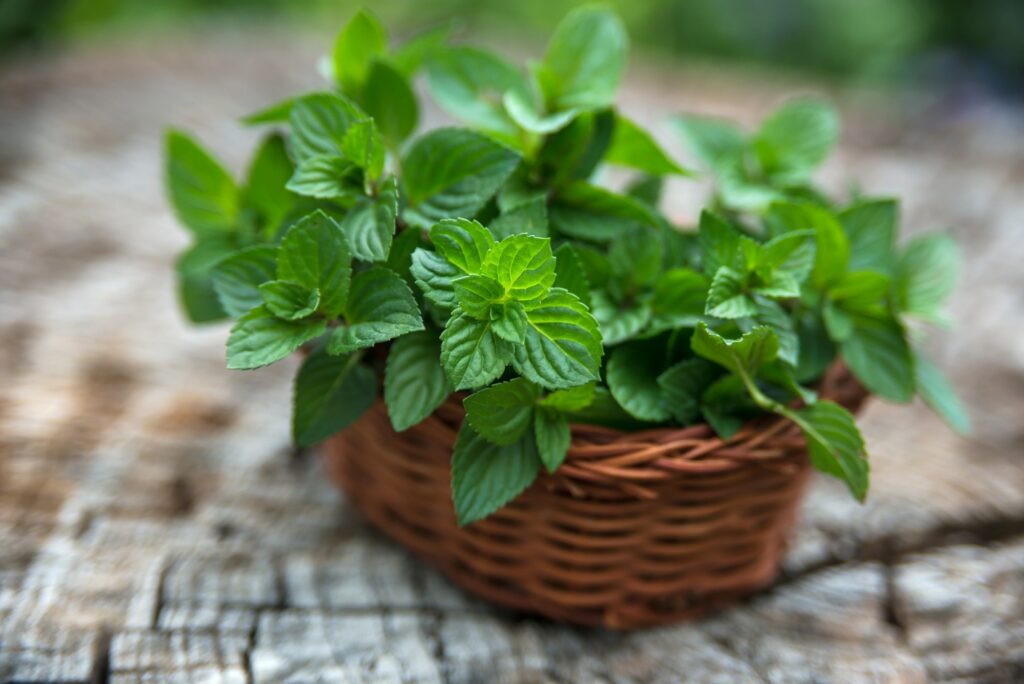
Peppermint is an aromatic mint traditionally understood as a natural hybrid of water mint (Mentha aquatica) and spearmint (Mentha spicata).
Its leaves contain aromatic compounds responsible for the familiar mint fragrance.
The best known is menthol, although peppermint contains a more complicated mixture of volatile and nonvolatile plant compounds.
Fresh leaves can be used to prepare tea, but most packaged peppermint tea is made with dried leaves.
Peppermint is different from Spearmint, even though the two plants are related and their flavors overlap.
Peppermint generally has the stronger cooling character.
🍵 Is Peppermint Tea Really Tea?
Technically, peppermint tea is an herbal infusion, also called a tisane.
True tea comes from Camellia sinensis, the plant used to make:
- Black tea
- Green tea
- White tea
- Oolong
- Matcha
- Pu-erh
Peppermint comes from an entirely different plant.
In everyday language, however, herbal infusions are commonly called teas, so “peppermint tea” remains a perfectly useful name.
Explore other caffeine-free options in our Herbal Tea collection.
☕ Does Peppermint Tea Have Caffeine?
Plain peppermint tea is naturally caffeine-free.
Peppermint leaves do not contain the caffeine naturally found in Camellia sinensis tea leaves.
That makes peppermint a useful option for people who want a warm drink without caffeine, especially:
- In the evening
- After dinner
- When reducing coffee
- Between caffeinated drinks
There is one important exception.
A commercial tea labeled something like peppermint green tea or mint black tea may contain caffeine because it contains real tea leaves in addition to peppermint.
Always check the ingredients if caffeine matters to you.
🌙 Can You Drink Peppermint Tea at Night?
Yes, if peppermint agrees with your digestion.
Because it is naturally caffeine-free, peppermint does not present the same stimulant concern as black, green, or oolong tea.
That makes it convenient for an evening drink.
However, peppermint should not automatically be described as a sleep aid.
There is not good evidence that drinking peppermint tea directly treats insomnia or makes people sleep.
If you enjoy its aroma and find a warm cup relaxing, it can certainly become part of an evening routine.
For another caffeine-free option, see our Chamomile Tea Guide: Benefits, Brewing, Caffeine & Safety.
🌿 What Are the Benefits of Peppermint Tea?
The most useful answer is to divide peppermint’s reputation into three categories:
What has been studied reasonably well
What has long-standing traditional use
What is still mostly unproven
This distinction matters because much of the strongest peppermint research involves peppermint oil, not a cup of peppermint tea.
🫄 Peppermint & Digestive Comfort
Peppermint has a longstanding reputation as a digestive herb.
The European Medicines Agency recognizes peppermint-leaf preparations for the traditional relief of digestive complaints such as indigestion and flatulence.
The word traditional is important.
The EMA’s conclusion is based largely on long-standing use rather than strong clinical trials demonstrating that peppermint tea treats digestive disease.
Laboratory studies provide plausible mechanisms, including effects on gastrointestinal smooth muscle.
But the evidence for ordinary brewed peppermint leaf remains much weaker than evidence for concentrated peppermint oil.
So it is reasonable to say:
Peppermint tea has traditionally been used for mild digestive discomfort.
It would be too strong to say:
Peppermint tea is proven to treat IBS.
🫧 Does Peppermint Tea Help With Bloating?
Possibly, but the evidence for the tea itself is limited.
Peppermint leaf has traditionally been used for problems such as:
- Fullness
- Gas
- Mild indigestion
- Flatulence
Some people enjoy peppermint after a meal for exactly that reason.
However, the clinical evidence often cited for bloating and IBS usually involves enteric-coated peppermint oil capsules.
Those products deliver a concentrated dose in a completely different form.
A cup of tea should not be assumed to produce the same effects.
🩺 What About Peppermint for IBS?
Peppermint oil is one of the better-studied herbal approaches for irritable bowel syndrome.
Several reviews suggest that certain enteric-coated peppermint-oil preparations may improve overall IBS symptoms and abdominal pain in some adults.
That is interesting evidence.
It is not evidence that peppermint tea has the same effect.
Peppermint oil is much more concentrated than an infusion of dried leaves, and enteric coatings are designed to release the oil farther down the gastrointestinal tract.
If you have IBS or persistent digestive symptoms, use appropriate medical guidance rather than attempting to treat the condition simply by drinking stronger and stronger peppermint tea.
🔥 Can Peppermint Make Heartburn Worse?
Yes.
This is one of the most important cautions about peppermint.
Peppermint preparations can worsen heartburn and gastroesophageal reflux in some people.
The European Medicines Agency specifically lists worsening reflux and heartburn among possible problems associated with peppermint-leaf preparations.
If you notice that peppermint tea causes:
- Burning in your chest
- Acid taste
- Regurgitation
- Increased reflux after meals
it may not be a good drink for you.
“Good for digestion” does not mean good for every digestive problem.
🤢 Does Peppermint Tea Help Nausea?
Peppermint is commonly used for nausea, but the evidence needs careful interpretation.
Some research has investigated:
- Peppermint oil aromatherapy
- Peppermint extracts
- Combination products
rather than peppermint tea.
A cooling aroma may certainly feel pleasant when you are queasy, but there is not enough evidence to say that an ordinary cup of peppermint tea is a proven nausea treatment.
Persistent or severe nausea deserves appropriate medical attention, especially if accompanied by dehydration, significant pain, vomiting, fever, or other concerning symptoms.
🧠 Does Peppermint Tea Improve Focus?
This is an interesting area of emerging research.
A small randomized controlled study published in 2025 investigated peppermint tea and measures of cognitive performance and cerebral blood flow in healthy adults.
The peppermint group showed improvements in some aspects of cognitive performance compared with a placebo beverage.
The study included only 25 participants, however.
That is far too small to establish peppermint tea as a reliable cognitive enhancer.
The result is interesting enough to justify further research, but not enough to turn peppermint tea into a “brain-boosting” drink.
🤕 Does Peppermint Tea Help Headaches?
Peppermint is often recommended online for headaches.
Most relevant clinical research has involved peppermint oil applied topically, not peppermint tea.
NCCIH notes that limited evidence suggests topical peppermint oil may help with tension headaches.
Drinking peppermint tea is a very different intervention.
A warm or cool drink may be comforting during a headache, and hydration may be useful when dehydration contributes to symptoms, but peppermint tea itself should not be described as a proven headache treatment.
Frequent, severe, sudden, or unusual headaches should be medically evaluated.
🤧 Does Peppermint Tea Clear Congestion?
Peppermint’s menthol aroma creates a strong sensation of coolness.
That can make breathing feel fresher or more open.
But feeling cooler in the nose is not the same as physically removing nasal congestion.
Peppermint tea can still be a pleasant warm drink when you have a cold.
The warmth, fluid, and aroma may be soothing.
Just avoid presenting it as a decongestant medication.
🦠 Does Peppermint Tea Boost Immunity?
There is no good clinical evidence that drinking peppermint tea “boosts” the immune system in the way that phrase is commonly used online.
Laboratory research has found interesting antimicrobial, antioxidant, and other biological activities in peppermint compounds.
Laboratory findings do not automatically translate into proven health effects in humans drinking tea.
A food or herb does not need an “immune boosting” claim to be worthwhile.
Peppermint tea can simply be a flavorful way to drink more fluids.
🧪 What Antioxidants Are in Peppermint?
Peppermint leaves contain plant compounds including:
- Rosmarinic acid
- Eriocitrin
- Luteolin-related compounds
- Hesperidin-related compounds
Laboratory studies have found antioxidant activity.
But “contains antioxidants” should not be translated into promises that peppermint tea prevents cancer, reverses aging, or cures chronic disease.
Antioxidants are normal components of many plants.
Their presence does not turn a tea into medicine.
🦷 Does Peppermint Tea Freshen Breath?
Peppermint’s strong aroma can leave the mouth feeling fresher temporarily.
That explains its widespread use in:
- Toothpaste
- Mouthwash
- Breath mints
- Gum
An unsweetened cup of peppermint tea may therefore leave a pleasant minty sensation.
It does not replace:
- Brushing
- Flossing
- Dental care
- Treatment of persistent bad breath
Chronic bad breath can have dental, medical, or dietary causes that tea will not solve.
⚖️ Does Peppermint Tea Help With Weight Loss?
There is no good evidence that peppermint tea produces meaningful weight loss.
It does not “melt fat.”
It does not “speed up metabolism” in a way demonstrated to cause significant weight reduction.
What peppermint tea can do is provide a nearly calorie-free drink when consumed without sugar or other calorie-containing additions.
Replacing a sweetened beverage with unsweetened peppermint tea may reduce overall calorie intake.
That is very different from claiming that peppermint itself burns fat.
🧹 Does Peppermint Tea Detox Your Body?
No special peppermint detox has been established.
Your body already has organs—including the liver and kidneys—that perform crucial roles in processing and eliminating many substances.
Peppermint tea contributes fluid like other beverages.
That does not mean it “flushes toxins” or cleanses organs.
Enjoy it for its flavor rather than detox marketing.
🌿 Fresh Peppermint vs. Dried Peppermint
Both make good tea.
Fresh Peppermint
Fresh leaves produce a bright, garden-fresh infusion.
The flavor can be:
- Green
- Cooling
- Sweet
- Light
Dried Peppermint
Drying concentrates the leaf by removing water.
Dried peppermint often produces:
- Stronger aroma
- Deeper mint character
- More convenient storage
Neither is automatically better.
Use whichever you enjoy and have available.
🫖 How to Make Peppermint Tea With Dried Leaves
For one cup, use:
- 1 to 2 teaspoons dried peppermint leaves
- 8 ounces freshly boiled water
Place the leaves in a mug, teapot, or infuser.
Pour the hot water over them.
Cover and steep for:
5 to 7 minutes
Strain.
Taste before adding anything.
Peppermint naturally has a slightly sweet character, so you may find it needs no sweetener.
🌱 How to Make Fresh Peppermint Tea
For one cup, use:
- 8 to 12 fresh peppermint leaves
- 8 ounces freshly boiled water
Gently rinse the leaves.
Lightly bruise them between your fingers or with the back of a spoon.
Place them in a cup.
Pour over the hot water.
Cover and steep for:
5 to 8 minutes.
Strain if desired.
Fresh-leaf quantity varies because leaf size and strength differ from plant to plant, so adjust according to taste.
🔥 Should You Use Boiling Water?
Peppermint is more forgiving than delicate green tea.
Freshly boiled water works well with dried peppermint leaves.
A temperature around:
200–212°F
is a useful starting point.
The most important thing is to cover the tea while it steeps.
Some of peppermint’s characteristic aromatic compounds are volatile.
Covering the cup helps retain more of that aroma rather than allowing it to escape immediately with the steam.
⏱️ How Long Should Peppermint Tea Steep?
Start with:
5–7 minutes
for dried peppermint.
Longer steeping produces a stronger herbal flavor.
Unlike many true teas, peppermint does not become intensely tannic in the same way an over-steeped black tea can.
However, excessively strong peppermint can become:
- Sharp
- Menthol-heavy
- Medicinal tasting
Taste before automatically leaving it for 15 or 20 minutes.
🍯 Should You Sweeten Peppermint Tea?
You do not need to.
Peppermint often has a naturally sweet-smelling character.
If you prefer additional sweetness, try:
- Honey
- Maple syrup
- Sugar
- Agave
Use a small amount first.
Heavy sweetness can overwhelm the refreshing mint flavor.
Remember that honey should never be given to children younger than 12 months.
🍋 Peppermint Tea With Lemon
Lemon brightens peppermint beautifully.
Add:
- A thin lemon slice
or:
- A small squeeze of lemon juice
after brewing.
The combination works especially well as iced tea.
Avoid assuming that lemon makes peppermint “detoxifying.” It simply makes a refreshing drink.
🫚 Peppermint & Ginger Tea
Peppermint and ginger create a stronger herbal infusion.
For one mug, combine:
- 1 teaspoon dried peppermint
- 3 to 4 thin slices fresh ginger
- 8 ounces boiling water
Cover and steep for 7 minutes.
Strain.
Ginger contributes warmth while peppermint provides a cooling contrast.
This can be an enjoyable after-dinner beverage without needing to frame it as a medical digestive treatment.
🌼 Peppermint & Chamomile Tea
For a caffeine-free evening blend, use:
- 1 teaspoon dried peppermint
- 1 tablespoon dried chamomile
Steep in 8 ounces hot water for approximately 5 minutes.
Strain carefully.
The result combines mint’s freshness with chamomile’s softer floral flavor.
If you have a ragweed-family allergy, review the allergy considerations in our Chamomile Tea Guide before using chamomile.
🌹 Peppermint & Rose Tea
For a more aromatic blend, combine:
- 1 teaspoon peppermint
- 1 teaspoon culinary rose petals
The cooling mint keeps rose from becoming excessively perfumed.
Browse additional floral ideas in our Rose Tea collection.
🍵 Green Tea With Peppermint
Green tea and peppermint make a refreshing combination, but this version is not caffeine-free.
Use:
- 1 teaspoon green tea
- 1 teaspoon peppermint
Brew according to the green tea’s recommended temperature rather than using boiling water.
Because Green Tea is more heat-sensitive than peppermint, the true tea determines the brewing method.
🖤 Peppermint Black Tea
Peppermint also works with black tea.
Use:
- 1 teaspoon black tea
- 1 teaspoon peppermint
Steep in hot water for around 3 minutes.
This produces a stronger caffeinated drink that can also work beautifully iced.
It is completely different from plain peppermint herbal tea in terms of caffeine.
🧊 How to Make Iced Peppermint Tea
For about four servings:
- 1/4 cup loosely packed dried peppermint
- 4 cups freshly boiled water
- Ice
- Lemon or lime, optional
Pour the hot water over the peppermint.
Cover and steep for about 7 minutes.
Strain.
Let cool, then refrigerate until chilled.
Serve over ice.
Add lemon, lime, cucumber, or fresh mint if desired.
🍋 Peppermint Lemon Iced Tea
For a bright summer drink, add to the chilled tea:
- Juice of 1/2 lemon
- Lemon slices
- Fresh mint
Sweeten lightly if desired.
Serve over plenty of ice.
For a sparkling version, replace part of the chilled water with plain sparkling water immediately before serving.
🥒 Peppermint Cucumber Cooler
Combine:
- Chilled peppermint tea
- Thin cucumber slices
- Ice
- Lime wedge
Let the cucumber sit in the tea for about 10 minutes before serving.
This is particularly refreshing in hot weather and contains no caffeine or added sugar unless you choose to add sweetener.
🍑 Peach Peppermint Iced Tea
Add fresh peach slices to cooled peppermint tea and refrigerate for 30–60 minutes.
Serve over ice.
The peach contributes gentle sweetness without requiring a heavy syrup.
For a stronger peach flavor, use a small amount of homemade peach purée or syrup.
❄️ Can You Cold Brew Peppermint Tea?
Yes.
Combine:
- 1/4 cup dried peppermint
- 4 cups cold water
Cover and refrigerate for:
6–8 hours.
Strain thoroughly.
Cold brewing produces a smoother, slightly softer peppermint infusion than hot brewing.
Keep it refrigerated.
🧊 How Long Does Brewed Peppermint Tea Keep?
For best quality, store brewed peppermint tea in a covered container in the refrigerator and use it within about 3 days.
Discard it sooner if it develops:
- An unusual odor
- Cloudiness unrelated to normal ingredients
- Mold
- Other signs of spoilage
Do not leave a pitcher of brewed herbal tea sitting at room temperature all day.
🌱 Can You Grow Peppermint for Tea?
Yes, and peppermint is often remarkably easy to grow.
In fact, it may be too easy.
Mint spreads aggressively through underground runners.
For that reason, many gardeners grow peppermint in:
- Containers
- Raised planters
- Pots sunk into the ground
rather than allowing it free access to a garden bed.
Harvest healthy leaves and wash them before brewing.
Avoid using plants treated with pesticides that are not appropriate for edible crops.
✂️ When Should You Harvest Peppermint?
You can harvest leaves throughout the growing season.
Young, healthy leaves are particularly pleasant for tea.
Cut stems rather than removing every leaf from one plant.
Regular harvesting can encourage bushier growth.
If you intend to dry large quantities, harvest clean leaves and dry them thoroughly before storage to reduce the risk of mold.
🫙 How to Store Dried Peppermint
Keep dried peppermint:
- Airtight
- Cool
- Dry
- Away from direct light
A cupboard away from the stove is usually better than a sunny countertop.
Over time, the volatile aromatic compounds fade.
Peppermint does not necessarily become unsafe merely because the aroma weakens, but stale leaves make a disappointing cup.
Replace them when the fragrance becomes faint or musty.
🌿 Peppermint vs. Spearmint Tea
The two are related but noticeably different.
Peppermint
Usually:
- Stronger
- Cooler
- More menthol-forward
- Sharper
Spearmint
Usually:
- Sweeter
- Softer
- Less cooling
- More gently herbal
Both are naturally caffeine-free when brewed on their own.
Which is better is purely a matter of taste.
🌱 Peppermint vs. Lemon Balm
Lemon balm belongs to the mint family but tastes completely different.
It has:
- Citrus-like aroma
- Mild herbal flavor
- Little of peppermint’s intense cooling sensation
Like peppermint, plain lemon balm infusion is naturally caffeine-free.
Browse it in our Lemon Balm section.
🌿 Peppermint Tea vs. Peppermint Oil
This distinction is essential.
A cup of peppermint tea contains compounds extracted from leaves into water.
Peppermint essential oil is a highly concentrated product containing volatile compounds distilled from peppermint plant material.
They are not interchangeable.
Research showing an effect from an enteric-coated peppermint-oil capsule does not prove that peppermint tea has the same effect.
Likewise, the dose and safety considerations for essential oil are completely different.
⚠️ Do Not Add Peppermint Essential Oil to Tea Casually
Peppermint essential oil is extremely concentrated.
Do not treat it as though one drop is equivalent to adding a few leaves.
Aromatherapy products are not automatically manufactured or labeled for internal consumption.
For peppermint tea, use:
- Fresh peppermint leaves
- Dried culinary peppermint leaves
- Commercial peppermint tea bags
There is no need to add essential oil.
🔥 Peppermint Tea & Acid Reflux
If you have frequent gastroesophageal reflux disease, peppermint deserves caution.
Peppermint preparations can worsen reflux and heartburn in susceptible people.
If peppermint consistently gives you symptoms, stop drinking it.
A tea does not have to work for everyone simply because it is herbal.
People with chronic reflux should follow appropriate medical and dietary guidance rather than trying to use peppermint as a digestive cure.
🟡 Peppermint & Gallbladder Problems
The European Medicines Agency advises caution with peppermint-leaf preparations in people with:
- Gallstones
- Other bile-related problems
If you have a known gallbladder or bile-duct condition and intend to use peppermint frequently or medicinally, discuss it with a qualified healthcare professional.
An occasional culinary cup and concentrated herbal treatment are not necessarily equivalent, but existing medical conditions warrant more caution.
🤰 Is Peppermint Tea Safe During Pregnancy?
Peppermint consumed in amounts normally found in food is generally considered likely safe during pregnancy.
However, NCCIH notes that little is known about the safety of medicinal amounts of oral peppermint during pregnancy.
That distinction is important.
An occasional ordinary cup of tea is not the same as:
- Highly concentrated peppermint products
- Large medicinal doses
- Essential oil taken internally
If you are pregnant and drinking peppermint frequently for nausea, reflux, or another symptom, discuss it with your prenatal care professional—especially because peppermint itself can worsen reflux in some people.
🤱 Peppermint Tea While Breastfeeding
NCCIH similarly notes limited information about oral peppermint in medicinal amounts during breastfeeding.
Normal culinary use is different from concentrated supplementation.
If you are breastfeeding and using peppermint frequently or in unusually large quantities, discuss it with a healthcare professional.
Do not apply peppermint essential oil near an infant’s face. Menthol-containing products can pose particular risks to very young children when inhaled at close range.
👧 Can Children Drink Peppermint Tea?
Ordinary peppermint tea is very different from peppermint essential oil.
The European Medicines Agency’s traditional-use guidance for medicinal peppermint-leaf preparations includes children older than four under appropriate directions, but that should not be interpreted as a universal dose recommendation for every child.
For young children—particularly if tea is being used to address persistent digestive symptoms—ask a pediatric healthcare professional.
Never substitute peppermint essential oil for peppermint tea.
💊 Does Peppermint Interact With Medications?
Specific interaction evidence for an ordinary cup of peppermint tea is limited.
However, people taking medication should be cautious about using herbal products in medicinal quantities, particularly concentrated extracts and oils.
If you:
- Take prescription medications
- Have liver or gallbladder disease
- Have significant reflux
- Are preparing for surgery
- Use concentrated herbal supplements
talk with a physician or pharmacist before treating peppermint as a medicinal product.
🌿 Is Peppermint Tea Safe Every Day?
For most healthy adults, ordinary peppermint tea appears to be safe in normal food-like quantities.
NCCIH notes that peppermint tea appears safe, while also pointing out that the long-term safety of consuming large amounts of peppermint leaf is unknown.
That makes moderation sensible.
One or two ordinary cups is very different from drinking extremely strong peppermint infusions throughout the day as a self-prescribed treatment.
More is not automatically better.
🤧 Can You Be Allergic to Peppermint?
Yes, although allergic reactions appear to be uncommon.
Stop using peppermint and seek appropriate care if you develop symptoms such as:
- Hives
- Swelling
- Wheezing
- Difficulty breathing
after consuming it.
Severe breathing difficulty or swelling of the mouth or throat requires emergency care.
🌙 Best Time to Drink Peppermint Tea
There is no medically required time.
Peppermint works well:
After a meal — because of its traditional association with digestion.
In the afternoon — as a caffeine-free alternative to another coffee or true tea.
In the evening — if you tolerate it well and do not have reflux.
On hot days — served iced.
Choose the timing according to preference rather than claims that peppermint must be consumed at a particular hour to “activate” its benefits.
🫖 How Many Cups of Peppermint Tea Can You Drink?
There is no single scientifically established ideal number of cups for everyone.
For ordinary enjoyment, start with a normal serving and see how your body responds.
Drinking very large quantities is unnecessary.
If you find yourself using peppermint tea several times a day to manage ongoing pain, nausea, bloating, reflux, or other symptoms, that is a reason to investigate the underlying problem rather than continuously increasing the tea.
🍽️ Peppermint Tea After Dinner
Peppermint makes an excellent after-dinner tea when reflux is not an issue.
Its bold aroma works particularly well after:
- Rich desserts
- Chocolate
- Mediterranean meals
- Spiced foods
Serve it unsweetened or with a small amount of honey.
Because it contains no caffeine naturally, it can replace after-dinner coffee for people who want to reduce evening stimulants.
🍫 Peppermint & Chocolate
Chocolate and peppermint are a classic pairing.
Try peppermint tea alongside:
- Dark chocolate
- Chocolate cookies
- Brownies
- Chocolate cake
A naturally caffeine-free peppermint tea does not make the entire snack caffeine-free, however.
Chocolate itself can contain caffeine and the related stimulant theobromine.
🍓 Peppermint & Fruit
Peppermint works especially well with:
- Strawberries
- Watermelon
- Peach
- Citrus
- Pineapple
- Berries
For afternoon tea, a pot of peppermint can be a refreshing contrast to sweet fruit desserts.
Explore more hosting ideas in our Tea Parties & Afternoon Tea section.
🧪 What the Research Actually Says
Peppermint is an excellent example of why herbal-health articles need careful wording.
There is genuine scientific interest in the plant.
There is meaningful clinical research involving peppermint oil, particularly for irritable bowel syndrome.
There is a long history of peppermint leaf being used for mild digestive complaints.
There are laboratory studies showing interesting biological activity.
And there are small emerging studies involving peppermint tea itself.
But those four types of evidence are not interchangeable.
A laboratory antimicrobial result does not prove that drinking tea treats an infection.
A study involving enteric-coated peppermint oil does not prove that a mug of tea treats IBS.
A traditional use does not automatically become a proven medical treatment.
That still leaves plenty of reasons to enjoy peppermint.
It tastes good.
It is naturally caffeine-free.
It is easy to brew.
It works hot or cold.
And for many people, it makes a pleasant drink after a meal.
That is already enough.
🌿 A Refreshing Herbal Tea Worth Keeping Simple
Peppermint tea does not need a long list of miracle claims to deserve a place in your tea cabinet.
Its strengths are straightforward.
It has a bright, unmistakable mint flavor.
It contains no caffeine naturally.
It can be brewed hot, chilled for iced tea, or combined with ingredients such as ginger, chamomile, citrus, and fruit.
It also has a well-established history of traditional use for digestive comfort, although scientific evidence for the tea itself remains limited.
The most important caution is equally straightforward: peppermint can worsen heartburn and reflux in some people.
So brew it because you enjoy it.
Use fresh or dried culinary leaves.
Steep for about five to seven minutes.
Keep health claims realistic.
And treat peppermint tea as what it is—a simple, aromatic herbal infusion that can be refreshing enough without needing to promise a cure.
🔗 Related Articles
- Peppermint Tea
- Herbal Tea
- Tea & Wellness
- Tea Varieties
- How to Brew Tea
- Chamomile Tea Guide: Benefits, Brewing, Caffeine & Safety
- Rooibos Tea Guide: Benefits, Flavor, Caffeine, Brewing & Safety
- Hibiscus Tea Guide: Benefits, Brewing, Caffeine & Safety
- Spearmint Tea
- Lemon Balm Tea
- Tea Parties & Afternoon Tea
📚 Sources & Further Reading
- National Center for Complementary and Integrative Health — Peppermint Oil: Usefulness and Safety
- National Center for Complementary and Integrative Health — Irritable Bowel Syndrome and Complementary Health Approaches
- European Medicines Agency — Peppermint Leaf (Mentha × piperita)
- PubMed — A Review of the Bioactivity and Potential Health Benefits of Peppermint Tea
- PubMed — Randomized Placebo-Controlled Clinical Trial Exploring the Short-Term Cognitive and Cerebrovascular Effects of Peppermint Tea