A warm cup of tea can be many things at once: a morning ritual, a quiet afternoon break, a source of caffeine, a comforting drink before bed, or simply an enjoyable way to stay hydrated.
Tea also has a long history of traditional use for health and well-being. Green tea is often associated with antioxidants, chamomile with relaxation, peppermint with digestion, ginger with nausea, and countless herbal infusions with traditional remedies passed down through generations.
That history is fascinating, but it is important to separate tradition, preliminary research, and established medical evidence. Drinking tea can certainly be part of a healthy lifestyle, but no tea should be treated as a cure-all or a replacement for appropriate medical care.
This guide explores tea and wellness from a practical, evidence-aware perspective, including caffeine, hydration, herbal teas, relaxation, digestion, pregnancy, medication interactions, and how to evaluate the many health claims surrounding tea.
🍃 Tea, Wellness & the Bigger Picture
Tea fits naturally into a wellness routine because it can provide a simple opportunity to slow down, hydrate, and enjoy something flavorful without requiring an elaborate ritual.
Traditional tea made from the Camellia sinensis plant also contains naturally occurring compounds such as polyphenols and caffeine. Green, black, white, and oolong tea all come from this same plant, although different processing methods give them very different flavors and characteristics.
Herbal teas are different. Chamomile, peppermint, hibiscus, rooibos, ginger, lemon balm, and other herbal infusions come from plants other than Camellia sinensis.
That distinction is useful because the chemical composition, caffeine content, evidence, and potential safety considerations of one herbal tea may be completely different from another.
Explore our Tea Varieties collection to learn more about the different types.
🫖 Is Tea Healthy?
There is no single answer because “tea” covers an enormous range of beverages.
Unsweetened traditional tea can be an enjoyable drink with very few calories. It also contains naturally occurring plant compounds that continue to be studied for their potential effects on human health.
Research into green tea, in particular, has examined areas ranging from cardiovascular health and cholesterol to cancer and body weight. However, evidence is mixed for many of the sweeping benefits sometimes attributed to tea.
That does not make tea unhealthy or uninteresting. It simply means the most responsible approach is to appreciate tea as a beverage rather than presenting every cup as medicine.
A cup of green tea does not need to prevent disease to be worth drinking.
💚 Green Tea & Wellness
Green tea is one of the most extensively studied types of tea.
It contains polyphenols, including compounds commonly known as catechins. This has led to considerable interest in whether green tea consumption might influence cardiovascular health, metabolism, cholesterol, cancer risk, and other health outcomes.
Research has produced some promising findings, but the evidence does not support treating green tea as a cure or reliable prevention strategy for serious disease.
There is also an important difference between drinking ordinary brewed green tea and taking concentrated green tea extracts. Supplements can contain much larger doses of compounds than a typical cup of tea and can carry different risks.
For everyday tea drinkers, green tea is best viewed as an enjoyable beverage that can fit comfortably into an overall balanced diet.
🖤 Black Tea & Everyday Wellness
Black tea comes from the same Camellia sinensis plant as green tea but undergoes greater oxidation during processing.
It naturally contains caffeine and polyphenols and has also been investigated for potential relationships with cardiovascular and metabolic health.
Black tea’s greatest everyday advantage may be much simpler: it is flavorful, widely available, and can replace more heavily sweetened beverages for people who enjoy it without large amounts of added sugar.
Of course, what you add to your cup matters. A lightly sweetened black tea and a large café tea drink loaded with syrup, cream, and sugar are nutritionally very different beverages.
🍵 Matcha & Wellness
Matcha is powdered green tea.
Unlike ordinary green tea, where the leaves are steeped and removed, matcha powder is whisked into the drink. As a result, you consume the suspended powdered leaf.
Matcha naturally contains caffeine and many of the same types of plant compounds found in other green teas.
It has sometimes been promoted online using dramatic terms such as “detox,” “fat-burning,” or “superfood.” Those descriptions can make a simple tea sound much more medicinal than the evidence warrants.
Matcha can be a delicious part of an everyday routine without needing exaggerated claims.
It can be enjoyed traditionally with water or incorporated into drinks such as those in our Tea Recipes collection.
☕ Tea & Caffeine
Caffeine is one of the most important wellness considerations for traditional tea.
Black, green, white, oolong, matcha, and pu-erh naturally contain caffeine because they come from Camellia sinensis.
The exact amount in your cup can vary considerably depending on factors such as:
- Type of tea
- Amount of leaf
- Water temperature
- Steeping time
- Serving size
- Processing
- Preparation method
This makes simple claims such as “green tea always has less caffeine than black tea” less reliable than they may appear.
If you are particularly sensitive to caffeine, pay attention to how different teas affect you personally rather than relying only on broad category averages.
⚡ How Much Caffeine Is Too Much?
Caffeine affects people differently.
Some people can enjoy several caffeinated drinks throughout the day without obvious problems. Others may notice jitteriness, headaches, digestive discomfort, a racing heartbeat, anxiety, or difficulty sleeping after much smaller amounts.
The U.S. Food and Drug Administration has said that for most healthy adults, 400 milligrams of caffeine per day is an amount not generally associated with negative effects. That is a general guideline, not an individual target.
Tea often contains less caffeine per serving than coffee, but serving size and preparation vary considerably.
Remember that your daily total can also include coffee, chocolate, soft drinks, energy drinks, supplements, and medications containing caffeine.
😴 Tea, Caffeine & Sleep
One of the simplest ways tea can affect well-being is through sleep.
Caffeine is a stimulant, and drinking caffeinated tea too late in the day can interfere with sleep in some people.
If you regularly have difficulty falling asleep, consider moving black, green, oolong, matcha, and other caffeinated teas earlier in the day.
Later in the evening, you might prefer a naturally caffeine-free drink such as rooibos, peppermint, or another herbal infusion.
That does not mean an herbal tea automatically makes you sleep. Sometimes the benefit is simply that a warm, caffeine-free drink fits pleasantly into a calming bedtime routine.
🌼 Chamomile Tea & Relaxation
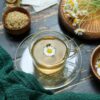
Chamomile tea has a long reputation as a relaxing evening drink.
Its gentle floral flavor and lack of caffeine make it well suited to bedtime routines.
Chamomile has also been studied for anxiety, sleep, and other uses, but evidence is considerably more limited than many wellness claims suggest. Research on chamomile specifically for insomnia has not established it as a reliable treatment.
That distinction matters.
It is reasonable to say that many people find a warm cup of chamomile pleasant and relaxing. It is much stronger—and less justified—to promise that chamomile will cure insomnia or treat an anxiety disorder.
Enjoy it for the ritual and flavor first.
🌿 Peppermint Tea & Digestion
Peppermint tea is naturally caffeine-free and has a bright, cooling flavor.
Peppermint products have been studied for digestive symptoms, particularly certain preparations of peppermint oil. However, research on concentrated peppermint oil should not automatically be applied to a cup of peppermint tea.
That is an important principle across the wellness world: evidence about an extract, supplement, essential oil, or pharmaceutical preparation does not necessarily prove that ordinary tea produces the same effect.
Peppermint tea can still be a refreshing after-meal beverage, and many people enjoy it simply because of its fresh flavor.
🌱 Spearmint Tea
Spearmint tea has a gentler, sweeter mint flavor than peppermint.
You may encounter online claims that spearmint tea can treat acne, balance hormones, improve skin, control unwanted hair growth, relieve anxiety, or provide numerous other benefits.
Some small studies have investigated particular effects of spearmint, but the evidence is nowhere near strong enough to describe it as a universal hormone-balancing or skin-clearing remedy.
That is particularly important for conditions that may have underlying medical causes.
Enjoy spearmint because you like it. If you are considering it specifically for a health problem, discuss that problem with an appropriate health professional rather than relying on tea alone.
🫚 Ginger Tea & Nausea
Ginger tea has a warming, spicy flavor and a long history in traditional food and medicine.
Ginger has been studied more seriously than many herbs for certain types of nausea, including pregnancy-related nausea.
However, studies frequently use specific amounts or preparations of ginger rather than an ordinary cup of ginger tea, so results should not automatically be translated into guarantees about homemade tea.
A mild ginger infusion can nevertheless be an enjoyable drink for people who like its warming flavor.
Anyone considering concentrated ginger products, particularly during pregnancy or while taking medications, should pay attention to appropriate medical guidance.
🍋 Lemon Balm Tea
Lemon balm has a gentle herbal and citrus-like aroma.
It has a long history of traditional use for relaxation and digestive complaints, and modern researchers have investigated some of those uses.
However, claims that lemon balm tea can “cure anxiety,” fight infections, eliminate colds, or provide other dramatic medical results go beyond what an ordinary cup of tea has been shown to do.
A more realistic reason to drink it is simple: lemon balm makes a pleasant caffeine-free herbal infusion that many people enjoy as part of a quiet routine.
💜 Lavender Tea
Lavender tea is highly aromatic and generally used in relatively small amounts.
Lavender has strong cultural associations with calm and relaxation, which is one reason it appears so frequently in bedtime teas and herbal blends.
The aroma and ritual may certainly feel soothing, but that should not be confused with proving that lavender tea treats anxiety, depression, insomnia, or another medical condition.
Lavender can pair beautifully with chamomile, mint, lemon balm, or other gentle herbs.
Because its flavor is powerful, begin with a small amount.
🌺 Hibiscus Tea
Hibiscus tea produces a striking red infusion with a tart, cranberry-like flavor.
Hibiscus has attracted research interest for possible effects on blood pressure and other cardiovascular measures.
Some studies have reported interesting results, but people should not substitute hibiscus tea for prescribed treatment.
This is especially important for anyone already taking medication for blood pressure or other health conditions, because herbs and medications can sometimes interact or produce additive effects.
For most people simply looking for a flavorful beverage, hibiscus is particularly refreshing served over ice with fruit or citrus.
🌹 Rosehip Tea
Rosehip tea has a fruity, slightly tart character and is commonly included in herbal blends.
Rosehips naturally contain vitamin C, although processing, storage, and brewing can influence how much remains in a finished drink.
That means it is better to think of rosehip tea as a flavorful herbal beverage rather than a guaranteed high-dose vitamin supplement.
It pairs particularly well with hibiscus, berries, citrus, and other fruit-forward ingredients.
🌿 Rooibos & Caffeine-Free Tea
Rooibos comes from a South African plant rather than Camellia sinensis.
Plain rooibos is naturally caffeine-free, which makes it useful for people who enjoy a full-flavored cup but want to avoid caffeine.
Its mellow, slightly sweet, woody character can work well plain or with milk, spices, vanilla, or fruit.
Like many plants, rooibos contains compounds that have attracted scientific interest, but it does not need to be treated as medicine to have a place in a wellness-oriented tea cupboard.
For many people, its greatest practical benefit is simply offering another flavorful caffeine-free option.
💧 Does Tea Count Toward Hydration?
Yes. Tea is primarily water and contributes to fluid intake.
The idea that caffeinated tea automatically “dehydrates” you is an oversimplification. Caffeine can have a mild diuretic effect, particularly at higher doses or in people who are not accustomed to it, but ordinary tea still provides fluid.
Plain tea and herbal infusions can therefore contribute to everyday hydration.
Water should remain an easy default drink, but there is no need to treat a normal cup of tea as if it cancels out the water it contains.
🍯 What About Honey in Tea?
Honey can add sweetness and flavor to tea.
A spoonful works particularly well with ginger, black tea, chamomile, lemon, and many herbal blends.
Honey is still an added sugar, however, so adding large quantities can significantly change the nutritional profile of an otherwise low-calorie drink.
If you are using tea primarily as an alternative to sugary drinks, gradually reducing the amount of added sweetener can allow you to appreciate more of the tea’s own flavor.
Honey should also never be given to infants younger than 12 months because of the risk of infant botulism.
🍋 Lemon & Tea
Lemon can brighten black tea, green tea, ginger tea, hibiscus, and many herbal blends.
It adds acidity and flavor without requiring much sugar.
There is no need to treat lemon tea as a “detox” drink. Your liver, kidneys, lungs, digestive system, and other organs already perform the body’s normal processes for handling waste and substances it does not need.
Drink lemon tea because it tastes refreshing—not because you have been promised that it will somehow flush mysterious toxins from your body.
🧹 Do Detox Teas Work?
“Detox” is one of the most misused words in wellness marketing.
Tea cannot magically cleanse your body of vaguely defined toxins.
Some products sold as detox teas contain laxative or diuretic ingredients, which may cause temporary changes in body weight or bowel habits without actually removing harmful substances in the way advertising implies.
These products can also cause unpleasant or potentially harmful side effects.
If you enjoy an herbal blend containing mint, ginger, hibiscus, or other familiar ingredients, enjoy it as tea. There is no need to describe it as a cleanse.
⚖️ Can Tea Help With Weight Loss?
Tea is often marketed as a weight-loss beverage.
Unsweetened tea can certainly be useful when it replaces a high-calorie drink. That is very different from claiming tea itself causes substantial weight loss.
Green tea catechins and caffeine have been studied for possible effects on body weight and metabolism, but any effects appear modest and are not a substitute for broader nutrition, physical activity, sleep, medical care, or other factors involved in weight management.
Be particularly cautious with concentrated “fat-burning” tea extracts and supplements. They are not equivalent to an ordinary brewed cup.
❤️ Tea & Heart Health
Researchers have studied associations between tea drinking and cardiovascular health for many years.
Some observational research has found associations between tea consumption and favorable cardiovascular outcomes, while clinical studies have examined effects on blood pressure, cholesterol, and other markers.
The overall picture is interesting but complex.
A person’s cardiovascular health is influenced by diet, exercise, smoking, genetics, blood pressure, cholesterol, medical conditions, medications, and many other factors.
Tea may fit within a heart-conscious lifestyle, but no tea should be marketed as a replacement for evidence-based cardiovascular care.
🧠 Tea, Focus & Alertness
Caffeinated tea can increase alertness because it contains caffeine.
Tea also contains the amino acid L-theanine, which has attracted research interest in relation to attention, relaxation, and cognition.
That combination is one reason some people describe tea as producing a different subjective experience from coffee.
Individual reactions vary widely, however. Some people feel comfortably alert after tea, while others are highly sensitive to even modest caffeine.
If tea makes you jittery or anxious, drinking more in pursuit of “focus” is unlikely to improve the experience.
🧘 Tea as a Relaxation Ritual
Not every wellness benefit needs to come from a biochemical compound.
Making tea can create a small pause in the day.
You heat the water, measure the leaves, wait for them to steep, hold a warm cup, and sit down for a few minutes.
That routine can encourage something many people otherwise struggle to make time for: stopping.
A tea ritual cannot treat a mental health condition, but it can become part of a broader routine involving relaxation, conversation, journaling, reading, meditation, or simply spending a few quiet minutes away from a screen.
Sometimes the ritual is the point.
😌 Tea for Stress & Anxiety
You will often see lists promising the “best teas for anxiety.”
That framing needs care.
An herbal beverage may feel pleasant and relaxing, but anxiety disorders are medical conditions that can require professional evaluation and evidence-based treatment.
Chamomile, lemon balm, lavender, peppermint, and other caffeine-free herbs can still be enjoyable choices when you want a gentle evening drink.
At the same time, people prone to anxiety may find that reducing caffeine helps them feel better, since caffeine itself can cause symptoms such as nervousness, restlessness, or a racing heartbeat.
The goal should be supportive everyday habits, not using tea as a substitute for mental health care.
🤧 Tea When You Have a Cold
A warm drink can be comforting when you have a cold.
Tea may help you maintain fluid intake, and warm liquids can feel soothing when your throat is irritated or you are congested.
Adding honey may also feel soothing for the throat for appropriate age groups.
That is different from saying a particular tea “kills a cold,” eliminates viruses, or cures congestion.
Colds generally improve with time. Tea can be part of the comfort routine while your body recovers.
Seek medical advice when symptoms are severe, unusual, worsening, or persistent.
🤰 Tea During Pregnancy
Pregnancy changes the conversation around both caffeine and herbs.
The American College of Obstetricians and Gynecologists advises limiting caffeine during pregnancy to less than 200 milligrams per day. Tea can contribute to that total alongside coffee, chocolate, soft drinks, energy drinks, and other sources.
Herbal tea requires separate consideration.
“Natural” does not automatically mean proven safe during pregnancy. For many herbs, pregnancy safety data are limited, and herbal blends can contain numerous ingredients.
If you are pregnant, trying to become pregnant, or breastfeeding, it is sensible to discuss regular use of medicinal herbal products or unfamiliar herbal teas with your obstetric or health care professional.
💊 Tea & Medication Interactions
Tea and herbs can interact with medications.
This is particularly important when drinking concentrated herbal products or using supplements, but ordinary foods and beverages can sometimes matter as well.
Green tea, for example, has documented or suspected interactions with certain medications. Chamomile may also interact with some drugs, including anticoagulants and sedatives.
The safest rule is straightforward: if you take prescription medication and plan to consume an herbal product regularly for a supposed medical benefit, check with your pharmacist or health care provider.
Do not assume that something is harmless simply because it is sold as tea.
🌼 Herbal Tea Allergies
Plants can cause allergic reactions.
Chamomile is a useful example because people with allergies to related plants such as ragweed, chrysanthemums, marigolds, or daisies may be more likely to react to it.
Other herbal ingredients can create their own allergy concerns.
Anyone with known plant allergies should check ingredient lists carefully, particularly with blends that contain many flowers, herbs, spices, and flavorings.
Stop using a product and seek appropriate medical care if you experience symptoms of a serious allergic reaction.
👶 Tea for Children
Children are more sensitive to caffeine than adults, so caffeinated tea is not automatically an ideal everyday beverage for them.
Herbal teas also require consideration because safety depends on the specific herb, age of the child, amount consumed, and any health conditions or medications.
A beverage being labeled “natural” or “children’s tea” does not remove the need to inspect the ingredients.
Parents and caregivers should seek pediatric guidance when considering medicinal herbal products for young children.
And remember that honey should not be given to children younger than 12 months.
🌙 Choosing an Evening Tea
If you want tea as part of an evening routine, the simplest approach is to choose something you enjoy that does not interfere with your sleep.
Naturally caffeine-free possibilities include:
Lavender and other herbs may also be included in evening blends.
Instead of searching for a tea guaranteed to “knock you out,” think about creating a routine that tells your body the busy part of the day is ending.
🌞 Choosing a Morning Tea
Morning tea is often about flavor and alertness.
Black tea, green tea, matcha, oolong, and chai all naturally provide caffeine.
If you enjoy a stronger cup, a breakfast-style black tea may suit you. Green tea offers a lighter alternative, while matcha produces a distinctive concentrated green-tea drink.
Chai combines tea with spices and often milk, making it particularly satisfying on cool mornings.
Choose the tea you enjoy rather than chasing the one supposedly offering the greatest list of benefits.
A healthy habit is much easier to maintain when you actually like it.
🍵 Tea vs. Supplements
One of the most important distinctions in tea-and-wellness discussions is the difference between beverages and concentrated supplements.
A brewed cup of green tea is not the same thing as a concentrated green tea extract capsule.
A mild ginger infusion is not identical to a standardized ginger supplement.
Chamomile tea is not necessarily equivalent to the preparations used in a clinical study.
Concentration, dose, preparation, absorption, and other ingredients may all differ.
This is why a study involving a concentrated extract should not automatically become a headline claiming that drinking a particular tea will produce the same result.
🔬 How to Evaluate Tea Health Claims
When you encounter a dramatic claim about tea, ask a few questions.
Was the research done in humans? Laboratory and animal studies can be useful, but they do not prove the same effect occurs in people.
Was the study actually testing tea? Research on an isolated chemical or concentrated extract is not necessarily evidence for an ordinary cup.
How many people participated? A tiny preliminary study should not be treated like established medical knowledge.
Was there a control group? Good study design matters.
Has the finding been repeated? One interesting result is rarely the final answer.
Who is making the claim? A university or government health agency and a company selling “miracle detox tea” have very different incentives.
Learning to ask these questions can make navigating wellness information much easier.
🌱 Traditional Use vs. Scientific Evidence
Traditional herbal knowledge deserves to be understood in its cultural context.
People have used plants for food, beverages, ceremonies, and healing traditions for thousands of years, and modern science has sometimes identified useful compounds in plants with long histories of traditional use.
But traditional use and scientific evidence are not interchangeable.
A plant having been used for centuries does not automatically prove that it treats a modern medical diagnosis. Likewise, a lack of strong clinical evidence does not mean the cultural history of the plant is meaningless.
We can respect tradition while still being accurate about what modern evidence can and cannot tell us.
🚩 Tea Wellness Claims to Be Skeptical Of
Be cautious when a product or article claims that tea can:
- “Detox” your entire body
- Melt belly fat
- Cure cancer
- Replace prescribed medication
- Eliminate anxiety or depression
- Cure insomnia
- Remove parasites without diagnosis
- “Balance all your hormones”
- Cleanse your liver or kidneys
- Prevent every cold or infection
- Reverse chronic disease
Health rarely works in such simple terms.
The more dramatic and universal the promise, the more skepticism it deserves.
🩺 When Tea Isn’t Enough
Tea belongs comfortably in everyday life.
It can be refreshing, comforting, social, flavorful, and relaxing. It may also contain compounds worthy of scientific investigation.
What it cannot do is replace appropriate medical care.
Persistent digestive problems, unexplained fatigue, chronic insomnia, severe anxiety, high blood pressure, significant pain, breathing difficulty, unusual bleeding, or other concerning symptoms deserve proper evaluation rather than another herbal tea recommendation.
Tea can accompany good health care.
It should not stand in its place.
☕ Building a Simple Wellness Tea Routine
You do not need an expensive “wellness tea collection.”
A very practical tea cupboard might include:
Morning: A caffeinated tea you enjoy, such as black tea, green tea, or matcha.
Afternoon: Green, oolong, black, or another favorite tea depending on your caffeine sensitivity.
Evening: A naturally caffeine-free option such as rooibos, peppermint, chamomile, or lemon balm.
For variety: Hibiscus, ginger, rosehip, spearmint, or another herbal infusion you enjoy.
Then pay attention to how you feel.
If afternoon caffeine disrupts your sleep, move it earlier. If a particular herb bothers your stomach, stop drinking it. If you take medications, check for possible interactions.
Wellness does not require drinking a specific tea on a strict schedule.
🌿 Let Tea Be Tea
The wellness world has a habit of turning enjoyable foods into either miracle cures or things to fear.
Tea does not need either treatment.
A cup of tea can simply be a flavorful drink that encourages you to slow down for ten minutes. It can introduce you to plants and traditions from around the world. It can replace a heavily sweetened beverage, provide some caffeine in the morning, or become part of a caffeine-free evening routine.
Some teas and herbal ingredients are also genuinely interesting subjects of scientific research, and evidence may become clearer as more good-quality studies are conducted.
Until then, curiosity and caution can comfortably coexist.
Enjoy the tea. Learn what the research actually says. Be skeptical of exaggerated promises. And when a question is truly medical rather than culinary, seek advice from someone qualified to answer it.
🔗 Explore More of SereniTea Room
- Tea Varieties
- Herbal Tea
- Green Tea
- Black Tea
- Matcha
- Chamomile
- Peppermint
- Spearmint
- Ginger
- Lemon Balm
- Hibiscus
- Rooibos
- Tea Recipes
- Brewing Techniques
- Tea Remedies Archive
📚 Sources & Further Reading
- National Center for Complementary and Integrative Health — Tea
- National Center for Complementary and Integrative Health — Green Tea
- National Center for Complementary and Integrative Health — Chamomile
- U.S. Food & Drug Administration — Spilling the Beans: How Much Caffeine Is Too Much?
- American College of Obstetricians and Gynecologists — How Much Coffee Can I Drink While I’m Pregnant?