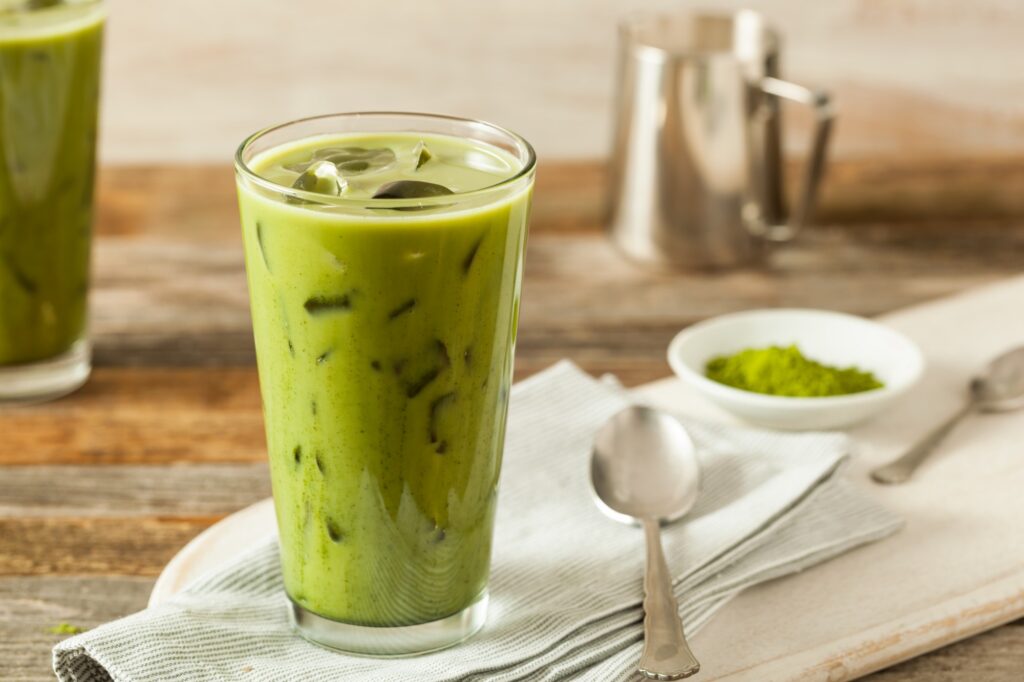
Creamy milk, vibrant green matcha, plenty of ice, and just enough sweetness make an iced matcha latte one of the easiest café drinks to recreate at home.
You only need a few ingredients, and despite what complicated coffee-shop menus might suggest, you do not need a blender or expensive equipment. The key is making a smooth matcha concentrate first, then pouring it over cold milk and ice.
This recipe uses 1 1/2 to 2 teaspoons of matcha, a small amount of warm water, and 3/4 cup of milk for a latte that still tastes distinctly like tea. Sweetener is completely optional and easy to adjust.
Use dairy milk for a classic creamy latte, oat milk for an especially smooth plant-based version, or experiment with almond, soy, and coconut milk.
Once you learn the basic formula, you can turn it into vanilla matcha, strawberry matcha, honey matcha, coconut matcha, or almost any other variation you like.
🍵 Iced Matcha Latte Recipe
Servings: 1
Prep time: 5 minutes
Total time: 5 minutes
🥛 Ingredients
- 1 1/2 to 2 teaspoons matcha powder
- 2 ounces warm water, about 160–175°F
- 3/4 cup cold milk or plant-based milk
- 1 to 2 teaspoons maple syrup, honey, simple syrup, or vanilla syrup, optional
- 1 cup ice, or enough to fill the glass
Optional Additions
- 1/4 teaspoon vanilla extract
- Pinch of cinnamon
- Strawberry purée
- Brown sugar syrup
- Coconut milk
- Cold foam
🫖 How to Make an Iced Matcha Latte
1. Sift the matcha. Place the matcha through a small fine-mesh strainer directly into a matcha bowl, small mixing bowl, or wide mug.
Sifting takes only a few seconds and helps prevent stubborn little clumps in the finished latte.
2. Add the warm water. Pour about 2 ounces of warm—not boiling—water over the matcha.
Water around 160–175°F works well.
3. Whisk until smooth and frothy. Using a bamboo matcha whisk, whisk briskly in a loose W or M motion for about 20 to 30 seconds.
The matcha should become evenly suspended in the water with a light layer of foam on top.
4. Add sweetener. If you are using honey, maple syrup, simple syrup, or another sweetener, stir it into the warm matcha concentrate.
Warm liquid makes sweeteners much easier to incorporate than adding them after everything is icy cold.
5. Fill a glass with ice. Add plenty of ice to a tall glass.
6. Add the milk. Pour the cold milk over the ice.
7. Add the matcha. Slowly pour the whisked matcha over the milk.
For a pretty layered latte, leave it unstirred for a moment. When you are ready to drink it, stir thoroughly so the matcha and milk combine.
🍵 What Is Matcha?
Matcha is a finely powdered Japanese green tea.
The leaves used to make traditional matcha are shaded before harvest, then steamed, dried without the rolling process used for many other Japanese green teas, and processed into tencha. The tencha is then ground into a fine powder.
Unlike ordinary loose-leaf green tea, matcha is not steeped and removed.
The powdered tea is whisked into water and consumed as part of the drink.
That is why properly prepared matcha is a suspension rather than a conventional tea infusion.
Explore more in our Matcha collection.
🌱 What Does Matcha Taste Like?
Good matcha has a distinctive combination of:
- Vegetal freshness
- Umami
- Mild sweetness
- Gentle bitterness
- Creaminess
- Grassy or leafy notes
The exact flavor depends on the tea itself.
Some matchas are particularly sweet and smooth, while others are stronger, more vegetal, or somewhat bitter.
Milk softens those intense green-tea flavors, which is one reason a latte can be an approachable introduction for someone trying matcha for the first time.
🥄 How Much Matcha Should You Use?
For one iced latte, 1 1/2 to 2 teaspoons is a good starting point.
Use 1 teaspoon if you want a mild matcha flavor.
Use closer to 2 teaspoons if you want the matcha to remain prominent against a generous amount of milk and ice.
If your latte tastes like nothing but milk, the solution usually is not more syrup.
It is more matcha.
🌡️ Don’t Use Boiling Water
Matcha does not need boiling water.
Very hot water can emphasize bitterness and astringency, especially with matcha that already has a strong flavor.
A range around 160–175°F is an easy starting point.
If you do not have a thermometer, bring the water to a boil and let it cool briefly before pouring it over the powder.
The exact temperature does not need to be perfect.
🥄 Why Sift Matcha?
Matcha is extremely fine and tends to develop small compressed clumps in its container.
Those clumps can be surprisingly difficult to break apart after liquid is added.
Sifting the powder first gives you a much smoother starting point.
If your homemade matcha latte repeatedly has tiny green lumps floating through it, this simple step may solve most of the problem.
🫧 Matcha Doesn’t Actually Dissolve
Matcha is powdered leaf.
It does not truly dissolve in water the way sugar does.
Whisking disperses the tiny tea particles throughout the liquid, creating a suspension.
That means some settling over time is normal.
If you leave an iced matcha latte on your desk for a while, you may notice green material beginning to collect toward the bottom.
Simply stir it again.
🎋 Do You Need a Bamboo Matcha Whisk?
No.
A bamboo whisk, or chasen, is excellent at preparing traditional matcha and creates a fine foam quickly.
But you can still make a good iced latte without one.
Alternatives include:
- Handheld milk frother
- Small kitchen whisk
- Jar with a tight-fitting lid
- Cocktail shaker
For a latte, a small electric frother is probably the easiest alternative.
Explore more equipment in our Tea Gear & Accessories hub.
🫙 Make Matcha in a Jar
No whisk?
Add the sifted matcha and warm water to a clean jar with a tight lid.
Close it securely.
Shake vigorously for about 20 to 30 seconds.
Open carefully and pour the matcha over your iced milk.
This method will not reproduce the experience of traditional matcha preparation, but it works remarkably well for an everyday iced latte.
🥛 What Milk Is Best for an Iced Matcha Latte?
There is no single correct choice.
Whole Milk
Whole milk creates a rich, creamy latte and softens matcha’s bitterness.
2% Milk
A little lighter but still creamy.
Oat Milk
One of my favorite plant-based choices for matcha. It has enough body to produce a café-style latte without overpowering the tea.
Soy Milk
Creamy and relatively neutral, making it another good match for matcha.
Almond Milk
Lighter and somewhat nutty.
Coconut Milk
Rich and distinctly tropical. Delicious, but the coconut flavor will be noticeable.
Try several and see which balance you prefer.
🍯 Should You Sweeten an Iced Matcha Latte?
You don’t have to.
Good matcha with naturally sweet milk may need little or no additional sweetener.
If you prefer the sweeter style common in cafés, start with 1 teaspoon of sweetener and increase gradually.
Good choices include:
- Simple syrup
- Maple syrup
- Honey
- Vanilla syrup
- Brown sugar syrup
Liquid sweeteners are easier to mix into a cold drink than granulated sugar.
🍯 Honey Iced Matcha Latte
Honey and matcha work especially well together.
Prepare the warm matcha concentrate, then stir in 1 to 2 teaspoons honey before adding it to the iced milk.
Adding honey at this stage helps it dissolve evenly.
A mild floral honey works best if you want the matcha to remain the dominant flavor.
🍁 Maple Matcha Latte
Replace the honey or sugar with 1 to 2 teaspoons pure maple syrup.
Maple brings a warm caramel-like sweetness that pairs particularly well with oat milk.
This variation is especially nice during late summer and fall.
🍦 Vanilla Iced Matcha Latte
For an easy vanilla matcha, add:
- 1/4 teaspoon vanilla extract
or
- 1 to 2 teaspoons vanilla syrup
to the milk.
Vanilla softens some of matcha’s vegetal character and gives the drink a familiar coffee-shop flavor.
Oat milk works especially well in this version.
🍓 Strawberry Matcha Latte
Strawberry matcha creates one of the prettiest layered drinks you can make at home.
Add approximately 2 tablespoons strawberry purée to the bottom of the glass.
Fill with ice.
Pour in the milk.
Finish with the whisked matcha.
The result creates distinct red, white, and green layers before stirring.
To make a simple strawberry purée, blend ripe strawberries with just enough sugar to taste.
🍑 Peach Matcha Latte
Peach is another surprisingly good pairing.
Add a spoonful of peach purée or peach syrup to the bottom of the glass.
Pour in ice and milk, then finish with matcha.
Use a light hand with the fruit.
Too much peach can cover the delicate tea flavor.
🥥 Coconut Matcha Latte
Use chilled coconut milk in place of dairy milk.
For an especially refreshing version, use a lighter drinking-style coconut milk rather than very thick canned coconut cream.
Add a little maple syrup if desired.
Matcha’s grassy flavor and coconut’s sweetness make a particularly good summer combination.
🤎 Brown Sugar Matcha Latte
Make a quick brown sugar syrup by combining equal parts brown sugar and hot water.
Stir until dissolved and cool.
Add 1 to 2 teaspoons to the glass before adding ice and milk.
Brown sugar creates deeper caramel and molasses notes than white sugar.
You can even drizzle a little around the inside of the glass for a boba-shop-style presentation.
🧋 Matcha Boba Latte
Turn the recipe into a boba drink by adding cooked tapioca pearls.
Spoon sweetened pearls into the bottom of a large glass.
Add ice and milk.
Top with matcha.
Serve with a wide boba straw.
For more information on cooking and serving tapioca pearls, see our Boba Tea Guide.
🧊 Use Plenty of Ice
An iced latte should actually be cold.
Fill the glass generously.
However, remember that ice melts and gradually dilutes the drink.
If you tend to sip slowly, use:
- Larger ice cubes
- Matcha ice cubes
- Slightly stronger matcha concentrate
Large cubes generally melt more slowly than lots of tiny pieces.
🍵 Make Matcha Ice Cubes
Prepare a weak batch of matcha and pour it into an ice-cube tray.
Freeze.
Use the green cubes in future iced lattes.
As they melt, they add matcha rather than plain water.
You can also freeze milk into cubes for an especially creamy drink.
🌱 What Matcha Is Best for a Latte?
Choose a matcha that:
- Is intended for drinking
- Has a fresh green color
- Smells clean and vegetal
- Tastes pleasant enough that milk does not need to hide it
- Fits your budget
You do not need the most expensive matcha available for a latte.
Milk and sweetener mute some of the most subtle characteristics of very high-end tea.
At the other extreme, very dull, harsh matcha can make a latte unpleasantly bitter no matter how much milk you add.
A good everyday drinking matcha is usually the sweet spot.
🎎 What About “Ceremonial Grade” Matcha?
You will see ceremonial grade written on many matcha packages outside Japan.
It sounds official, but it is not a standardized Japanese grading designation.
Japanese tea companies may instead evaluate matcha based on factors such as:
- Flavor
- Aroma
- Color
- Texture
- Cultivar
- Harvest
- Intended preparation
A package saying “ceremonial grade” may contain wonderful matcha.
The phrase by itself simply does not guarantee quality.
For an iced latte, focus on how the matcha actually looks, smells, and tastes rather than relying entirely on the word ceremonial.
🟢 Why Is Good Matcha Bright Green?
Matcha is produced from shade-grown tea leaves.
Shading affects the chemistry and appearance of the leaves and contributes to matcha’s characteristic color, umami, and flavor.
Fresh, properly stored matcha is generally vivid green.
A dull yellow-brown powder may be:
- Old
- Oxidized
- Poorly stored
- Lower quality
Color alone cannot tell you everything about quality, but it is a useful clue.
📦 How to Store Matcha
Matcha is much more sensitive to air, heat, light, and moisture than many whole-leaf teas.
Keep it:
- Tightly sealed
- Away from light
- Away from heat
- Away from strong odors
Once opened, try to use it while it is still fresh rather than keeping the same tin for many months.
Some producers recommend refrigerated storage after opening. If you refrigerate matcha, keep the container tightly sealed and allow it to come closer to room temperature before opening so condensation does not form inside.
☕ Does Matcha Contain Caffeine?
Yes.
Matcha comes from Camellia sinensis and naturally contains caffeine.
Because you consume the powdered tea rather than removing leaves after steeping, a matcha drink can contain a meaningful amount.
The exact caffeine content depends on:
- The matcha itself
- Amount of powder used
- Growing and processing conditions
- Serving size
Using 2 teaspoons will generally provide more caffeine than using 1 teaspoon.
If you are sensitive to caffeine, begin with a smaller amount.
🌙 Can You Drink an Iced Matcha Latte at Night?
You can, but matcha is not caffeine-free.
People vary greatly in caffeine sensitivity.
If a late-afternoon coffee interferes with your sleep, an evening matcha latte may do the same.
For a green-looking caffeine-free latte, matcha itself is not the right ingredient.
Instead, consider an evening Rooibos or Chamomile Tea.
🌿 What About L-Theanine?
Matcha naturally contains the amino acid L-theanine, along with caffeine and other tea compounds.
Research has examined caffeine and L-theanine in relation to attention, alertness, and cognitive performance.
That does not mean everyone will experience matcha as perfectly calm or “jitter-free.”
The caffeine still matters.
If you are sensitive to stimulants, matcha can still make you feel restless or interfere with sleep.
💚 Is an Iced Matcha Latte Healthy?
That depends on what you mean by healthy—and what you put in it.
Plain matcha contains naturally occurring tea compounds including catechins, caffeine, and L-theanine.
A latte also contains whatever comes with your milk and sweetener.
An unsweetened matcha latte can be a relatively simple drink.
A café latte containing large amounts of flavored syrup, sweetened milk, whipped cream, and toppings can be much more dessert-like.
Neither needs to be assigned a moral label.
It is simply useful to know what is in your glass.
⚖️ Does Matcha Help With Weight Loss?
Matcha and green-tea compounds have been studied in relation to metabolism and fat oxidation.
That research does not establish an iced matcha latte as a reliable weight-loss treatment.
Adding matcha to your diet does not automatically cause meaningful fat loss.
One practical advantage is simpler: an unsweetened homemade matcha latte may contain less added sugar than some commercial café drinks.
But there is no need to market matcha as a fat burner.
🌿 Does Matcha “Detox” Your Body?
No special detox claim is necessary.
The chlorophyll that gives matcha part of its green appearance does not turn a latte into a liver cleanse.
Your liver and kidneys already carry out the body’s normal processes for handling and eliminating substances.
Enjoy matcha for its flavor, tea compounds, caffeine, and tradition rather than an undefined promise to remove toxins.
🍵 Matcha vs. Regular Green Tea
Both come from Camellia sinensis, but the preparation is very different.
With ordinary Green Tea, leaves are infused in water and removed.
With matcha, powdered tea is whisked into water and consumed as part of the beverage.
That gives matcha:
- A thicker texture
- More concentrated tea flavor
- Distinctive umami
- A vivid appearance
It also means preparation technique matters.
☕ Iced Matcha Latte vs. Iced Coffee
Both can provide caffeine, but their flavors are completely different.
Iced coffee tends toward:
- Roast
- Chocolate
- Caramel
- Bitterness
Matcha tends toward:
- Grass
- Greens
- Umami
- Mild sweetness
- Gentle bitterness
Neither is inherently the “better” drink.
Choose based on flavor, caffeine preference, and what sounds good that day.
🥤 Why Is My Matcha Latte Bitter?
Several things can contribute.
The Water Was Too Hot
Boiling water can make matcha taste harsher.
You Used Too Much Matcha
More is not always better.
The Matcha Is Naturally Bitter
Lower-quality or older matcha may be particularly harsh.
The Latte Needs More Milk
Increase the milk slightly.
You Simply Prefer a Sweeter Latte
Add a small amount of honey or syrup.
Adjust one variable at a time so you learn what you actually prefer.
🟢 Why Is My Matcha Latte Dull Green?
Matcha naturally loses brightness with age and exposure to air, light, heat, and moisture.
A dull latte may result from:
- Older matcha
- Poor storage
- A darker-quality powder
- Certain milk colors
- Added syrups
Using fresh matcha and storing it properly usually gives you a brighter drink.
🥄 Why Is My Matcha Clumpy?
The most common reasons are:
- Skipping the sifting step
- Adding too much liquid before whisking
- Using a utensil that cannot disperse the powder well
Sift first.
Use only about 2 ounces of water to make the concentrate.
Whisk until smooth.
Then add it to the rest of the drink.
🫧 Why Doesn’t My Matcha Foam?
Foam is nice, but it is not essential for an iced latte.
If you want more:
- Sift the matcha
- Use a bamboo whisk or frother
- Whisk rapidly
- Use a wide bowl
- Avoid filling the bowl with too much water
A traditional chasen works best when whisked quickly from the wrist rather than slowly stirring in circles.
💧 Why Is My Iced Matcha Latte Watery?
The usual culprit is too much ice combined with weak matcha.
Try:
- Increasing matcha to 2 teaspoons
- Using less water in the concentrate
- Using larger ice cubes
- Chilling the milk before serving
- Using matcha or milk ice cubes
Do not simply eliminate the ice entirely—the drink should still be properly chilled.
🫙 Can You Make an Iced Matcha Latte Ahead?
You can prepare one somewhat ahead, but matcha tastes best fresh.
The particles naturally settle, so a prepared latte will separate as it sits.
If you need to prepare ahead, whisk the matcha concentrate and refrigerate it in a covered container for a short period.
Then stir or shake thoroughly before assembling the latte.
I prefer making the complete drink immediately before serving.
It only takes a few minutes.
🧊 Make a Matcha Latte by the Pitcher
For four servings, use approximately:
- 6 to 8 teaspoons matcha
- 1 cup warm water
- 3 cups cold milk
- Sweetener to taste
- Ice
Sift the matcha into a large bowl.
Gradually whisk in the warm water until smooth.
Stir in your sweetener.
Cool if necessary.
Add the milk and refrigerate.
Stir or whisk again before pouring over ice because settling is normal.
🎀 Serve Iced Matcha at a Tea Party
Iced matcha lattes make a colorful addition to a spring or summer tea gathering.
Serve them in clear glasses so the green color is visible.
You could create a small matcha bar with:
- Dairy milk
- Oat milk
- Vanilla syrup
- Honey
- Strawberry purée
- Brown sugar syrup
Guests can customize individual glasses.
For more ideas, visit our Tea Parties & Afternoon Tea hub.
🥐 What Goes With an Iced Matcha Latte?
Matcha pairs particularly well with flavors that are sweet without being overwhelmingly sugary.
Try it with:
- Shortbread
- Strawberries
- Vanilla cake
- Mochi
- White chocolate
- Lemon cake
- Almond cookies
- Scones
- Red bean sweets
The mild bitterness of matcha provides a useful contrast to creamy or sweet foods.
Browse our Food & Tea Pairings collection for more ideas.
🍵 The Easiest Formula to Remember
Once you have made this recipe a few times, you really do not need to measure everything precisely.
For one café-style iced matcha latte, remember:
1 1/2–2 teaspoons matcha
2 ounces warm water
3/4 cup cold milk
Sweetener to taste
Plenty of ice
Whisk the matcha first.
Everything else is simply customization.
💚 A Café-Style Matcha Latte in Five Minutes
A good iced matcha latte does not need a blender, a complicated supplement list, or a giant pour of flavored syrup.
Start with fresh matcha.
Sift it.
Whisk it with a little warm water until smooth and frothy.
Fill a glass with ice and cold milk.
Pour the brilliant green matcha over the top.
Then decide whether you want vanilla, honey, strawberries, brown sugar—or nothing else at all.
Once you learn the basic technique, your favorite coffee-shop iced matcha becomes one of the easiest tea drinks to make at home.
🔗 Related Articles
- Matcha
- Green Tea
- Tea Recipes
- Tea Varieties
- How to Brew Tea
- Tea Gear & Accessories
- Tea Parties & Afternoon Tea
- Boba Tea Guide
- 5 Milk Tea Styles From Around the World
📚 Sources & Further Reading
- Japan Ministry of Agriculture, Forestry and Fisheries — Japanese Tea and Matcha
- Ippodo Tea — Is Ippodo’s Matcha “Ceremonial Grade”?
- PubMed — Health Benefits and Chemical Composition of Matcha Green Tea: A Review
- PubMed — Effect of Green Tea Phytochemicals on Mood and Cognition
- PubMed — An Intervention Study on Matcha Tea, Mood and Cognitive Performance