In the hills and valleys of southern Fukuoka Prefecture lies one of Japan’s most prestigious tea regions. Yame is known for green teas with deep sweetness, concentrated umami and a refined character, but one tea in particular has made the region famous: gyokuro.
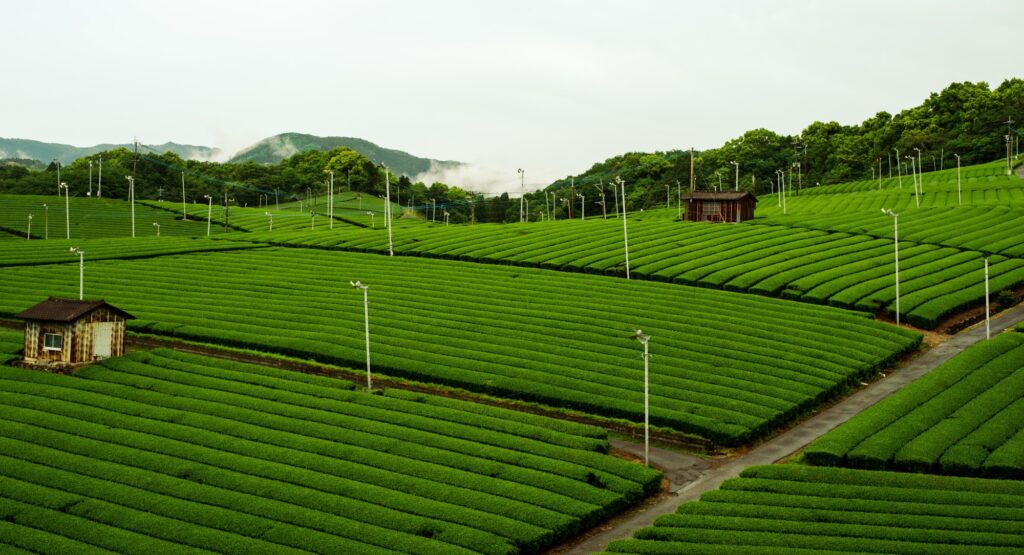
Yame produces some of Japan’s most celebrated shade-grown tea. Mountain districts around Kurogi, Jōyō and Hoshino have become closely associated with exceptionally rich gyokuro, while lower and more open areas produce fragrant sencha and other everyday green teas. Frequent fog, substantial rainfall, fertile soil and significant differences between daytime and nighttime temperatures create favorable conditions for slow, high-quality tea growth.
Yame also has more than six centuries of tea history. According to local tradition, tea cultivation began here in 1423 when the Zen monk Eirin Shūzui returned from China with tea seeds and introduced tea-growing and manufacturing techniques at Reiganji Temple. Today, that long history continues alongside some of the most exacting tea cultivation practiced anywhere in Japan.
🍵 What Is Yame Tea?
Yame tea, or Yame-cha, refers broadly to tea produced in and around the Yame region of Fukuoka Prefecture. Green tea dominates production, and drinkers may encounter sencha, gyokuro, kabusecha, matcha and bancha carrying the Yame name.
The region is especially notable for its emphasis on quality rather than sheer production volume. Yame’s tea identity is strongly tied to carefully cultivated first-harvest leaves, shaded production and skilled processing. Gyokuro receives much of the attention, but it would be a mistake to assume that all Yame tea tastes similar. A Yame sencha may be refreshing and balanced, while a heavily shaded gyokuro can be extraordinarily sweet, savory and concentrated.
Those differences begin in the field, where elevation, sunlight, cultivar, shade and harvest timing all shape the final tea.
🏯 More Than 600 Years of Tea History
The traditional origin of Yame tea dates to the Muromachi period. In 1423, the Zen monk Eirin Shūzui is said to have established Reiganji Temple in what is now Kurogi in Yame. After returning from Ming China, he brought tea seeds with him, planted them in the area and taught local people how to cultivate and process tea.
Tea production remained relatively small for generations, but cultivation expanded during the Edo period as tea became increasingly common among ordinary people. By the end of the Edo period, local authorities were encouraging production in Yame’s mountainous districts, and tea became an increasingly important commercial crop.
When Japan opened to international trade during the 19th century, tea exports expanded further. Yame’s modern tea culture therefore grew out of monastic history, mountain agriculture, regional trade and centuries of gradual refinement.
🌄 How Yame’s Mountains Shape the Tea
Yame is not one uniform tea-growing plain. Its landscape shifts from lower western districts into increasingly mountainous territory toward the east, and the most prestigious gyokuro production is concentrated especially in these upland areas.
Mountain valleys create substantial temperature differences between day and night. Fog often settles across the tea gardens, softening direct sunlight, while abundant rainfall keeps the landscape green and humid. These conditions can slow the growth of tea shoots and contribute to a more delicate leaf character.
It would be too simple to say that mountain fog alone creates great Yame tea, but climate and terrain form an important part of the region’s terroir. Cultivar, soil, shading, harvesting and processing all work together to produce the final cup.
💚 Why Yame Is Famous for Gyokuro
Gyokuro is one of Japan’s most luxurious green teas, and Yame has become one of its most celebrated production areas. The defining feature of gyokuro is shade. Before harvest, tea plants are covered to dramatically reduce the amount of sunlight reaching the young shoots.
This alters the chemistry of the developing leaves. Shading helps preserve amino acids associated with sweetness and umami while reducing the development of some of the compounds responsible for stronger bitterness and astringency. The result can taste dramatically different from ordinary sencha.
Fine Yame gyokuro may be intensely savory, sweet and almost broth-like, with a deep green character and a lingering flavor that coats the palate. It is usually brewed with very cool water and served in small quantities, making it less like an everyday mug of tea and more like a concentrated tasting experience.
🌿 Traditional Hon-Gyokuro Takes the Craft Further
Within the already prestigious world of gyokuro, Yame Dento Hon Gyokuro, or Traditional Authentic Yame Gyokuro, represents an especially demanding style. The protected traditional method involves natural-style cultivation, shade structures covered with materials such as rice straw and hand harvesting rather than machine picking.
Yame City traces this local style of gyokuro production to 1904. The method requires enormous care because the tea plants are cultivated in a form less convenient for mechanical harvesting, shade structures must be managed closely and only the tender leaves are selected by hand.
The objective is not maximum yield. It is exceptional leaf quality. That philosophy helps explain why Traditional Authentic Yame Gyokuro occupies such a rarefied place within Japanese tea.
🏅 A Remarkable Competition Reputation
Yame’s gyokuro reputation is supported by an extraordinary record in Japanese tea competitions. Producers from Yame have repeatedly taken top honors in the gyokuro division of the National Tea Competition, while the city itself has accumulated a long run of production-area awards.
Competition tea is not identical to the tea most people buy for daily drinking, but these awards reflect the unusually high technical standards found in the region. Growers are judged on appearance, aroma, liquor color and taste, and the best producers continually refine small details in cultivation and processing.
The culture of competition reinforces the idea that tea quality is something active rather than static. Tradition matters, but so does constant improvement.
🗾 Protected Geographic Status
Traditional Authentic Yame Gyokuro received another important recognition in 2015, when it became the first tea registered under Japan’s national Geographical Indication, or GI, protection system.
GI protection connects a product’s reputation and characteristics with a defined place and established method of production. That means not every tea simply labeled “gyokuro” qualifies as Traditional Authentic Yame Gyokuro.
For tea drinkers, the distinction is useful. Yame gyokuro, Traditional Authentic Yame Gyokuro and generic Japanese gyokuro belong to the same broad family, but they do not necessarily follow the same cultivation and harvesting standards.
🌾 Why Rice-Straw Shading Matters
Modern Japanese tea farms frequently use synthetic black covering materials because they are efficient and easy to manage. Traditional Yame Hon-Gyokuro preserves an older approach involving natural covering material such as rice straw.
The purpose is still to reduce light dramatically before harvest, but natural materials create a somewhat different growing environment. Managing them requires more work and greater experience than simply covering fields with modern synthetic sheets.
During the shading period, the young shoots develop the amino-acid-rich character that gives gyokuro its sweetness and umami. When those leaves are harvested and processed carefully, only a small amount of tea is needed to create an unusually concentrated infusion.
🌱 Hoshino and High-Grade Tea
Hoshino Village sits in mountainous eastern Yame and is one of the names tea drinkers frequently encounter when exploring the region. Its upland environment, clear water, mist and strong day-to-night temperature differences create favorable conditions for refined green tea.
Gyokuro is particularly important here, and the area has become closely associated with high-grade tea. Hoshino’s Tea Culture Museum introduces visitors to the region’s tea history and offers opportunities to taste different styles, including concentrated preparations of premium gyokuro.
Because of that reputation, “Hoshino tea” may appear on specialty packages in addition to the broader Yame designation. For buyers, the name can provide an extra clue about origin.
🌄 Kurogi Is Central to Yame Tea
Kurogi is another crucial name within Yame. Reiganji Temple, traditionally regarded as the birthplace of Yame tea, lies here, giving the district direct historical significance.
Modern Kurogi is also a major gyokuro-producing area. Its mountain conditions and long cultivation tradition have made it one of the most important districts for premium shaded tea, and producers from the area regularly appear among competition winners.
The combination of history and current production makes Kurogi one of the best places to understand how Yame’s past remains connected with its present.
🍃 Yame Sencha Deserves More Attention
Gyokuro tends to overshadow nearly everything else from Yame, but sencha is equally important for everyday tea drinkers. Unlike gyokuro, sencha is usually grown with abundant sunlight rather than prolonged heavy shading.
That difference creates a brighter, more refreshing cup. Good Yame sencha may combine sweetness and umami with a pleasant astringency and a clean finish. Compared with gyokuro, it is easier to brew casually and usually much more affordable.
For many tea drinkers, sencha is the best place to begin exploring Yame. It reveals the region’s quality without requiring specialized brewing or a premium gyokuro budget.
🌿 Kabusecha Bridges Sencha and Gyokuro
Kabusecha is another important style to understand. It is shade-grown, but generally for a shorter period than gyokuro, creating a flavor profile that sits somewhere between ordinary sencha and heavily shaded tea.
The shading can increase sweetness and umami while preserving more of sencha’s fresh and lightly astringent character. This makes kabusecha particularly useful for tea drinkers who are curious about shaded tea but are not yet ready for the intensity of gyokuro.
A side-by-side tasting of sencha, kabusecha and gyokuro is one of the clearest demonstrations of how shade changes Japanese green tea.
🍵 Yame Matcha and Tencha
Matcha is also produced within the wider Yame tea region. Like gyokuro, matcha begins with shade-grown plants, but after harvest the leaves follow a different processing path.
Leaves destined for matcha are processed into tencha. Unlike sencha or gyokuro, tencha is not intensively rolled into tight needle shapes. Once refined, the leaf material can be ground into matcha powder.
Yame matcha benefits from the region’s deep experience with shaded cultivation, premium cultivars and first-harvest tea. Gyokuro remains the region’s defining luxury style, but matcha adds another dimension to Yame’s shaded-tea tradition.
🌱 Yabukita and Yame Sencha
Yabukita remains an important cultivar in Fukuoka’s tea industry and is frequently used for sencha. Its balance of quality, productivity and familiar Japanese-green-tea character helped make it the dominant cultivar across Japan.
A Yabukita Yame sencha can offer a useful benchmark, with vegetal aroma, moderate umami, gentle sweetness and refreshing astringency.
Yame becomes even more interesting, however, when moving beyond Yabukita, particularly into cultivars favored for premium gyokuro.
💚 Saemidori and Premium Gyokuro
Saemidori is especially important in high-end shaded tea. The cultivar is valued for vivid green color, strong sweetness, high amino-acid content and relatively restrained astringency.
Those characteristics pair naturally with heavy shading, making Saemidori particularly suited to premium gyokuro. When cultivated and processed well, it can produce an extraordinarily smooth cup with powerful umami.
If cultivar information appears on a Yame gyokuro package, Saemidori is one of the names worth recognizing.
🌫️ Fog and Mountain Tea
Fog is frequently mentioned in descriptions of Yame tea country. Moist air settling through mountain valleys can reduce the intensity of sunlight and contribute to the humid conditions surrounding upland tea gardens.
Fog alone does not create high-quality tea, but it forms part of the broader environment that distinguishes Yame’s mountain districts from sunnier lowland production areas.
The visual image is fitting as well. Rows of tea bushes disappearing into mist seem perfectly suited to a region known for subtle, carefully shaded tea.
🌸 The First Spring Harvest
The first Yame harvest generally begins in spring, with the main first-harvest period building through April and into early May. This ichibancha crop receives the greatest attention for premium loose-leaf production.
Young shoots emerging after winter can be tender, aromatic and rich in flavor. The season overlaps with hachijūhachiya, the traditional 88th night after the beginning of spring, a date long associated with Japanese new tea.
Yame’s historical connection with spring remains visible at Reiganji, where tea-related ceremonies continue to honor the region’s origins and celebrate the beginning of another harvest season.
👃 What Does Yame Tea Taste Like?
Yame tea is often associated with sweetness and umami, but the exact profile depends heavily on style.
Premium gyokuro can taste deeply savory, suggesting sweet greens, seaweed and even broth. Bitterness can be remarkably low when the tea is brewed carefully, while the texture may feel dense and almost silky.
Yame sencha is brighter and more refreshing. It can retain noticeable umami while offering more astringency and a cleaner vegetal finish. Kabusecha usually falls between the two.
Cultivar, shading, processing and brewing technique all matter, so no one flavor description applies to every Yame tea. Still, the region’s reputation for depth, sweetness and savory richness is well deserved.
💧 How to Brew Yame Gyokuro
Gyokuro rewards unusually cool water. A useful starting point is around 40–60°C, or approximately 104–140°F, using a relatively generous quantity of leaf and only a small amount of water.
Allow the first infusion enough time to extract the amino-acid-rich liquor, then pour every drop into small cups. The result may be extremely concentrated, with only a small serving needed to reveal the tea’s depth.
Later infusions can use progressively warmer water and shorter steeping times. Very high-grade gyokuro can even be started with water near body temperature, which may sound excessively cool until you taste how much sweetness and umami it draws from the leaf.
🍵 Shizuku Brewing for Exceptional Gyokuro
One of the most fascinating ways to prepare premium Yame gyokuro is shizuku, or drop-style brewing. Instead of filling the vessel with a conventional volume of water, only a tiny amount of very cool water is added to a relatively generous quantity of leaf.
The resulting infusion may amount to only a few drops or a small sip per person, but those drops can be astonishingly concentrated. Sweetness, amino acids and umami become so intense that the tea can seem closer to a rich vegetable broth than an ordinary beverage.
This style makes the most sense with exceptional gyokuro. It is less about thirst and more about tasting what the leaf can do.
🍃 How to Brew Yame Sencha
Yame sencha is considerably more forgiving. Water around 70–80°C, or 158–176°F, provides a useful starting point.
A steep of approximately 45 seconds to one minute works well for many teas. Pour the teapot completely dry between infusions so the leaves do not continue extracting.
If the tea tastes too bitter or sharp, lower the temperature or shorten the steep. If it seems too mild, increase the temperature slightly or use more leaf.
Second infusions generally need much less time because the leaves are already open and hydrated.
🫖 Small Teapots Work Best
A Japanese side-handled kyusu is ideal for Yame sencha, while gyokuro often benefits from even smaller vessels.
A hōhin or shiboridashi works especially well for high-grade gyokuro. These handleless teapots are designed for tea brewed with cooler water, so there is no need for a side handle to protect the hand from heat.
Their shallow shapes also allow a small amount of water to interact evenly with a relatively generous quantity of leaf.
Special equipment is not absolutely necessary, but smaller vessels make it much easier to prepare gyokuro in the concentrated proportions that show the tea at its best.
🥬 You Can Eat the Leaves
The experience of exceptional gyokuro does not necessarily end after the last infusion.
Once the leaves have been brewed several times, they become soft and tender enough to eat. A little ponzu or soy sauce can be added.
The leaves themselves can taste surprisingly good, with a soft vegetal texture and lingering umami. This works particularly well with carefully hand-picked high-grade gyokuro.
For such an expensive tea, it is satisfying to know that even the leaves can become one final course.
🛍️ How to Choose Yame Tea
Start by deciding whether you want an everyday tea or a special tasting experience. Yame sencha offers excellent quality at a much more accessible price and is easy to brew regularly.
Kabusecha provides extra sweetness and umami while remaining less demanding than premium gyokuro. If you want the tea that defines Yame’s luxury reputation, choose gyokuro.
For the most traditional expression, look specifically for Yame Dento Hon Gyokuro or Traditional Authentic Yame Gyokuro rather than assuming every Yame gyokuro follows the protected traditional method.
Cultivar information can help further. Saemidori is especially worth seeking in premium gyokuro, while Yabukita offers a more classic reference point for sencha. Place names such as Hoshino or Kurogi provide additional information about origin.
💴 Why Great Yame Gyokuro Is Expensive
Premium Yame gyokuro is expensive because almost every stage of production requires additional work.
Shade structures must be managed carefully. Traditional examples use natural covering materials. Plants may be grown in a form less suited to mechanical harvesting. The best leaves are hand picked, and processing must preserve extremely delicate material.
Yields are comparatively small, and finishing requires further skill.
The price therefore reflects labor and scarcity as much as reputation. Fortunately, gyokuro is brewed in small portions and can provide several infusions, so even a modest package can support numerous tasting sessions.
📦 Freshness and Storage
Like other Japanese green teas, Yame tea is sensitive to oxygen, moisture, heat, light and strong odors.
Opened tea should be kept tightly sealed and used while its aroma remains fresh. Smaller packages are often preferable to large ones, particularly with expensive gyokuro.
If unopened tea is refrigerated, let the sealed package return to room temperature before opening it so condensation does not form on the leaves.
Premium tea deserves careful storage, but it also deserves to be drunk. Saving it indefinitely defeats the purpose.
🗺️ A Simple Yame Tea Tasting Journey
A useful introduction to Yame requires only three teas.
Begin with a good Yame sencha and notice the balance between refreshing astringency, sweetness and umami. Next, try a kabusecha and pay attention to how additional shade deepens the sweetness and savory character.
Finally, prepare a premium Yame gyokuro using cool water and a high leaf-to-water ratio.
The difference can be remarkable.
Instead of tasting three unrelated teas, you experience a progression from sun-grown tea toward increasingly shaded cultivation. Few tastings demonstrate the effect of agricultural technique more clearly.
🌿 Yame Is About Quality More Than Scale
Some Japanese tea regions impress through sheer production volume. Yame’s reputation rests more heavily on concentrated quality, particularly in gyokuro.
Its tea culture combines mountain agriculture, careful shade management, skilled harvesting and processing traditions that have developed over generations.
Modern machinery is certainly part of the industry, but traditional skills remain important as well. Hand-rolling techniques and competitions continue to preserve the knowledge behind Japanese tea processing even though machines now handle most commercial production.
The technology may change.
The understanding of the leaf still begins with the hand.
❤️ Why Yame Matters
Yame occupies a special place within the Japanese tea map.
Uji demonstrates the relationship between tea, matcha and the development of tea ceremony. Shizuoka shows the extraordinary range of sencha and the scale of modern Japanese green-tea production. Kagoshima reveals the possibilities created by warm climate, cultivar diversity and increasingly innovative production.
Yame adds something different.
It shows just how far growers can push the pursuit of sweetness and umami.
A great Yame gyokuro asks the tea plant to grow beneath shade, asks workers to harvest tender leaves with extraordinary care and then asks the drinker to slow down enough to appreciate a cup containing only a few concentrated sips.
That may sound almost excessive.
Then you taste it.
The best Yame tea demonstrates why gyokuro became one of Japan’s great luxury teas—and why, more than 600 years after tea was first planted in these mountains, Yame remains one of the essential regions for anyone who wants to understand Japanese tea.
🔗 Related Articles
- Japanese Tea Regions Guide: Shizuoka, Uji, Kagoshima, Yame & More
- World’s Best Tea Regions: China, India, Japan, Sri Lanka & Beyond
📚 Sources & Further Reading
- Visit Fukuoka — Discover the Secrets of Yame Tea
- Yame City — History of Yame Tea
- Yame City — Reiganji Temple, Birthplace of Yame Tea
- Yame City — Traditional Authentic Yame Gyokuro and GI Registration
- Fukuoka Prefecture — Fukuoka Yame Tea and Traditional Gyokuro
- Visit Fukuoka — Yame Tea Experience in Hoshino Village