Few teas are as instantly recognizable as Earl Grey. Before you even take a sip, the fragrance gives it away: bright citrus, floral perfume, and the deeper aroma of black tea underneath.
That distinctive scent comes from bergamot, a highly aromatic citrus fruit whose peel provides the flavor traditionally associated with Earl Grey. Combined with black tea, bergamot creates a cup that can taste brisk, citrusy, floral, slightly sweet, and sometimes almost perfume-like.
Earl Grey has also become much more than one specific tea blend. Today you can find strong Earl Greys, delicate versions, lavender Earl Grey, decaffeinated blends, green-tea versions, and creamy tea lattes such as the London Fog.
Its history is equally intriguing. Earl Grey is associated with Charles Grey, the British prime minister and second Earl Grey, but the famous stories explaining exactly how the tea was created are much less certain than many tea packages suggest.
Here is what Earl Grey actually is, what it tastes like, how much caffeine it contains, how to brew it properly, and how to choose the right Earl Grey for your cup.
🍊 What Is Earl Grey Tea?
Traditional Earl Grey is black tea flavored or scented with bergamot.
The black-tea base is made from Camellia sinensis, the same plant used to make green, white, and oolong tea. What distinguishes black tea is that its leaves undergo extensive oxidation during processing, developing darker colors and richer flavors.
Earl Grey then adds another layer: bergamot.
Classic blends may use bergamot essential oil or bergamot flavoring applied to finished tea leaves. Some modern teas also include dried bergamot peel or other citrus ingredients.
A straightforward Earl Grey therefore has two principal components:
- Black tea
- Bergamot flavor
Many contemporary blends add flowers, fruit peel, vanilla, lavender, cornflower petals, or other ingredients.
🍋 What Is Bergamot?
Bergamot is a fragrant citrus fruit botanically known as Citrus bergamia.
It resembles a small citrus fruit with yellow-green skin, but it is much more famous for its aromatic peel than for eating fresh. The fruit is intensely tart and bitter.
Oil from the peel has long been valued in both flavoring and perfumery.
Most commercial bergamot production is strongly associated with Calabria in southern Italy, where the fruit thrives in the region’s climate.
Its aroma can be difficult to describe if you have never encountered it.
Imagine elements of:
- Lemon
- Orange peel
- Grapefruit
- Floral perfume
combined into one particularly fragrant citrus note.
That aroma is what gives Earl Grey its unmistakable character.
👃 What Does Earl Grey Tea Taste Like?
Earl Grey usually combines the flavor of its black-tea base with a pronounced citrus-floral fragrance.
Depending on the blend, you might notice:
- Bright citrus
- Bergamot peel
- Lemon
- Orange
- Flowers
- Honey
- Malt
- Wood
- Light fruit
- Gentle astringency
The black tea underneath matters enormously.
A robust Assam-based Earl Grey can be malty and full-bodied.
A Ceylon-based Earl Grey may taste brighter and brisker.
A lighter Chinese black tea can create a smoother, softer Earl Grey with less obvious malt.
The amount and style of bergamot flavoring also vary considerably. Some Earl Greys are subtle; others are intensely fragrant.
🌸 Is Earl Grey Supposed to Taste Floral?
Often, yes.
Bergamot itself has floral qualities in addition to citrus notes, so even a plain Earl Grey may seem slightly floral.
Some blends intensify this character by adding flowers such as:
- Lavender
- Cornflower petals
- Rose
A lavender Earl Grey can taste dramatically more floral than a classic version.
If you find Earl Grey too perfume-like, look for a blend described as lightly scented or choose one with a stronger black-tea base.
🫖 Is Earl Grey a Type of Black Tea?
Traditional Earl Grey is generally a flavored black tea rather than its own botanical category.
The tea leaves still come from Camellia sinensis. Bergamot is added after or during processing to create the distinctive flavor.
However, modern producers sometimes apply Earl Grey-style bergamot flavoring to:
- Green tea
- White tea
- Oolong
- Rooibos
Those drinks may be marketed as Green Earl Grey, Earl Grey White Tea, or Rooibos Earl Grey.
So while classic Earl Grey means black tea with bergamot, the name is now used more broadly.
🇬🇧 Why Is It Called Earl Grey?
The tea is traditionally associated with Charles Grey, 2nd Earl Grey, who served as British prime minister from 1830 to 1834.
Exactly how his name became attached to bergamot-flavored tea is less certain.
Several colorful origin stories have developed over the years, but there is little firm historical evidence establishing one definitive version.
The safest conclusion is that Earl Grey became associated with Charles Grey during the 19th century and eventually developed into one of Britain’s most famous flavored tea styles.
📜 The Famous Earl Grey Origin Story
One popular story says that a Chinese official or tea master gave Charles Grey a specially flavored tea after a member of Grey’s party rescued someone’s son from drowning.
It is a memorable story.
It is also almost certainly folklore.
Charles Grey did not travel to China, and historical evidence linking such a dramatic rescue directly to the creation of Earl Grey is lacking.
Another version claims the tea was blended to make the mineral-heavy water at the Grey family estate more pleasant.
Again, it is an interesting story but difficult to verify conclusively.
These legends are part of Earl Grey’s cultural history, but they should not be treated as documented fact.
🏪 Did Twinings Invent Earl Grey?
Twinings strongly associates itself with the creation of Earl Grey and says that Richard Twining produced the blend in 1831 at the request of Prime Minister Charles Grey.
That account is one important part of Earl Grey tradition.
However, the historical record is more complicated.
References to tea flavored with bergamot existed in Britain during the early 19th century, and the exact origin of the name “Earl Grey” remains debated.
Other tea merchants have also been associated with early versions of the blend.
Rather than declaring one perfectly documented inventor, it is more accurate to say that bergamot-flavored tea emerged in 19th-century Britain and eventually became closely associated with the Grey name.
🍵 What Tea Is Used to Make Earl Grey?
There is no single required black-tea base.
Earl Grey can be blended from teas originating in places such as:
- Sri Lanka
- India
- China
- Africa
Common base styles include Ceylon and Assam.
Some producers use a blend of several origins to create a consistent flavor.
The choice affects how the Earl Grey tastes.
🇱🇰 Ceylon Earl Grey
Ceylon tea works especially well with bergamot because many Sri Lankan black teas are naturally brisk, bright, and aromatic.
Bergamot can emphasize their citrus-like qualities rather than overwhelming them.
A Ceylon-based Earl Grey may taste:
- Bright
- Crisp
- Citrusy
- Moderately brisk
- Clean
If you enjoy a lively, refreshing Earl Grey, Ceylon is a good base to look for.
You can learn more in Ceylon Black Tea: Flavor, Regions & How to Brew It.
🌾 Assam Earl Grey
Assam creates a fuller and richer Earl Grey.
Assam black tea is known for flavors that can include:
- Malt
- Honey
- Dark fruit
- Toast
- Caramel
When combined with bergamot, these deeper flavors create a stronger contrast between rich black tea and bright citrus.
An Assam-heavy Earl Grey can also work particularly well with milk.
For more about this style of black tea, see Assam Black Tea: Flavor, History & How to Brew It.
🇨🇳 Chinese Earl Grey
Some Earl Grey blends use Chinese black tea as the base.
Depending on the tea, this can produce a smoother, softer cup with notes such as:
- Cocoa
- Fruit
- Honey
- Wood
- Flowers
Chinese black teas can create an elegant Earl Grey that allows bergamot to remain prominent without the strong maltiness of Assam.
⚡ Does Earl Grey Have Caffeine?
Yes, traditional Earl Grey contains caffeine because it is made with black tea.
The bergamot does not create the caffeine. The caffeine comes from the tea leaves.
There is no single caffeine amount that applies to every cup.
Caffeine varies according to:
- Type of black tea
- Amount of tea used
- Leaf size
- Water temperature
- Steeping time
- Serving size
The FDA lists a typical 12-ounce serving of black tea at about 71 mg of caffeine, while smaller servings may contain considerably less.
For Earl Grey, the best approach is to check the product’s information when available rather than assuming every cup contains the same amount.
☕ Is Earl Grey More Caffeinated Than Regular Black Tea?
Not inherently.
Earl Grey is black tea with added bergamot flavoring, so the caffeine primarily depends on the underlying tea.
Adding bergamot does not increase caffeine.
An Earl Grey made from a strong broken-leaf black tea may contain more caffeine than a lightly brewed whole-leaf black tea, but that difference comes from the tea and preparation—not from the fact that it is Earl Grey.
🌙 Does Decaf Earl Grey Have Caffeine?
Decaffeinated Earl Grey contains substantially less caffeine than regular Earl Grey, but decaf does not necessarily mean completely caffeine-free.
The tea begins as ordinary caffeinated tea and undergoes a process that removes most of its caffeine.
If you are highly caffeine-sensitive, check the manufacturer’s caffeine information when available.
Decaf Earl Grey can be especially useful for:
- Evening tea
- People reducing caffeine
- London Fog lattes later in the day
🤰 Can You Drink Earl Grey During Pregnancy?
Because traditional Earl Grey is made with black tea, it contributes caffeine to your daily total during pregnancy.
The bergamot flavoring does not remove or neutralize the caffeine.
If you are pregnant, count Earl Grey along with other sources such as coffee, chocolate, soda, chai, and additional tea.
For more detailed guidance, see Can You Drink Black Tea During Pregnancy? Caffeine & Safety.
🌡️ Best Water Temperature for Earl Grey
Earl Grey is generally brewed like other black teas.
A good starting point is approximately:
200–212°F
or water just off the boil.
Some delicate Earl Grey blends may taste smoother with slightly cooler water.
If your cup consistently tastes harsh, try lowering the water temperature before shortening the steep dramatically.
⏱️ How Long Should You Steep Earl Grey?
Start with about:
3–5 minutes
Tea bags containing smaller leaf particles often brew quickly, so 3 minutes may be enough.
Large loose leaves may benefit from a longer infusion.
Taste is more useful than blindly following the clock.
If the tea tastes weak, use more tea.
If it tastes bitter or excessively dry, shorten the steep.
For a deeper explanation, see Black Tea Steep Time: How Long to Brew for the Best Flavor.
📝 How to Brew Earl Grey Tea
For one cup:
Ingredients
- 1 Earl Grey tea bag or about 1 teaspoon loose-leaf Earl Grey
- 8 ounces water
- Milk, lemon, honey, or sugar, optional
Instructions
- Heat fresh water until just below or at boiling.
- Place the Earl Grey in your cup or teapot.
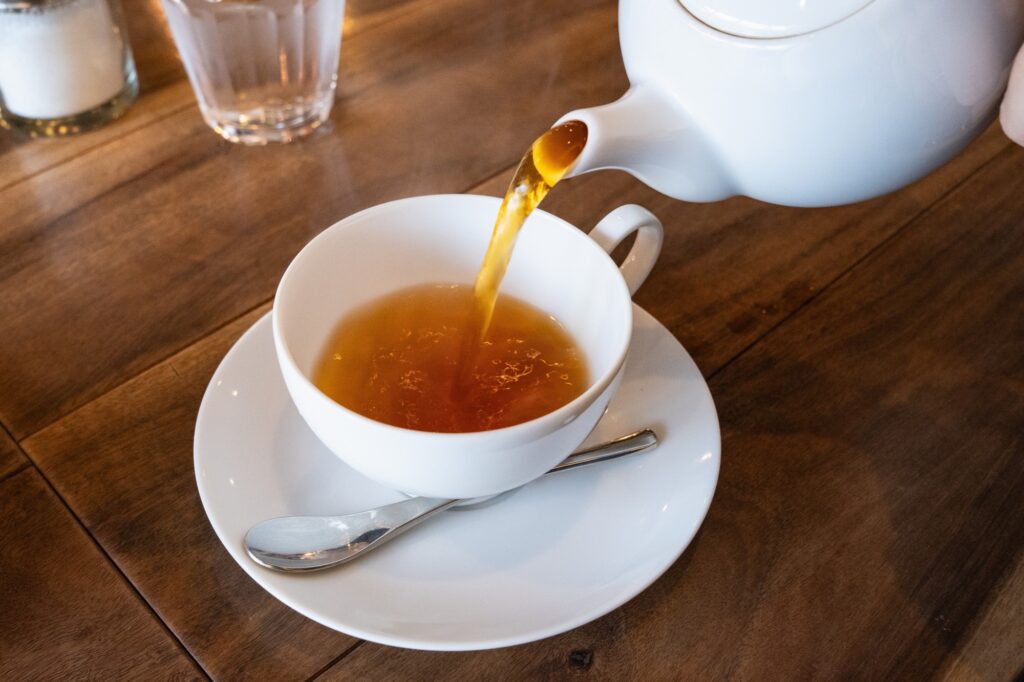
- Pour the hot water over the tea.
- Steep for 3–5 minutes.
- Remove the tea bag or strain the leaves.
- Taste before adding anything.
- Add milk, lemon, or sweetener if desired.
Avoid squeezing the tea bag aggressively after steeping, especially if the tea already tastes astringent.
😬 Why Does My Earl Grey Taste Bitter?
Bitterness usually comes from the black-tea base rather than the bergamot itself.
Common causes include:
- Water that is excessively hot for a delicate blend
- Oversteeping
- Too much tea
- Very fine tea particles
- Leaving the tea bag in while drinking
Try reducing the steep to about 3 minutes.
If the tea then tastes weak, use slightly more tea rather than steeping one bag for much longer.
👄 What Is Astringency?
Astringency is different from bitterness.
It is the dry, puckering sensation that black tea can leave in your mouth.
Think of the drying feeling from:
- Strong tea
- Red wine
- Unripe fruit
Some astringency gives black tea structure.
Too much can make the cup unpleasant.
Milk can soften that sensation, which is one reason some people prefer Earl Grey with milk.
🥛 Can You Put Milk in Earl Grey?
Yes.
Although some tea drinkers prefer Earl Grey plain, milk works particularly well with stronger black-tea-based blends.
Milk softens:
- Astringency
- Sharp citrus
- Strong bergamot
- Tannic dryness
Use only a small splash at first.
Too much milk can cover the bergamot fragrance completely.
🍋 Can You Put Lemon in Earl Grey?
Yes.
Lemon can enhance Earl Grey’s citrus character.
A thin slice or small squeeze can make the tea taste especially bright and refreshing.
However, avoid combining substantial amounts of both lemon and dairy milk in the same cup because the acidity can cause the milk to curdle.
Choose either:
Earl Grey + lemon
or
Earl Grey + milk
unless you are intentionally making a recipe designed around both.
🍯 What Sweetener Goes Best With Earl Grey?
Earl Grey works with many sweeteners.
Good choices include:
- Honey
- White sugar
- Raw sugar
- Maple syrup
- Vanilla syrup
Honey emphasizes floral notes.
Vanilla creates a softer, dessert-like flavor and forms the basis of a London Fog.
Try the tea unsweetened first. A good Earl Grey may need very little added sweetness.
🌫️ What Is a London Fog?
A London Fog is a tea latte traditionally made from:
- Earl Grey tea
- Milk
- Vanilla
- Sweetener
The milk softens the black tea, while vanilla complements bergamot’s floral-citrus aroma.
It is one of the most popular ways to turn Earl Grey into a café-style drink.
You can make one at home with the London Fog Tea Latte Recipe: Earl Grey, Vanilla & Foamed Milk.
🧊 Can You Make Iced Earl Grey?
Absolutely.
For iced Earl Grey, brew the tea slightly stronger because ice will dilute it.
For one glass:
- 2 Earl Grey tea bags
- 1 cup hot water
- Ice
- Lemon or sweetener, optional
Steep for about 3–4 minutes.
Remove the tea bags.
Allow the tea to cool briefly, then pour it over plenty of ice.
Add lemon for a crisp citrus-forward drink.
❄️ Cold-Brew Earl Grey
Earl Grey also works extremely well as cold brew.
Combine:
- 2 tea bags or about 2 teaspoons loose tea
- 2 cups cold water
Refrigerate for approximately 6–8 hours.
Remove the tea.
Cold brewing tends to produce a smoother drink with less obvious astringency than hot brewing.
The bergamot aroma can remain surprisingly vivid.
🌸 What Is Lavender Earl Grey?
Lavender Earl Grey combines bergamot-scented tea with lavender flowers or lavender flavor.
The result emphasizes the floral side of Earl Grey.
A well-balanced version can taste elegant.
Too much lavender can make the tea taste perfume-like or soapy.
If you are blending your own, use culinary lavender very sparingly.
🌼 What Is Lady Grey Tea?
Lady Grey is a modern variation associated particularly with Twinings.
It was developed as a lighter, fruitier relative of Earl Grey and typically adds citrus elements such as orange and lemon to the bergamot-flavored black-tea base.
That gives Lady Grey a brighter fruit character than many traditional Earl Grey blends.
It is not an old aristocratic tea with the same historical background as the Earl Grey name. It is a comparatively modern commercial blend.
🍦 What Is Earl Grey Crème?
Earl Grey Crème is a popular modern variation combining Earl Grey with creamy vanilla-like flavor.
It is usually:
- Softer
- Sweeter-smelling
- Less sharp
- More dessert-like
than traditional Earl Grey.
Some blends include flowers such as cornflower petals.
If classic Earl Grey seems too citrusy or perfumed, Earl Grey Crème can be a gentler introduction.
🌿 What Is Green Earl Grey?
Green Earl Grey uses green tea instead of black tea as the base.
Bergamot remains the defining flavor, but the cup tastes very different.
Expect:
- Grassier tea notes
- Less malt
- Lighter body
- Fresh citrus
- More vegetal character
Because green tea should generally be brewed cooler than black tea, do not automatically use boiling water for Green Earl Grey.
🍵 What Is Rooibos Earl Grey?
Rooibos Earl Grey replaces Camellia sinensis tea with rooibos.
This makes it naturally caffeine-free unless another caffeinated ingredient has been added.
The flavor tends to combine bergamot with rooibos notes that can seem:
- Woody
- Honeyed
- Vanilla-like
- Slightly earthy
It does not taste exactly like traditional Earl Grey but can be a useful caffeine-free alternative.
🍂 Earl Grey vs. English Breakfast
Earl Grey and English Breakfast are both commonly made from black tea, but they are very different blends.
Earl Grey is defined primarily by bergamot.
English Breakfast is designed around the character of the black teas themselves.
English Breakfast tends to taste:
- Malty
- Brisk
- Strong
- Full-bodied
Earl Grey tends to taste:
- Citrusy
- Fragrant
- Floral
- Aromatic
If you enjoy milk-heavy tea, English Breakfast is often the stronger choice.
If you like fragrance and citrus, Earl Grey is more distinctive.
🌶️ Earl Grey vs. Chai
Chai and Earl Grey can both use black tea, but their flavoring traditions are completely different.
Earl Grey centers on:
- Bergamot
- Citrus
- Floral aroma
Masala chai centers on spices such as:
- Cardamom
- Ginger
- Cinnamon
- Clove
- Black pepper
Earl Grey tastes fragrant and bright.
Chai tastes warming, spicy, and rich.
🍃 Earl Grey vs. Darjeeling
Darjeeling is a tea origin.
Earl Grey is a flavored tea style.
A Darjeeling can actually be used as the tea base for an Earl Grey blend.
Unflavored Darjeeling is appreciated for its natural flavors, which can include flowers, fruit, herbs, honey, and muscatel character.
Earl Grey introduces an obvious added bergamot note.
You can explore Darjeeling in more detail in Darjeeling Black Tea: Flavor, Flushes & How to Brew It.
🛒 How to Choose a Good Earl Grey
Look first at the tea base.
Does the package tell you whether it uses:
- Ceylon
- Assam
- Chinese black tea
- A blended black-tea base
Then check how the bergamot is described.
You may see:
- Bergamot oil
- Natural bergamot flavor
- Bergamot flavoring
- Bergamot peel
There is no requirement that one of these automatically creates a better tea.
Taste matters more.
A well-made Earl Grey should allow you to taste both the black tea and the bergamot rather than presenting one overwhelming note.
🍂 Loose-Leaf Earl Grey vs. Tea Bags
Both can make good Earl Grey.
Loose-leaf tea often gives you:
- Larger leaf pieces
- More control over quantity
- More room for the leaf to expand
- Potentially more nuanced flavor
Tea bags offer:
- Convenience
- Fast brewing
- Easy cleanup
- Consistent portions
The quality of the actual tea matters more than the package format.
A good tea bag can easily taste better than mediocre loose leaf.
🏷️ Does Leaf Grade Matter?
Leaf grade can affect the way Earl Grey brews.
Whole leaves usually infuse more gradually.
Broken leaves brew faster.
Fannings and smaller tea-bag particles can produce color and strength very quickly.
That does not mean larger leaves are automatically superior.
Leaf grade primarily tells you about particle size and appearance rather than providing a universal quality score.
🧁 What Foods Go Well With Earl Grey?
Earl Grey pairs especially well with foods that complement citrus, vanilla, butter, or light floral flavors.
Try it with:
- Lemon cake
- Shortbread
- Scones
- Madeleines
- Vanilla cookies
- Blueberry muffins
- Almond cake
- Butter cookies
- Dark chocolate
The bergamot can also provide a pleasant contrast with richer baked goods.
🍰 Can You Cook With Earl Grey?
Yes.
Earl Grey is often used to flavor:
- Cakes
- Cookies
- Custards
- Ice cream
- Frosting
- Chocolate
- Syrups
You can infuse tea into warm milk, cream, or water and use the liquid in a recipe.
Finely ground tea leaves can also be incorporated directly into some baked goods.
Because bergamot is aromatic, Earl Grey can add noticeable flavor without requiring much tea.
🫙 How Should You Store Earl Grey?
Tea absorbs odors easily.
Store Earl Grey in:
- An airtight container
- A cool location
- A dry cupboard
- A dark place
Keep it away from:
- Spices
- Coffee
- Strong-smelling foods
- Heat
- Sunlight
- Moisture
Bergamot aroma can fade over time, so Earl Grey is particularly enjoyable when reasonably fresh.
👃 How Can You Tell If Earl Grey Has Gone Stale?
Old Earl Grey usually does not become dangerous simply because its aroma fades, but the drinking experience deteriorates.
Signs include:
- Weak bergamot fragrance
- Flat tea aroma
- Dull flavor
- Papery character
If the tea smells musty or shows evidence of moisture or mold, discard it.
❤️ What About Earl Grey Health Benefits?
Earl Grey contains black tea and therefore includes many of the same naturally occurring compounds found in other black teas.
But it is better to treat Earl Grey primarily as a beverage rather than as a treatment.
Claims that Earl Grey:
- Causes weight loss
- Detoxifies the body
- Prevents cancer
- Boosts immunity
- Treats anxiety
- Prevents heart disease
go well beyond what should be promised from drinking a cup of tea.
Enjoy Earl Grey because you like the flavor.
That is enough of a reason to drink it.
❓ Frequently Asked Questions
What is Earl Grey tea?
Earl Grey is traditionally black tea flavored with bergamot, an aromatic citrus fruit.
What does Earl Grey taste like?
It typically tastes citrusy, floral, fragrant, and slightly brisk, with the character of the underlying black tea still noticeable.
Why does Earl Grey taste like perfume?
Bergamot has naturally floral, perfumed qualities. Strongly scented blends can emphasize that character considerably.
Does Earl Grey contain caffeine?
Yes, traditional black-tea Earl Grey contains caffeine.
How much caffeine does Earl Grey have?
The amount varies by tea, serving size, quantity, and brewing method. There is no universal caffeine number for Earl Grey.
Is Earl Grey stronger than coffee?
Earl Grey generally contains substantially less caffeine than brewed coffee, although serving sizes vary.
Is Earl Grey black tea?
Traditional Earl Grey is flavored black tea, although modern green, white, oolong, and rooibos versions also exist.
What is bergamot?
Bergamot is a highly aromatic citrus fruit whose peel oil provides Earl Grey’s signature fragrance.
Does Earl Grey contain orange?
Traditional Earl Grey is flavored with bergamot rather than ordinary sweet orange, although some modern blends may include orange peel or additional citrus flavoring.
Can you put milk in Earl Grey?
Yes. Strong Earl Grey works especially well with a small amount of milk.
Can you put lemon in Earl Grey?
Yes. Lemon enhances its citrus qualities.
Can you use milk and lemon together?
Acid from lemon can cause dairy milk to curdle, so it is generally better to choose one or the other.
How long should Earl Grey steep?
About 3–5 minutes is a good starting range for traditional black-tea Earl Grey.
What temperature should Earl Grey be brewed at?
Approximately 200–212°F works well for most black-tea Earl Grey blends.
What is a London Fog?
A London Fog is an Earl Grey tea latte made with milk and vanilla.
Is Lady Grey the same as Earl Grey?
No. Lady Grey is a lighter modern variation that typically includes additional citrus flavors.
Is decaf Earl Grey caffeine-free?
Not necessarily. Decaffeinated tea can still contain small amounts of caffeine.
🍊 Final Thoughts
Earl Grey is one of the world’s most recognizable flavored teas because its recipe is both simple and remarkably distinctive.
At its heart, it is black tea plus bergamot.
But that basic formula leaves plenty of room for variation.
A bright Ceylon base can create a crisp, citrus-forward cup. Assam can produce something richer and maltier. Lavender can make Earl Grey intensely floral, while vanilla and milk transform it into a creamy London Fog.
Even the tea’s history contains layers. Charles Grey’s name is firmly attached to the drink, but the familiar stories explaining exactly how he supposedly received the recipe belong more to tea legend than securely documented history.
For everyday drinking, the best approach is much simpler: find a blend where the bergamot complements rather than overwhelms the tea, brew it for about 3–5 minutes, and adjust from there.
Drink it plain to appreciate the tea and citrus.
Add lemon for extra brightness.
Add milk for softness.
Or add vanilla and foamed milk when you want a London Fog.
There is no single correct way to enjoy Earl Grey—which may be one reason this fragrant black tea has remained so enduringly popular.
🔗 Related Articles
- London Fog Tea Latte Recipe: Earl Grey, Vanilla & Foamed Milk
- Black Tea Steep Time: How Long to Brew for the Best Flavor
- What Does Black Tea Taste Like? Flavor Profiles by Type
- Assam Black Tea: Flavor, History & How to Brew It
- Darjeeling Black Tea: Flavor, Flushes & How to Brew It
- Ceylon Black Tea: Flavor, Regions & How to Brew It
- Can You Drink Black Tea During Pregnancy? Caffeine & Safety
- Starbucks Black Tea Guide: Drinks, Caffeine & Iced Tea Options
📚 Sources & Further Reading
- Twinings — Earl Grey Tea
- Twinings — The History of Twinings Tea
- Twinings — What Is Bergamot?
- U.S. Food & Drug Administration — Spilling the Beans: How Much Caffeine Is Too Much?
- Tea Association of the U.S.A.