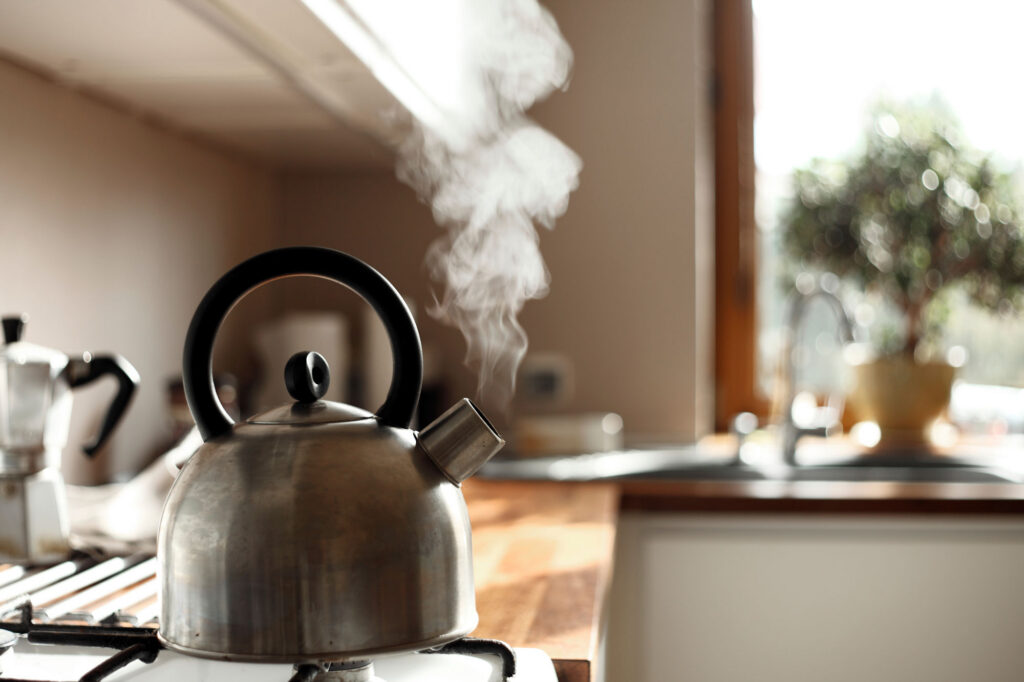
A tea kettle is one of the most frequently used appliances in a tea lover’s kitchen. Whether you’re preparing a strong cup of black tea in the morning, a delicate green tea in the afternoon, or a soothing herbal infusion before bed, your kettle may be heating water several times a day.
But how often does it actually need cleaning?
Because most tea kettles are used only for heating water, it’s easy to assume they don’t get dirty. After all, you’re not brewing tea leaves inside the kettle or adding milk, sugar, or other ingredients.
However, even clean drinking water contains dissolved minerals that can gradually accumulate on the kettle’s interior. Over time, these deposits may form white flakes, chalky patches, or a stubborn layer of limescale.
You might also notice water spots on the exterior, residue around the spout, or mineral buildup collecting on a removable filter.
For a kettle used daily, a good starting point is light cleaning after use, inspecting the interior weekly, and descaling approximately once a month. If you have particularly hard water, you may need to descale more often. With soft water or occasional use, cleaning every two or three months may be sufficient.
The ideal schedule depends on your water quality, kettle material, and how frequently you use it.
Here’s how often to clean an electric or stovetop tea kettle, how to recognize when descaling is necessary, and how to maintain your kettle without cleaning it more aggressively than needed.
🫖 How Often Should You Clean a Tea Kettle?
There are two important types of kettle maintenance: ordinary cleaning and descaling.
Ordinary cleaning involves removing water splashes, dust, residue, and other material that collects on the kettle’s surfaces.
Descaling is a more specific process that removes mineral deposits from the interior.
Because these tasks address different problems, they don’t necessarily need to be performed at the same frequency.
KitchenAid recommends making light kettle cleaning a daily habit and descaling approximately once a month when the appliance is used every day.
Fellow similarly recommends cleaning its electric kettles at least monthly and adjusting descaling frequency according to water hardness.
These recommendations provide a useful starting point for most households.
A practical maintenance schedule looks like this:
- After each use: Empty leftover water when appropriate, allow the kettle to cool, and wipe away exterior splashes as needed.
- Every week or two: Inspect the interior, lid, spout, and removable filter for mineral buildup or residue.
- Approximately once a month: Descale a frequently used kettle when recommended by the manufacturer, particularly if deposits are developing.
- Every two to three months: Consider this interval for lightly used kettles or those supplied with relatively soft water, provided the interior remains clean.
- Whenever necessary: Clean sooner if you notice substantial limescale, unusual residue, or a performance problem associated with mineral buildup.
These intervals aren’t rigid rules.
A kettle used six times a day in a hard-water area may need more attention than one used only on weekends with naturally soft water.
The best approach combines manufacturer guidance with regular inspection.
🪨 Why Do Tea Kettles Need Descaling?
The most common reason for cleaning a tea kettle’s interior is limescale.
Limescale develops when certain dissolved minerals in water form solid deposits during heating.
These deposits consist mainly of calcium carbonate and are especially common in areas with hard water.
Water hardness describes the concentration of dissolved calcium and magnesium.
As mineral-rich water is repeatedly heated, some calcium compounds can form solid residue that sticks to the kettle’s bottom and walls.
Over time, the deposits may become thicker.
At first, you might notice a thin white film covering the heating plate of an electric kettle.
Later, small flakes may begin appearing in the water, or a crusty ring may develop along the waterline.
This isn’t necessarily an indication that the water is unsafe.
Ordinary limescale is a common result of heating drinking water.
However, substantial deposits can affect the kettle’s operation.
Fellow explains that heavy scale can contribute to reduced heating efficiency, delayed temperature readings, overboiling, or inaccurate temperature measurements in some electric kettles.
These problems are particularly relevant for variable-temperature models designed to heat water to precise settings for different teas.
Regular descaling helps remove mineral deposits before they become difficult to manage.
It also allows you to inspect the kettle for other issues that may not be immediately obvious from the outside.
💧 How Often Should You Descale a Kettle With Hard Water?
If your home has hard water, you’ll probably need to descale your kettle more frequently.
Hard water contains higher concentrations of calcium and magnesium, making mineral deposits more likely to form.
A kettle used several times daily may develop visible scale in a relatively short period.
Fellow recommends considering monthly descaling in hard-water conditions, while KitchenAid notes that more frequent cleaning may be necessary when mineral content is especially high.
For a frequently used kettle in a hard-water area, checking the interior weekly and descaling approximately every two to four weeks can be a practical starting point, subject to the manufacturer’s recommendations.
The exact schedule should depend on how quickly deposits appear.
If you notice a white film after two weeks, there’s little benefit in waiting another month before cleaning it.
On the other hand, if the interior remains relatively clean after four weeks, you may not need to descale more aggressively.
Glass kettles make this particularly easy to monitor because mineral deposits are visible through the transparent walls.
Stainless-steel kettles require a little more attention because you usually need to open the lid to inspect the interior.
Water treatment may also influence how quickly limescale develops.
However, ordinary activated-carbon filters don’t necessarily remove much of the calcium and magnesium responsible for hard water.
If mineral buildup is a persistent problem, a water-treatment system specifically designed to reduce hardness may be more effective.
For more information, see Tap Water vs. Filtered Water for Tea: Which Makes a Better Cup?.
🌿 How Often Should You Clean a Kettle With Soft Water?
If you live in an area with naturally soft water, limescale may develop much more slowly.
Soft water contains relatively low concentrations of calcium and magnesium.
Because fewer hardness minerals are present, there may be less material available to form deposits during heating.
According to Fellow, a kettle used with soft water may only require descaling every two or three months.
However, this doesn’t mean the kettle should be ignored between treatments.
Dust, fingerprints, water splashes, and other residue can still accumulate on the exterior.
The interior may also develop minor deposits over time, particularly if the kettle is used frequently.
Continue inspecting it every week or two.
If the heating surface remains clean and the kettle operates normally, there’s generally no reason to use acidic descalers more frequently than the manufacturer recommends.
Routine inspection is more useful than repeatedly cleaning a kettle that has no noticeable buildup.
⚡ How Often Should You Clean an Electric Tea Kettle?
Electric kettles are popular because they’re convenient, heat water quickly, and often include automatic shutoff.
Many also provide variable-temperature settings for green, white, oolong, and black tea.
However, their heating components can accumulate mineral deposits over time.
Most electric kettles have a metal heating plate at the bottom of the water chamber.
In some models, this surface is particularly prone to visible limescale.
A monthly cleaning and descaling routine is a reasonable starting point for an electric kettle used daily.
However, the manufacturer’s instructions should determine the cleaning method and minimum maintenance requirements.
For routine care, unplug the kettle and allow it to cool before wiping the exterior with a soft, slightly damp cloth.
Don’t immerse the kettle, power base, cord, or electrical connections in water unless the manufacturer explicitly states that the product is designed for that treatment.
When inspecting the interior, pay attention to the bottom heating surface and any removable filter.
A chalky film or rough mineral deposits indicate that descaling may be needed.
Some electric kettles also provide cleaning alerts or display unusual behavior when scale accumulates.
If the kettle begins heating more slowly or its temperature readings become unreliable, mineral buildup may be contributing.
However, these symptoms can also indicate other problems.
If cleaning doesn’t resolve the issue, consult the manufacturer rather than assuming repeated descaling will fix it.
🔥 How Often Should You Clean a Stovetop Tea Kettle?
Stovetop kettles have different maintenance needs because they don’t contain the same electrical components as electric models.
However, the frequency of interior descaling is still determined largely by water hardness and usage.
A stainless-steel stovetop kettle used every day may benefit from monthly descaling, with more frequent treatments necessary when mineral deposits appear quickly.
If the water is soft and the kettle is used occasionally, longer intervals may be appropriate.
Exterior cleaning is another consideration.
Stovetop kettles often sit near cooking burners, where they can accumulate grease, food splashes, and other kitchen residue.
Over time, this buildup may become sticky or develop unpleasant odors when heated.
Wiping the exterior regularly can prevent grease and fingerprints from becoming difficult to remove.
However, wait until the kettle has cooled completely before cleaning it.
The correct products also depend on the kettle’s material.
Stainless steel, enamel, aluminum, and copper have different care requirements.
A vinegar solution suitable for one kettle may be inappropriate for another.
Always follow the manufacturer’s instructions, particularly when the kettle has an enamel coating or a decorative exterior.
🥇 Does Kettle Material Change the Cleaning Schedule?
Kettle material can influence how easily deposits are noticed and how the appliance should be cleaned.
However, it usually doesn’t change the underlying cause of limescale.
Mineral deposits can develop inside stainless-steel, glass, and other compatible water-heating vessels.
The most important factors remain water hardness and frequency of use.
Stainless-steel kettles often conceal minor buildup until you look inside.
Because of this, regular inspection is important even when the kettle appears clean from the outside.
Glass kettles reveal mineral deposits immediately, making it easier to recognize when descaling is necessary.
However, this transparency can also make small amounts of residue seem more noticeable.
A few water spots on the glass don’t automatically require a full descaling treatment.
Enameled kettles can be relatively easy to maintain when their coatings remain intact, but abrasive cleaning methods may damage the surface.
Aluminum and copper kettles require additional caution because certain acidic cleaning solutions may react with their materials.
In every case, use a cleaning schedule based on the kettle’s condition and a method approved for its construction.
If you’re considering a new kettle, our How to Choose a Tea Kettle guide explains how materials, heating methods, and maintenance requirements compare.
🔍 Signs Your Tea Kettle Needs Cleaning Sooner
Even when you follow a regular cleaning schedule, certain changes suggest that the kettle deserves attention before its next planned maintenance.
The most obvious is visible mineral buildup.
A thin white film, loose flakes, or rough deposits on the heating surface are signs that limescale is accumulating.
You may also notice a chalky ring near the usual waterline.
These deposits can become more difficult to remove when allowed to accumulate over time.
Another warning sign is a change in heating performance.
Some kettles may take longer to heat water when substantial scale develops.
Variable-temperature models may also show delayed or inaccurate temperature readings.
However, don’t assume that every heating problem is caused by limescale.
Electrical faults, damaged controls, and other mechanical problems require separate attention.
A removable scale filter that’s becoming clogged is another reason to clean sooner.
If mineral particles are collecting around the spout or appearing in the water, inspect and clean the filter according to the manufacturer’s instructions.
Unpleasant odors also deserve investigation.
A lingering vinegar smell after descaling may indicate incomplete rinsing, while a musty smell could be associated with residue or moisture.
However, a burning electrical smell, smoke, sparks, or melted components are not ordinary cleaning problems.
If an electric kettle produces these warning signs, stop using it immediately and disconnect the power if it’s safe to do so.
Cleaning should never be used as a substitute for addressing an unsafe appliance.
🧽 How to Maintain a Kettle Between Descaling Treatments
Regular maintenance doesn’t have to involve a lengthy cleaning session.
Most of the time, a few small habits are enough to keep the kettle in good condition.
Begin by using fresh, safe drinking water whenever you prepare tea.
Avoid repeatedly boiling the same small quantity of water until much of it has evaporated.
Evaporation leaves dissolved minerals behind, which can contribute to increasingly concentrated mineral deposits.
After using the kettle, allow it to cool before handling or cleaning.
If the manufacturer recommends emptying leftover water, pour it away once the kettle has cooled sufficiently.
For the exterior, use a soft cloth to remove water splashes, fingerprints, and dust as needed.
Abrasive cleaning pads aren’t usually necessary and may damage the finish.
Inspect the removable filter periodically if your kettle includes one.
KitchenAid recommends cleaning its compatible scale filters under hot water with a soft brush or cloth, with more frequent attention in hard-water areas.
Allow the kettle and any removable components to dry according to the manufacturer’s instructions.
The goal isn’t to perform a complete wash every time you prepare a cup of tea.
It’s to prevent residue from accumulating and recognize when a deeper cleaning treatment is necessary.
🍋 How Often Should You Use Vinegar or Citric Acid?
Vinegar and citric acid are commonly used to remove mineral deposits from compatible kettles.
Both contain acids that can dissolve calcium carbonate, which makes up much of ordinary limescale.
However, there’s no advantage to using these cleaners excessively when the kettle doesn’t need descaling.
A reasonable schedule for many frequently used kettles is approximately once a month, adjusted according to water hardness and manufacturer guidance.
If the interior remains clean, you may be able to wait longer.
If thick deposits appear after only a couple of weeks, more frequent treatment may be appropriate.
The correct concentration and soaking time depend on the kettle.
KitchenAid recommends a diluted vinegar solution containing one part vinegar and three parts water for certain models.
Fellow recommends a different concentration and treatment time for its compatible kettles.
These variations matter.
Using a stronger solution than recommended won’t necessarily improve the result and may be unsuitable for seals, coatings, and other components.
Always rinse thoroughly after descaling, following any required fresh-water boiling cycles.
Avoid steel wool, knives, metal scrapers, and other abrasive tools.
Gentle, approved descaling is preferable to scraping thick mineral deposits from the heating surface.
If you’re using a commercial kettle descaler, follow the product’s instructions and confirm compatibility with your particular appliance.
🍵 Can Limescale Affect the Taste of Tea?
Limescale is mainly a maintenance issue, but mineral deposits and the water that causes them can also be relevant to tea flavor.
Tea is made almost entirely of water, so its mineral composition has an important influence on the finished infusion.
Calcium and magnesium can interact with compounds extracted from tea leaves, affecting flavor, appearance, and mouthfeel.
Hard water can sometimes produce a duller or less fragrant cup.
Certain teas may also develop a visible surface film when brewed with mineral-rich water.
However, a small amount of limescale inside the kettle doesn’t automatically mean the tea will taste unpleasant.
The composition of the water itself may have a greater effect than a thin mineral film.
Heavy deposits can release particles into the water and interfere with the operation of some kettles.
Cleaning helps eliminate these avoidable problems, but it doesn’t necessarily change the mineral content of fresh water added afterward.
This distinction is important when troubleshooting tea that tastes unusually bitter, flat, or weak.
If the kettle is clean but the tea still tastes different from what you expect, the water supply or brewing method may be contributing.
For more information, see Does Water Quality Affect Tea? How Minerals, Hardness, and pH Change the Flavor.
📅 A Simple Tea Kettle Maintenance Routine
Keeping your kettle clean is easier when the routine fits naturally into the way you make tea.
For someone who prepares several cups a day, a little attention throughout the month is usually more useful than allowing scale to accumulate for a long time.
After brewing, use the kettle normally and handle any leftover water according to the manufacturer’s instructions.
Wipe away visible exterior splashes when needed.
Once a week, look inside the kettle.
You don’t need to dismantle the appliance or perform a special cleaning treatment.
Simply inspect the heating surface, waterline, lid, and removable filter for deposits.
If the interior looks clean, continue using the kettle.
If you notice a developing chalky film, consider whether it’s time for an approved descaling treatment.
At the end of the month, reassess the kettle’s condition.
For a frequently used model, this is a convenient time to perform the manufacturer-recommended cleaning or descaling procedure.
If you have very hard water, you may already have needed to clean it earlier.
If you have soft water and little buildup, your model may require only routine maintenance at that point.
The purpose of this approach is consistency rather than strict adherence to a calendar.
A regular habit of looking inside the kettle can prevent mineral deposits from becoming excessive without encouraging unnecessary cleaning.
❓ Frequently Asked Questions
How often should you clean an electric tea kettle?
For a kettle used daily, light exterior cleaning as needed and regular interior inspection are sensible habits. KitchenAid recommends descaling approximately once a month for daily use, while Fellow recommends cleaning its electric kettles at least monthly. The ideal frequency depends on water hardness and the manufacturer’s instructions.
Should you clean a tea kettle every day?
You don’t generally need to perform a complete wash or descaling treatment every day. However, emptying leftover water when appropriate and wiping away exterior splashes can be useful daily habits. More thorough cleaning should follow the manufacturer’s recommendations and the amount of buildup present.
How often should you descale a kettle in a hard-water area?
Monthly descaling is a common starting point, but a heavily used kettle may need treatment every two to four weeks if deposits develop rapidly. Inspect the interior regularly and follow your manufacturer’s instructions rather than waiting for thick scale to accumulate.
How often should you descale a kettle with soft water?
A kettle used with relatively soft water may need descaling only every two or three months, particularly if it’s used occasionally. Continue inspecting the interior for deposits, since soft water doesn’t always eliminate mineral buildup completely.
How do you know when your kettle needs descaling?
Look for white flakes, chalky deposits, a rough mineral film, or a crust forming around the heating surface. In some electric kettles, substantial buildup can contribute to slower heating or inaccurate temperature readings. These signs may indicate that descaling is needed sooner than usual.
What happens if you never descale a kettle?
Mineral deposits may gradually accumulate, particularly with hard water. Heavy buildup can reduce heating efficiency, contribute to temperature-control problems in some models, and release loose particles into the water. Regular descaling helps maintain the kettle’s performance.
Can you descale a kettle too often?
Unnecessary acidic cleaning may expose certain materials, finishes, and components to more treatment than the manufacturer recommends. Follow the approved procedure and frequency rather than repeatedly descaling an already clean kettle. More frequent treatment should be based on actual buildup and manufacturer guidance.
Is it safe to use a kettle with limescale?
A small amount of ordinary limescale isn’t automatically evidence that the water is unsafe. However, substantial deposits can affect kettle performance and should be removed according to the manufacturer’s instructions. Rust, chipped coatings, damaged components, or unusual residue require separate attention.
Should you empty a kettle after every use?
Emptying cooled leftover water can help reduce repeated heating and evaporation that concentrate minerals. However, specific recommendations vary by appliance. Follow the manufacturer’s instructions and use fresh, safe drinking water for your tea.
Does filtered water mean you don’t have to descale?
Not necessarily. Many common activated-carbon filters improve taste and odor without substantially reducing hardness minerals. Unless your water treatment specifically reduces calcium and magnesium, limescale may continue forming.
How often should you clean the filter in an electric kettle?
Inspect the removable scale filter regularly, particularly when you have hard water. Clean it when mineral particles or residue begin collecting. Some manufacturers recommend rinsing the filter under hot water and using a soft brush to remove deposits.
Should you use vinegar every time you clean a kettle?
No. Vinegar is primarily useful for descaling compatible kettles. Routine maintenance may require only a soft damp cloth, ordinary rinsing, or another approved cleaning method. Use vinegar only when the manufacturer permits it and descaling is needed.
Is monthly kettle cleaning enough?
For many households, monthly descaling combined with light maintenance and regular inspection is a reasonable routine. However, a kettle used frequently with very hard water may need more attention, while one used occasionally with soft water may need less.
🌸 Final Thoughts
A tea kettle doesn’t need complicated daily maintenance, but it does benefit from regular attention.
For most households, the simplest routine is to keep the exterior clean, inspect the interior every week or two, and descale approximately once a month when the kettle is used frequently.
However, water hardness makes a significant difference.
If your water contains substantial amounts of calcium and magnesium, limescale may develop quickly enough to require more frequent treatment.
With softer water or occasional use, you may only need to descale every two or three months.
The important thing is to pay attention to the condition of the kettle rather than relying exclusively on a fixed schedule.
White mineral deposits, chalky flakes, and rough patches along the heating surface are signs that cleaning may be necessary.
For electric kettles, changes in heating performance or temperature accuracy can also be worth investigating.
When descaling, always use a method approved for your specific appliance.
Diluted vinegar, citric acid, and commercial kettle descalers can all be effective for compatible materials, but the correct concentration and soaking time vary.
Avoid aggressive scrubbing and don’t expose electrical components to water.
A little routine maintenance can prevent heavy mineral buildup and make future cleaning much easier.
More importantly, a clean, well-maintained kettle helps you prepare hot water reliably, leaving you free to focus on the tea itself.
Whether your favorite is a robust breakfast blend, a delicate green tea, or a comforting evening herbal infusion, keeping your kettle in good condition is a small habit that can make your daily tea routine more enjoyable.
🔗 Related Articles
- How to Choose a Tea Kettle: Electric vs. Stovetop, Materials & Features
- Tea Gear & Accessories: Teapots, Kettles, Infusers, Cups & More
- Does Water Quality Affect Tea? How Minerals, Hardness, and pH Change the Flavor
- Tap Water vs. Filtered Water for Tea: Which Makes a Better Cup?
- How to Brew Tea: Water Temperature, Steeping Times & Brewing Methods
- Best Water Temperature for Tea: A Complete Brewing Guide by Tea Type
📚 Sources & Further Reading
- KitchenAid — How to Clean an Electric Kettle
- Fellow — Is Descaling Necessary? How Often to Descale a Kettle
- Fellow — How to Clean, Maintain and Descale an Electric Kettle
- KitchenAid Product Help — Descaling an Electric Kettle
- KitchenAid Product Help — Smells and Odors: Electric Kettle
- Breville — Frequently Asked Questions About Kettle Maintenance