A good tea infuser makes brewing loose-leaf tea wonderfully simple. You add your favorite tea leaves, place the infuser in hot water, allow the tea to steep, and remove it when your drink reaches the perfect strength. But after several cups, you may notice that your once-shiny infuser has developed a brown coating, tiny leaves are trapped in the mesh, or an unpleasant smell has started lingering between uses.
These problems are common, particularly if you drink tea every day.
Black tea, green tea, oolong, rooibos, and herbal blends all leave different types of residue behind. Fine tea particles can become lodged in small openings, while tannins and other compounds gradually create brown stains on metal surfaces.
Fortunately, most tea infusers are easy to maintain with a little regular attention.
The best way to clean a tea infuser is to empty the used leaves, rinse the infuser thoroughly with warm water, gently wash it with mild dish soap, and allow it to dry completely. For stubborn brown stains, a manufacturer-approved baking soda soak can help restore stainless-steel infusers without damaging their delicate mesh.
The exact method depends on the material and design. Stainless-steel baskets, mesh tea balls, silicone infusers, and infusers built into travel bottles may need slightly different care.
Here’s how to clean a tea infuser properly, remove stubborn residue, clear clogged mesh, and keep your brewing equipment in good condition.
🍵 Why Do Tea Infusers Need Cleaning?
A tea infuser comes into direct contact with hot water and tea leaves every time you brew a cup.
During steeping, the water extracts compounds from the leaves that give tea its characteristic flavor, aroma, color, and mouthfeel.
Some of these compounds can also leave residue behind.
Tea contains polyphenols, including tannins and related compounds, that contribute to the color and astringency of many infusions. Over time, these substances can form a brown film on the infuser’s surface.
This is especially noticeable with frequently used stainless-steel baskets and tea balls.
Small leaf fragments can also become trapped in fine mesh or narrow perforations.
Teas containing very small particles, such as rooibos, finely broken black tea, and certain herbal blends, are particularly likely to lodge in tiny openings.
If these particles are left to dry, they become more difficult to remove.
Tea blends containing fruit pieces, oils, or other flavoring ingredients may leave additional residue.
Cleaning prevents these deposits from accumulating and makes sure your next cup isn’t affected by the remains of the previous one.
A clean infuser also allows water to circulate through its openings as intended.
For more information about how infusers work, see How to Use a Tea Strainer: Types, Tea Infusers & Brewing Tips.
🫖 How to Clean a Tea Infuser After Every Use
For most everyday tea infusers, cleaning doesn’t need to involve special products or lengthy soaking.
A simple routine after each brewing session is usually enough to prevent stubborn residue from developing.
The following method works for many stainless-steel infusers and other washable designs, although you should always follow the manufacturer’s instructions for your particular product.
Step 1: Let the Infuser Cool
After removing the infuser from your tea, place it on a clean saucer, drip tray, or other heat-safe surface.
Allow it to cool until you can handle it comfortably.
Metal infusers can become very hot during brewing, especially when submerged in near-boiling water.
Avoid trying to open a hot tea ball or squeeze wet leaves out of an infuser immediately after steeping.
Once the infuser is cool enough to handle safely, begin cleaning.
Step 2: Remove the Used Tea Leaves
Empty the wet tea leaves into the trash or an appropriate compost container.
Many plain tea leaves can be composted, although blends containing noncompostable packaging or other unsuitable ingredients should be handled according to local guidance.
If you’re using a basket infuser, turn it upside down and tap it gently to release the leaves.
For a tea ball, open the clasp carefully and remove the used tea.
Avoid forcing large amounts of wet leaves down the sink drain.
Tea leaves can collect in plumbing, particularly when combined with other kitchen debris.
Removing as much loose material as possible before rinsing makes the rest of the cleaning process easier.
Step 3: Rinse With Warm Water
Hold the infuser beneath warm running water to remove loose particles.
For a fine-mesh basket, it can help to direct the water from the outside of the basket toward the inside.
This reverse flow may dislodge particles that became trapped while the tea was steeping.
Rotate the infuser so the water reaches its entire surface.
Pay attention to the bottom, seams, rim, and any areas where the mesh joins the frame.
If you’re cleaning a tea ball, open it and rinse both halves thoroughly.
The goal is to remove visible leaf fragments before they dry and harden.
Step 4: Wash With Mild Dish Soap
Apply a small amount of mild dish soap to a soft sponge or brush and gently clean the infuser.
Warm, soapy water helps remove tea residue and other deposits that may not disappear through rinsing alone.
A soft-bristled brush is particularly useful for fine mesh.
Avoid scrubbing aggressively, since delicate screens can bend or become damaged.
If your infuser has a handle, hinge, clasp, or removable lid, clean those areas as well.
Food residue can collect in small spaces that are easy to overlook.
Many stainless-steel infusers are dishwasher-safe, but that doesn’t mean every tea infuser should go into the dishwasher.
Check the manufacturer’s instructions before using a machine-washing cycle.
Step 5: Rinse Thoroughly
Rinse the infuser under clean running water until all soap residue has been removed.
This step is especially important for fine-mesh infusers because soap can remain trapped in the tiny openings.
Leftover detergent may affect the flavor or aroma of your next cup.
If the infuser contains removable parts, rinse them separately.
Check the seams, hinges, and any small corners where cleaning solution might collect.
Step 6: Allow the Infuser to Dry Completely
After rinsing, shake off excess water and place the infuser on a clean drying rack or towel.
Make sure air can circulate around the mesh and interior surfaces.
If your tea ball opens into two halves, leave it open while drying.
If your basket has a removable lid, dry the two pieces separately.
Storing an infuser while it’s still damp can encourage unpleasant odors and leave moisture trapped in small crevices.
Once completely dry, the infuser can be stored with the rest of your tea accessories.
🟤 How to Remove Brown Tea Stains From an Infuser
Even with regular washing, stainless-steel tea infusers may eventually develop brown discoloration.
This is especially common with strong black teas and other richly colored infusions.
The staining usually develops gradually, beginning as a light golden-brown film before becoming darker and more noticeable.
Although an ordinary tea stain doesn’t automatically make the infuser unsafe, removing the residue can improve its appearance and help prevent buildup.
For stubborn stains on compatible stainless-steel infusers, baking soda is a practical option.
FORLIFE, a manufacturer of stainless-steel tea infusers, recommends using baking soda dissolved in warm water to clean tea stains when necessary.
Saki also recommends a baking soda soak for stubborn residue on certain stainless-steel mesh filters.
How to Clean an Infuser With Baking Soda
Begin by checking whether the manufacturer permits a baking soda treatment.
For a compatible stainless-steel infuser, prepare a bowl of warm water and dissolve a small amount of baking soda.
Saki recommends approximately one tablespoon of baking soda in warm water for its particular mesh filter, followed by a 15-minute soak.
Use the amount and soaking time recommended for your own infuser if they differ.
Place the infuser in the solution and allow the stained surfaces to soak.
Afterward, use a soft brush or sponge to gently loosen any remaining discoloration.
Rinse thoroughly under running water and allow the infuser to dry completely.
If the stains remain, repeat the approved treatment rather than scraping the mesh with a metal tool.
Brown tea discoloration can sometimes be persistent, especially when it has accumulated over months of use.
A few remaining stains aren’t necessarily a reason to discard an otherwise clean, undamaged infuser.
🧴 Can You Use Vinegar to Clean a Tea Infuser?
White vinegar is another household product sometimes used for cleaning tea accessories.
Its acidity can help dissolve certain mineral deposits and may loosen some types of residue.
Some infuser manufacturers recommend vinegar for particular products.
For example, Float2infuse permits vinegar for removing tea-related staining from its compatible stainless-steel and silicone infusers.
However, vinegar isn’t the best choice for every tea stain or every material.
Brown tea film is different from the white mineral scale that develops inside kettles.
For ordinary brown staining on stainless-steel mesh, warm soapy water or a manufacturer-approved baking soda treatment may be more suitable.
Vinegar can be useful when the infuser has developed chalky mineral deposits, but prolonged acidic soaking may be inappropriate for plated metal, decorative coatings, certain fittings, or other sensitive components.
If your infuser’s manufacturer permits vinegar cleaning, follow its recommended dilution and soaking time.
Rinse thoroughly afterward so the next cup of tea doesn’t develop an unwanted vinegar flavor.
Don’t mix vinegar with baking soda in an attempt to create a more powerful cleaner. The two react with one another, reducing the effectiveness of the acid for dissolving mineral deposits.
Never mix vinegar with chlorine bleach, as the reaction can release dangerous chlorine gas.
🧽 How to Clean a Fine-Mesh Tea Infuser
Fine-mesh tea infusers are particularly useful for loose-leaf brewing because they can catch small particles that might otherwise escape into your mug.
However, the tiny openings can also trap tea residue.
This is especially noticeable when brewing rooibos, finely chopped herbs, or broken-leaf teas.
If your mesh basket looks clogged, begin by emptying it and rinsing the screen from both sides.
Directing water through the mesh in the opposite direction from the usual brewing flow can help loosen particles lodged in the openings.
Next, use a clean, soft-bristled brush.
Gently brush the surface rather than pressing the bristles forcefully through the screen.
A small kitchen brush or soft toothbrush reserved for cleaning tea equipment can work well.
Avoid inserting needles, pins, toothpicks with sharp tips, or metal picks into individual holes.
These tools may stretch or puncture delicate mesh, eventually allowing more tea particles to escape into the cup.
If residue remains stuck after brushing, soak the infuser in warm, soapy water for a short period before trying again.
For persistent tea stains, follow the manufacturer’s approved deep-cleaning method.
The objective is to clear the mesh without bending or enlarging its openings.
🥄 How to Clean a Stainless-Steel Tea Ball
Stainless-steel tea balls are popular because they’re inexpensive, reusable, and easy to store.
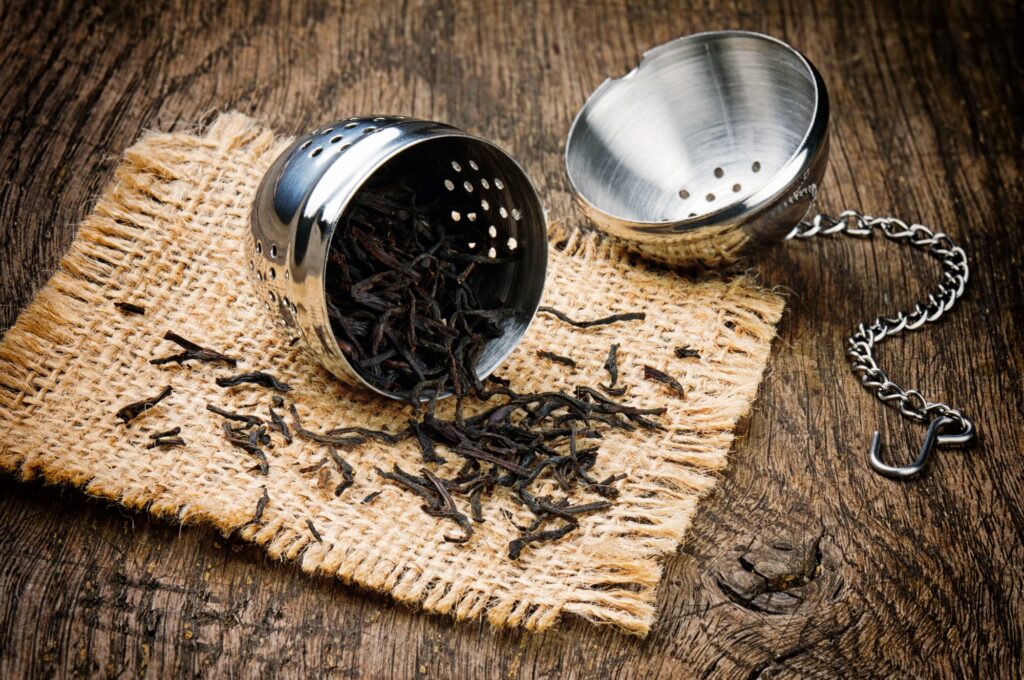
Most consist of two perforated halves connected by a hinge or clasp. Some also have a short chain or handle that allows the ball to hang inside a mug.
Their compact design makes them convenient, but the hinge and clasp can collect small pieces of tea.
After each use, allow the tea ball to cool, open it, and discard the wet leaves.
Rinse both halves thoroughly under warm water.
Pay particular attention to the hinge and the narrow area where the two halves meet.
A soft brush can help remove small particles from the perforations.
If the tea ball has a chain, wipe or rinse it as appropriate for the material.
For stubborn brown staining, a manufacturer-approved baking soda soak may be useful if the tea ball is made from compatible stainless steel.
Avoid bending the hinge or forcing the clasp.
If the tea ball no longer closes securely, damaged edges become sharp, or the mesh begins to separate from the frame, replacing it is safer than continuing to use a broken infuser.
A properly maintained tea ball can last a long time, although a larger basket infuser often provides more room for whole leaves to expand during brewing.
🌿 How to Clean a Silicone Tea Infuser
Silicone tea infusers are often designed in playful shapes, making them popular gifts and convenient accessories for casual tea drinkers.
They may resemble animals, flowers, fruits, or other decorative objects, with small holes that allow water to circulate around the leaves.
Although food-grade silicone is generally easy to wash, these infusers can develop stains or retain odors.
The cleaning method depends on whether the infuser is made entirely from silicone or includes stainless steel, plastic, glued components, or other materials.
For routine cleaning, empty the leaves and wash the infuser with warm water and mild dish soap.
Use a soft brush to remove particles from small openings or decorative details.
If the design comes apart, separate the pieces according to the manufacturer’s instructions.
Rinse thoroughly and allow all surfaces to dry before reassembling.
Some silicone infusers are dishwasher-safe, but not every model has the same care requirements.
Float2infuse, for example, identifies its products as top-rack dishwasher-safe but recommends avoiding harsh cleaning chemicals and essential oils.
If a silicone infuser develops a persistent flavor or scent, consult the manufacturer’s cleaning instructions rather than attempting to cover the odor with a stronger fragrance.
Avoid using essential oils to deodorize the infuser. They can leave unwanted flavors and may be unsuitable for the material.
If the silicone becomes sticky, cracked, unusually brittle, or permanently contaminated by an unpleasant odor, replacement may be the better option.
🫙 How to Clean a Tea Infuser Bottle
Tea infuser bottles and travel tumblers need more thorough cleaning than a simple mesh basket because they often contain several components.
Depending on the design, a bottle may include a removable stainless-steel infuser, drinking lid, silicone gasket, threaded cap, and insulated body.
Each part can collect tea residue.
After using the bottle, remove the infuser and discard the leaves.
Wash the basket with warm water and mild dish soap, then rinse thoroughly.
Next, clean the bottle itself using a bottle brush or other tool recommended by the manufacturer.
Pay particular attention to the interior bottom, where tea residue may accumulate.
The lid and seals deserve extra attention.
Tea can collect beneath removable gaskets and around threads, eventually producing an unpleasant smell.
If the manufacturer permits removing the seal, take it out carefully, wash it separately, and allow it to dry completely.
Don’t pry apart components that aren’t designed to be removed.
Once everything is clean, allow the bottle, lid, seal, and infuser to dry before reassembly.
Some removable infusers and lids are dishwasher-safe even when the insulated bottle itself isn’t.
Always check which components can safely go into the dishwasher.
For more guidance on choosing and maintaining these products, see Best Tea Infuser Bottles: How to Choose the Right One.
🌸 How to Remove Lingering Odors From a Tea Infuser
Sometimes a tea infuser looks clean but still smells like the last tea you brewed.
This can happen with strongly flavored blends containing mint, spices, citrus oils, floral ingredients, or other aromatic additions.
Residue may remain in the mesh, under silicone seals, or around small joints.
If you switch from a strongly flavored herbal blend to a delicate white or green tea, you may notice those lingering aromas in the next cup.
Begin by washing the infuser thoroughly with warm water and mild dish soap.
Use a soft brush to clean difficult areas, then rinse well.
For compatible stainless-steel infusers, an approved baking soda soak may help remove remaining residue.
However, don’t assume every infuser can be soaked for long periods.
Silicone, decorative coatings, wood, bamboo, and plated components may require different care.
After cleaning, allow the infuser to dry completely in a well-ventilated area.
If the odor remains, inspect hidden areas such as hinges, seams, and removable gaskets.
A persistent smell may indicate trapped residue that needs more attention.
If the infuser develops a musty odor, visible mold, or discoloration that doesn’t resemble ordinary tea staining, don’t continue brewing with it until it can be thoroughly cleaned and inspected.
Some products with inaccessible crevices may need to be replaced.
🍃 Can You Use the Same Tea Infuser for Different Teas?
Yes. Most washable tea infusers can be used for several different types of tea.
A stainless-steel basket can brew black tea in the morning, green tea in the afternoon, and rooibos in the evening.
However, cleaning becomes more important when switching between very different flavors.
Strongly scented blends may leave aromatic residue that affects the next infusion.
For example, peppermint, cinnamon, chai spices, or heavily flavored fruit blends may leave lingering scents.
A delicate white tea could taste noticeably different if brewed in an infuser that still smells strongly of peppermint.
If you regularly enjoy both flavored and unflavored teas, consider washing the infuser thoroughly between different varieties.
Some tea enthusiasts prefer keeping a separate infuser for particularly aromatic blends.
This isn’t essential for most households, but it can be useful if you frequently brew delicate teas and want to minimize unwanted flavors.
A well-cleaned stainless-steel infuser should generally be versatile enough for everyday use.
💧 How to Prevent Tea Stains and Buildup
Preventing stubborn tea residue is usually easier than removing it after months of accumulation.
The most helpful habit is to clean the infuser soon after brewing.
Wet leaves release from the mesh much more easily than leaves that have dried in place.
After you’ve finished steeping, allow the infuser to cool and empty the leaves promptly.
Rinse the basket or tea ball thoroughly, then wash it according to the manufacturer’s instructions.
If you’re re-steeping the same leaves during one tea session, you don’t need to wash the infuser between each successive infusion. However, once you’re finished, remove the leaves and clean it rather than leaving damp tea sitting indefinitely.
Check fine-mesh openings occasionally for trapped fragments.
A quick rinse in the reverse direction can help prevent accumulation.
You should also pay attention to how the infuser dries.
An enclosed tea ball or tightly assembled infuser bottle can retain moisture in its seams and openings.
Allowing the components to dry separately helps keep them fresh between uses.
Finally, inspect the infuser periodically for discoloration, loose parts, damaged mesh, or corrosion.
A little regular maintenance can prevent a simple cleaning problem from becoming a reason to replace the equipment.
⏱️ How Often Should You Deep Clean a Tea Infuser?
The best cleaning schedule depends on how frequently you use the infuser and the types of tea you brew.
An infuser used several times a day will usually accumulate residue more quickly than one used occasionally.
Dark black teas, rooibos, and certain flavored blends may create more noticeable staining than some lighter infusions.
For ordinary use, wash the infuser after each completed tea session.
This removes wet leaves, tea residue, and other material before it has time to dry.
A deeper cleaning treatment is useful when you begin noticing persistent discoloration, clogged openings, or lingering odors that ordinary washing doesn’t remove.
For some people, that may mean an occasional baking soda soak every few weeks.
Others may only need to do it every couple of months.
There is no need to use acidic or alkaline cleaning solutions constantly when routine washing keeps the infuser in good condition.
Follow the manufacturer’s recommendations and let the actual condition of the infuser guide your cleaning routine.
🚫 Common Mistakes When Cleaning a Tea Infuser
One of the most common mistakes is leaving wet tea leaves inside the infuser long after brewing.
When the leaves dry, they may become firmly attached to the mesh, making cleaning unnecessarily difficult.
Another mistake is using abrasive tools.
Steel wool, stiff wire brushes, and sharp objects can scratch stainless steel, distort mesh, or damage protective finishes.
A soft brush is usually more suitable.
Some people also assume that every infuser can safely go into the dishwasher.
However, a stainless-steel basket with a plastic frame may have different care instructions from an all-metal tea ball.
Certain bamboo handles, wooden components, decorative finishes, or glued joints may not tolerate prolonged soaking or machine washing.
Using overly aggressive cleaning chemicals is another unnecessary risk.
Bleach, harsh degreasers, and other household cleaners can damage finishes or leave undesirable residues if used improperly.
Stick to mild dish soap and manufacturer-approved deep-cleaning methods.
Finally, don’t ignore signs that the infuser is physically deteriorating.
Loose mesh, rust, sharp edges, chipped coatings, and damaged components cannot always be corrected through cleaning.
If the infuser is no longer structurally sound or cannot be adequately cleaned, replacement may be the safest choice.
❓ Frequently Asked Questions
What is the best way to clean a tea infuser?
For most washable infusers, remove the used leaves, rinse thoroughly with warm water, wash gently with mild dish soap, and allow the infuser to dry completely. A soft brush helps remove trapped particles from fine mesh. Follow the manufacturer’s instructions for deeper cleaning.
How do you remove brown stains from a tea infuser?
For compatible stainless-steel infusers, a manufacturer-approved baking soda soak can help remove persistent tea stains. FORLIFE and Saki both recommend baking soda treatments for certain stainless-steel infusers. Rinse thoroughly and avoid abrasive scrubbing.
Can you clean a tea infuser with baking soda?
Yes, many stainless-steel infusers can be cleaned with baking soda dissolved in warm water. However, the appropriate quantity and soaking time depend on the product. Check the manufacturer’s instructions, particularly if your infuser has silicone, plastic, wood, or decorative components.
Can you clean a tea infuser with vinegar?
Some tea infusers can be cleaned with diluted white vinegar when the manufacturer permits it. Vinegar may be particularly useful for mineral deposits. However, it’s not suitable for every material, and brown tea residue may respond better to mild soap or an approved baking soda treatment.
Why is my tea infuser turning brown?
The brown discoloration usually comes from tea compounds gradually accumulating on the surface. Strong black teas and other richly colored infusions can leave noticeable staining over time. Regular washing helps prevent heavy buildup.
How do you get tea leaves out of a mesh infuser?
Empty the loose leaves, then rinse the mesh from both sides. Running water from the outside toward the inside can help push trapped particles back out of the openings. Use a soft brush for stubborn fragments and avoid sharp tools that could damage the mesh.
Can tea infusers go in the dishwasher?
Some can, but not all. Manufacturers such as FORLIFE and Finum identify certain stainless-steel infusers as dishwasher-safe. Other products have components that require hand washing. Check the specific care instructions before using the dishwasher.
How often should you wash a tea infuser?
Wash the infuser after each completed brewing session. If you re-steep the same leaves several times in one session, clean the infuser when you’re finished. Deeper cleaning is useful when persistent stains, odors, or clogged openings appear.
Why does my tea infuser smell bad?
A lingering odor may come from trapped tea residue, strongly flavored blends, or moisture remaining in seams and other hard-to-clean areas. Wash the infuser thoroughly, inspect hidden spaces, and allow every component to dry completely. Persistent musty odors may require further cleaning or replacement.
Can a dirty tea infuser affect the taste of tea?
Yes. Old tea residue, trapped particles, detergent, and lingering aromas can influence subsequent infusions. This may be especially noticeable when switching from strongly flavored blends to delicate green or white teas.
How do you clean a silicone tea infuser?
Wash it with warm water and mild dish soap, paying attention to small holes and seams. Rinse thoroughly and allow it to dry. Some silicone infusers are dishwasher-safe, but you should verify this with the manufacturer. Avoid harsh chemicals and unsuitable essential oils.
Can you use boiling water to clean a tea infuser?
Some all-metal infusers tolerate hot-water soaking, but not every material is designed for boiling temperatures outside normal brewing conditions. Plastic frames, adhesives, bamboo handles, and other components may require gentler treatment. Follow the manufacturer’s care instructions.
Should you replace a stained tea infuser?
Not necessarily. Ordinary brown staining doesn’t automatically mean the infuser is unsafe or unusable. If the product is structurally sound and can be thoroughly cleaned, continued use may be reasonable. Replace it if the mesh breaks, coatings flake, corrosion develops, or residue cannot be safely removed.
What is the easiest tea infuser to clean?
A wide stainless-steel basket with a simple design is one of the easiest options. Its open shape makes it straightforward to remove leaves, rinse the mesh, and reach most surfaces. Complicated decorative infusers and bottles with multiple seals may require more attention.
✨ Final Thoughts
Keeping a tea infuser clean is one of the easiest ways to maintain a pleasant loose-leaf tea routine.
Although brown staining and trapped leaf fragments are common, most infusers don’t need complicated cleaning procedures.
For everyday maintenance, simply remove the used leaves, rinse the mesh thoroughly, wash with mild dish soap, and allow the infuser to dry completely.
A soft brush can help clear small openings without damaging the delicate mesh.
If brown tea stains become difficult to remove, an approved baking soda treatment can be useful for many stainless-steel infusers.
However, the correct method depends on the material.
Stainless-steel baskets, tea balls, silicone infusers, and travel-bottle filters may have different cleaning requirements.
Avoid harsh chemicals, abrasive tools, and prolonged soaking unless the manufacturer permits them.
Regular cleaning also helps prevent old tea flavors from carrying over into future cups.
This can make a noticeable difference when you enjoy a variety of teas, particularly if you switch between strongly flavored blends and delicate loose-leaf varieties.
The best approach is to clean the infuser after each brewing session and use deeper cleaning methods only when stains or buildup make them necessary.
With a little care, a good tea infuser can remain a reliable part of your daily tea routine for years.
And when your brewing equipment is clean and ready to use, you can focus on the part that matters most: enjoying a fresh, flavorful cup of your favorite tea.
🔗 Related Articles
- How to Use a Tea Strainer: Types, Tea Infusers & Brewing Tips
- Tea Gear & Accessories: Teapots, Kettles, Infusers, Cups & More
- Best Tea Infuser Bottles: How to Choose the Right One
- Best Tea Makers: Electric Brewers, Kettles & Infusers Compared
- How to Choose a Tea Kettle: Electric vs. Stovetop, Materials & Features
- How to Brew Tea Bags: Water Temperature, Steep Time & Easy Tips
📚 Sources & Further Reading
- Saki — How to Clean the Magnetic Infuser or Mesh Filter
- FORLIFE — Hook Handle Tea Infuser & Dish Set: Care Instructions
- Finum — Brewing Basket: Materials and Cleaning Instructions
- Float2infuse — Tea Infuser Care and Maintenance
- Dominion Tea — Cleaning Tea Accessories for Optimal Tea Enjoyment
- Plum Deluxe — How to Clean a Tea Infuser