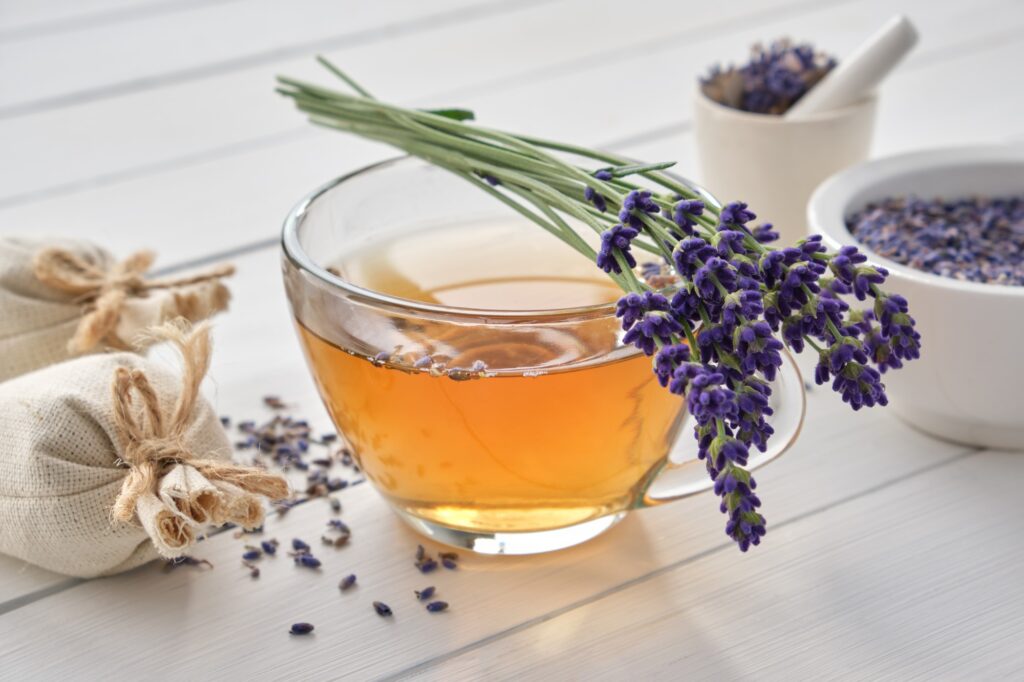
Lavender is best known for its unmistakable floral fragrance, but the same aromatic flowers can also be used to make a delicate herbal tea. When prepared carefully, lavender tea is fragrant, lightly sweet, and floral without needing added flavoring.
The key word is carefully.
Lavender has a powerful flavor. Too much can make a cup taste perfumed, bitter, or even slightly soapy. A small amount of culinary lavender, however, can produce a pleasantly aromatic infusion that pairs beautifully with honey, lemon, chamomile, mint, or other mild herbs.
Lavender tea is naturally caffeine-free when it is made only from lavender flowers, making it a popular choice for people looking for an herbal drink in the evening. Lavender is also frequently associated with relaxation and sleep, although the scientific evidence behind those claims is much more limited than many wellness articles suggest.
Here is what lavender tea tastes like, how to make it at home, which lavender to use, and what to know before adding it to your regular tea routine.
💜 What Is Lavender Tea?
Lavender tea is an herbal infusion made by steeping lavender flowers in hot water.
Because lavender does not come from the Camellia sinensis plant used to make black, green, white, and oolong tea, it is technically an herbal infusion or tisane rather than a true tea.
That distinction matters mainly when discussing caffeine.
Pure lavender contains no naturally occurring tea caffeine, so a cup made exclusively from lavender flowers is caffeine-free.
However, lavender is also frequently blended with:
- Black tea
- Green tea
- Earl Grey
- Chamomile
- Mint
- Lemon balm
- Rose
- Vanilla
- Rooibos
If lavender is blended with black or green tea, the finished drink will contain caffeine.
🌿 What Does Lavender Tea Taste Like?
Lavender tea has a distinctly floral flavor and aroma.
Depending on the variety and amount used, you may notice notes that seem:
- Floral
- Sweet
- Herbaceous
- Slightly minty
- Lightly woody
- Gently citrusy
Some lavender can also develop a mildly bitter or medicinal character, particularly when too much is used.
Lavender is one of those ingredients where more is usually not better.
The goal is to create a subtle floral cup rather than a drink that tastes like perfume.
Starting with a small quantity and increasing it gradually is one of the best ways to learn how much lavender you enjoy.
🌸 What Kind of Lavender Can You Use for Tea?
For tea, use culinary lavender that is specifically intended for food or beverage use.
English lavender, Lavandula angustifolia, is commonly used in cooking because its flowers are aromatic and edible.
Lavender sold for culinary purposes may be used in:
- Tea
- Baked goods
- Syrups
- Honey
- Sugar
- Lemonade
- Desserts
- Savory seasonings
Avoid assuming that every lavender plant, dried bouquet, or scented lavender product is appropriate for tea.
Flowers from florists, garden centers, roadside plantings, or decorative arrangements may have been treated with pesticides or other chemicals that were never intended for use on food.
When buying dried lavender for tea, look for packaging that clearly identifies it as culinary, food grade, or intended for use in foods and beverages.
🪻 Can You Use Lavender From Your Garden?
Possibly, but only when you know exactly what you are growing and how the plant has been treated.
Correct plant identification is important whenever you eat flowers.
If your lavender has been grown without pesticides or other products unsuitable for edible plants, the flowers can potentially be harvested and dried for culinary use.
Do not use flowers if you are uncertain about:
- The plant’s identity
- Whether it is an edible lavender variety
- Pesticide treatments
- Herbicide exposure
- Other chemical treatments
If you are uncertain, purchasing packaged culinary lavender is the simpler choice.
🫖 How to Make Lavender Tea
Lavender tea is very easy to prepare, but start with less lavender than you think you need.
For one cup, you will need:
- 8 ounces hot water
- About 1/2 to 1 teaspoon dried culinary lavender flowers
- Honey, lemon, or another addition, if desired
Heat the Water
Bring fresh water to a boil, then allow it to settle briefly.
Lavender is not as temperature-sensitive as delicate green tea, so you do not need to obsess over an exact temperature.
Hot water close to boiling works well.
Add the Lavender
Place the dried culinary lavender in a tea infuser or directly in your mug or teapot.
If this is your first time drinking lavender tea, begin with 1/2 teaspoon per cup.
You can always make your next cup stronger.
Pour in the Water
Pour about 8 ounces of hot water over the lavender.
Cover the cup if possible to help retain the fragrant aromatic compounds while the flowers steep.
Steep
Allow the lavender to steep for approximately 5 minutes.
Taste the tea.
If you would like a stronger floral flavor, let it infuse for another few minutes.
Strain
Remove the infuser or strain the flowers from the water before drinking.
If you normally brew loose herbs directly in the cup, see How to Use a Tea Strainer: Types, Tea Infusers & Brewing Tips for easy filtering methods.
📏 How Much Lavender Should You Use?
Lavender is much stronger than many other herbal tea ingredients.
For an 8-ounce cup, approximately 1/2 to 1 teaspoon of dried culinary flowers is a reasonable starting range.
You may eventually prefer more or less.
Large differences in lavender varieties, drying methods, freshness, and personal taste make it difficult to give one perfect measurement.
If your tea tastes overly perfumed, bitter, or soapy, use less lavender next time rather than trying to mask it with large amounts of sweetener.
⏱️ How Long Should Lavender Tea Steep?
About 5 to 10 minutes works well for most simple lavender infusions.
A shorter steep produces a gentler floral cup.
A longer steep produces a stronger herbal flavor and may draw out more bitterness.
Because lavender is powerful, tasting the tea during brewing is often more useful than following an exact timer.
🍯 Lavender Tea With Honey
Honey is one of the easiest additions to lavender tea.
Its sweetness softens lavender’s herbal edge and complements the floral aroma without overpowering it.
Brew the lavender first, strain it, and then stir in honey to taste.
A mild honey works especially well if you want the lavender itself to remain noticeable.
🍋 Lavender Tea With Lemon
Lavender and lemon make a bright, refreshing combination.
After brewing and straining the lavender, add:
- A squeeze of fresh lemon juice
- A thin lemon slice
- A small strip of lemon zest
Use lemon sparingly at first.
Too much acidity can overwhelm lavender’s delicate floral character.
🌼 Lavender and Chamomile Tea
Chamomile and lavender are commonly paired because both are caffeine-free herbal ingredients with gentle floral aromas.
Chamomile usually brings a softer, apple-like character, while lavender adds a more perfumed floral note.
For one cup, try using more chamomile than lavender.
For example:
- 1 teaspoon dried chamomile
- 1/4 to 1/2 teaspoon dried culinary lavender
- 8 ounces hot water
Steep for approximately 5 minutes and strain.
This ratio prevents the lavender from dominating the blend.
🌱 Lavender Mint Tea
Mint is another good partner for lavender because its cool freshness helps balance lavender’s floral character.
Try combining:
- 1 teaspoon dried peppermint or spearmint
- 1/4 teaspoon culinary lavender
- 8 ounces hot water
Steep for about 5 minutes.
The result is brighter and fresher than plain lavender tea and can also be enjoyable chilled.
🌹 Lavender and Rose Tea
Lavender and rose create an intensely floral blend, so moderation is especially important.
Use culinary-quality rose petals and lavender intended for food.
Start with something like:
- 1 teaspoon dried rose petals
- 1/4 teaspoon lavender
- 8 ounces hot water
If you enjoy floral herbal infusions, you may also like Rose Tea Recipe: How to Make Rose Petal Tea.
🍵 Lavender Green Tea
Lavender can also be blended with green tea.
In this case, the finished drink does contain caffeine.
Green tea is more sensitive to temperature than lavender, so prepare the blend using the temperature appropriate for the green tea rather than boiling water.
Use only a small pinch of lavender because its aroma can easily overwhelm delicate green-tea flavors.
For brewing guidance, see Best Water Temperature for Green Tea.
🖤 Lavender Black Tea
Lavender also pairs surprisingly well with black tea.
A small amount can add a floral layer to teas such as:
- Ceylon
- Darjeeling
- Earl Grey
- English Breakfast
Earl Grey is particularly compatible because its bergamot aroma already has a fragrant citrus-floral character.
Remember that any lavender blend containing black tea will contain caffeine.
🥛 Lavender Milk Tea
Lavender can also be used in creamy tea drinks.
One simple approach is to brew lavender a little stronger than usual, strain it, and combine the infusion with warm or frothed milk.
Vanilla, honey, and lavender pair particularly well.
Plant-based milks can also be used, though their flavors vary considerably. Oat milk tends to create a creamy, neutral base, while coconut milk introduces a more noticeable flavor of its own.
🧊 Can You Make Iced Lavender Tea?
Yes.
Lavender makes a refreshing iced herbal tea, especially when paired with lemon or mint.
To make it:
- Brew lavender slightly stronger than you would for a hot cup.
- Strain the flowers.
- Allow the infusion to cool.
- Refrigerate until chilled.
- Serve over ice.
Add lemon, honey, or mint if desired.
Because lavender can become overpowering when concentrated, it is better to begin moderately and adjust after chilling.
☕ Does Lavender Tea Have Caffeine?
Pure lavender tea is naturally caffeine-free.
Lavender itself does not contain caffeine.
However, always check the ingredient list of commercial lavender tea blends.
A product labeled “lavender tea” might contain:
- Black tea
- Green tea
- Oolong
- White tea
All of these come from Camellia sinensis and naturally contain caffeine.
Herbal blends containing only lavender and other caffeine-free herbs generally do not.
🌙 Does Lavender Tea Help You Sleep?
Lavender is strongly associated with bedtime, relaxation, pillows, aromatherapy, and sleep products.
That reputation is much stronger than the evidence specifically supporting lavender tea as a treatment for insomnia.
Research involving lavender has examined several different forms, including aromatherapy and concentrated oral lavender preparations. Those products are not the same thing as drinking a cup of lavender-flower tea.
Research on complementary approaches to sleep remains mixed and limited, and lavender tea should not be treated as a proven treatment for insomnia.
That does not mean a warm caffeine-free drink cannot be pleasant before bed.
For some people, the simple routine of brewing tea, putting away screens, sitting quietly, and drinking something warm can become part of a relaxing evening ritual.
It is more accurate to describe lavender tea as a caffeine-free beverage that may fit into a relaxing bedtime routine than as a sleep remedy.
😌 Does Lavender Tea Reduce Stress or Anxiety?
Claims about lavender and anxiety also need some context.
Some research has examined standardized oral lavender-oil preparations and other lavender products. Results from certain studies have been promising, but researchers have noted limitations, and those concentrated preparations are not equivalent to homemade lavender tea.
Evidence specifically demonstrating that ordinary lavender-flower tea treats anxiety is limited.
Enjoy lavender tea because you like the flavor and ritual.
Do not rely on it to treat an anxiety disorder or replace professional care.
🧪 What Does the Research Actually Say About Lavender?
Lavender has received considerable scientific attention, but “lavender” can mean many different things in research.
Studies may investigate:
- Lavender essential oil used in aromatherapy
- Standardized lavender-oil capsules
- Lavender extracts
- Topical lavender products
- Lavender tea
Those products have different concentrations and routes of exposure.
Results from a study of concentrated lavender oil cannot automatically be applied to a cup of tea made from a small amount of dried flowers.
The National Center for Complementary and Integrative Health notes that more high-quality research is needed before reliable conclusions can be made about many of lavender’s promoted health uses.
That is why claims that lavender tea “detoxes,” “heals the body,” “balances hormones,” or reliably treats anxiety or insomnia should be approached cautiously.
🛡️ Is Lavender Tea Safe?
Lavender consumed in the amounts normally used in foods is generally considered likely safe for most adults.
That does not mean every person will react the same way.
Possible adverse reactions to oral lavender products reported in research include gastrointestinal symptoms and headache.
People can also have sensitivities or allergies to plants.
If you have never consumed lavender before, start with a small amount rather than making an extremely concentrated infusion.
💊 Can Lavender Interact With Medications?
Herbal products can interact with medicines.
Lavender may theoretically increase drowsiness when combined with sedating medicines or other herbs with sedative effects.
If you take prescription medications, particularly medications that cause drowsiness, ask your health care professional whether regular use of lavender products is appropriate for you.
This becomes more important with concentrated supplements or extracts than with ordinary culinary use, but it is still sensible to mention all herbal products you use when discussing medications with a clinician.
🤰 Can You Drink Lavender Tea During Pregnancy?
There is not enough reliable information to establish the safety of medicinal lavender use during pregnancy or breastfeeding.
That uncertainty does not mean lavender is known to be dangerous. It means the research needed to establish safety is limited.
If you are pregnant or breastfeeding and want to drink lavender tea regularly or in concentrated amounts, discuss it with your health care provider first.
🧴 Can You Put Lavender Essential Oil in Tea?
Lavender essential oil and dried lavender flowers are not interchangeable ingredients.
Essential oil is highly concentrated.
A tea made from culinary lavender flowers is a dilute water infusion. Adding drops of essential oil produces a very different exposure.
For ordinary homemade lavender tea, use culinary lavender flowers, not essential oil.
🌱 Fresh vs. Dried Lavender for Tea
Both fresh and dried edible lavender flowers can be used, but dried lavender is easier to measure, store, and find year-round.
Fresh lavender usually has a somewhat softer flavor because it contains more water.
If substituting fresh flowers for dried, you may need a little more by volume.
Regardless of which form you use, make sure the lavender is correctly identified and has been grown for culinary use.
📦 How to Store Dried Lavender
Store dried culinary lavender in an airtight container away from:
- Sunlight
- Heat
- Humidity
- Strong odors
A cool, dark cupboard works well.
Like tea leaves and dried herbs, lavender gradually loses aroma over time.
If you open the container and can barely smell anything, the flowers may no longer produce a very flavorful cup.
🫖 Do You Need a Special Teapot?
No.
You can make lavender tea with very simple equipment:
- Mug
- Kettle
- Basket infuser or strainer
- Measuring spoon
A teapot is useful when preparing several cups, but it is not necessary.
If you are upgrading your brewing setup, How to Choose a Tea Kettle: Electric vs. Stovetop, Materials & Features explains the main options.
🚫 Common Lavender Tea Mistakes
The most common problem is simply using too much lavender.
A heavy hand can make the tea seem like perfume rather than a beverage.
Other mistakes include using decorative lavender of unknown origin, steeping it indefinitely in an attempt to make the tea “more beneficial,” or using essential oil as though it were equivalent to culinary flowers.
Lavender does not need to dominate the cup.
In many blends, the best lavender flavor is the one you notice gently in the background.
❓ Frequently Asked Questions
What does lavender tea taste like?
Lavender tea tastes floral, fragrant, slightly herbaceous, and sometimes mildly sweet or citrusy. Too much lavender can taste bitter or perfumed.
Is lavender tea caffeine-free?
Pure lavender tea is naturally caffeine-free. Lavender blends containing black, green, white, or oolong tea contain caffeine.
How much lavender should I use for one cup?
Start with about 1/2 teaspoon of dried culinary lavender per 8 ounces of water. Increase gradually if you prefer a stronger flavor.
How long should lavender tea steep?
About 5 minutes is a good starting point. You can extend the steep toward 10 minutes for a stronger infusion.
Can you drink lavender tea every day?
Lavender is likely safe in typical food amounts for most adults, but individual sensitivities and medication interactions are possible. Regular concentrated use is worth discussing with a health professional if you take medications or have health concerns.
Can you drink lavender tea before bed?
Yes, if lavender agrees with you. Pure lavender tea contains no caffeine and can fit into an evening routine, but it should not be considered a proven treatment for insomnia.
Does lavender tea make you sleepy?
There is not enough evidence to say that an ordinary cup of lavender tea reliably causes sleepiness.
Does lavender tea treat anxiety?
Lavender has been studied for anxiety in several forms, particularly concentrated oral lavender preparations, but those studies should not be treated as proof that homemade lavender tea treats anxiety.
Can I use any lavender from my garden?
Only use lavender that has been correctly identified as edible and has not been treated with pesticides or other chemicals unsuitable for food plants.
What lavender is best for tea?
Culinary English lavender, Lavandula angustifolia, is a common choice.
Can I use fresh lavender?
Yes, provided it is an edible culinary lavender grown without unsuitable chemical treatments.
Can I add milk to lavender tea?
Yes. Lavender pairs well with dairy or plant-based milk, particularly with a little vanilla or honey.
Can lavender tea be served cold?
Yes. Brew, strain, cool, and refrigerate it before serving over ice.
Can I put lavender essential oil in tea?
For homemade lavender tea, stick with culinary lavender flowers rather than concentrated essential oil.
💜 Final Thoughts
Lavender tea does not need grand wellness promises to be worth making.
Used lightly, culinary lavender creates a beautifully fragrant herbal infusion with a distinctive floral flavor. It can be enjoyed on its own or paired with chamomile, mint, rose, lemon, honey, black tea, or green tea.
The most important trick is restraint.
Start with a small amount of culinary lavender, give the flowers several minutes to infuse, and taste before making the next cup stronger.
Pure lavender tea is naturally caffeine-free, which can make it a pleasant option for the evening. While lavender is often marketed for sleep, anxiety, stress, and relaxation, the research is not strong enough to treat an ordinary cup of lavender tea as a medical remedy.
Enjoy it for what it does very well: making a simple cup of herbal tea unusually fragrant, floral, and soothing to sip.
🔗 Related Articles
- Tea Recipes: Hot Tea, Iced Tea, Lattes, Matcha, Chai & More
- How to Use a Tea Strainer: Types, Tea Infusers & Brewing Tips
- Rose Tea Recipe: How to Make Rose Petal Tea
- Rosemary Tea Recipe: How to Make Fresh Rosemary Tea
- Butterfly Pea Tea: Flavor, Caffeine, Color Change & How to Brew It
- How to Choose a Tea Kettle: Electric vs. Stovetop, Materials & Features
📚 Sources & Further Reading
- National Center for Complementary and Integrative Health — Lavender: Usefulness and Safety
- National Center for Complementary and Integrative Health — Sleep Disorders and Complementary Health Approaches
- National Center for Complementary and Integrative Health — Anxiety and Complementary Health Approaches
- Colorado State University Extension — Edible Flowers
- Penn State Extension — A Consumer’s Guide to Purchasing, Producing and Using Edible Flowers