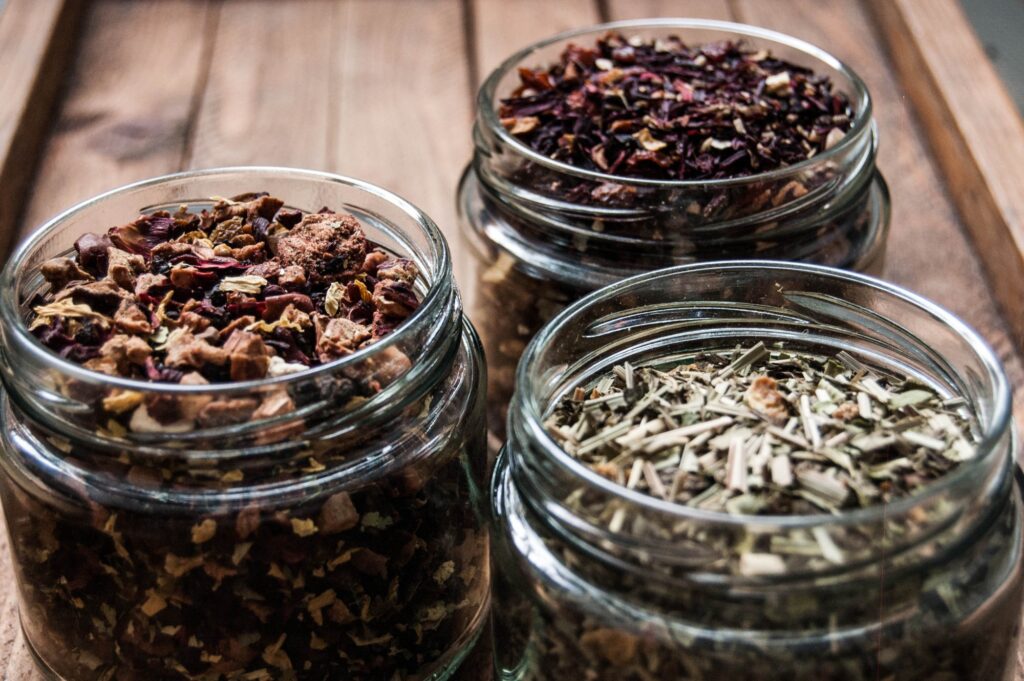
Tea can seem surprisingly complicated once you move beyond the basic categories. Black tea, green tea, white tea, oolong, matcha, herbal tea, rooibos, chai, Earl Grey, and dozens of regional styles can all look, taste, and brew differently. Some come from the same plant but are processed in different ways, while others are not technically true tea at all.
That is why comparisons are so useful. Understanding the differences between tea types can help you choose the right tea for your taste, caffeine preference, brewing style, or time of day. It can also explain why two teas made from the same plant can taste completely different.
This guide covers some of the most common tea comparisons and the characteristics that separate them.
🍃 True Tea vs. Herbal Tea
The biggest distinction in the tea world is between true tea and herbal infusions. True tea comes from the Camellia sinensis plant. Black tea, green tea, white tea, oolong, and pu-erh all come from this same species, with their differences created largely by how the leaves are harvested, withered, rolled, oxidized, heated, fermented, or aged.
Herbal teas, on the other hand, are made from plants other than Camellia sinensis. Chamomile, peppermint, hibiscus, ginger, rooibos, and fruit blends are examples of herbal infusions. The term “herbal tea” is widely used in everyday conversation, although “tisane” or “herbal infusion” is technically more precise.
True teas naturally contain caffeine unless they have been decaffeinated. Most herbal teas are naturally caffeine-free, though there are exceptions such as yerba mate.
🖤 Black Tea vs. Green Tea
Black tea and green tea come from the same plant, but processing creates major differences in flavor, color, aroma, and brewing. Black tea is generally more heavily oxidized. After harvesting, the leaves are typically withered, rolled or crushed, oxidized, and then dried. This oxidation helps create the darker color and deeper flavors associated with black tea, which may taste malty, brisk, fruity, floral, smoky, or earthy depending on the variety.
Green tea is processed to limit oxidation. Soon after harvesting, the leaves are heated to deactivate enzymes that would otherwise encourage oxidation. This may be done through steaming, as is common with many Japanese green teas, or pan-firing, as with many Chinese green teas. The resulting flavors are often fresher and more vegetal, grassy, nutty, marine, floral, or sweet.
Black tea generally tolerates hotter water and longer brewing than green tea. Green tea is more sensitive to excessive heat and steeping time and can become bitter if overbrewed.
🤍 White Tea vs. Green Tea
White tea and green tea can both be delicate, but they are processed differently. White tea is generally minimally processed. The young buds and leaves are harvested, withered, and dried with relatively little manipulation, which often creates a soft, subtle character.
Common white tea flavors may include honey, hay, flowers, melon, stone fruit, and gentle sweetness. Green tea, by contrast, is usually heated deliberately to stop oxidation, and this additional processing can create flavors ranging from grassy and vegetal to roasted, nutty, marine, or floral.
White tea is not automatically weaker than green tea. Some white teas can produce surprisingly full-bodied infusions, especially when made from mature leaves or aged material. The two also differ in appearance. White teas often contain large, lightly processed leaves or fuzzy buds, while green teas may be rolled, flattened, twisted, or needle-shaped.
🍂 Oolong Tea vs. Black Tea
Oolong sits between green and black tea in terms of oxidation, although that description is only a starting point. Oolong teas vary enormously. Some are lightly oxidized and taste floral, creamy, and fresh, while others are more heavily oxidized or roasted and may taste fruity, woody, toasted, or mineral.
Black tea is generally more fully oxidized, which tends to produce deeper color and stronger flavor. If you enjoy black tea but want something with greater aromatic complexity, oolong can be an excellent category to explore.
Oolong is also commonly brewed several times, particularly when using gongfu-style methods. The flavor often changes noticeably from one infusion to the next.
🍵 Matcha vs. Green Tea
Matcha is green tea, but it is prepared very differently from ordinary steeped green tea. With conventional green tea, the leaves are steeped in water and then removed. Matcha is made by grinding specially cultivated tea leaves into a fine powder, which is whisked directly into water and consumed.
Because you ingest the powdered leaf itself, matcha tends to have a more concentrated flavor than many steeped green teas. It is often rich, vegetal, creamy, umami-forward, and slightly bitter.
Matcha also requires somewhat different equipment. A bowl and whisk are traditionally used, while ordinary green tea can be prepared with a teapot or infuser. If you enjoy the freshness of green tea but want a richer and more concentrated experience, matcha may appeal to you.
🌱 Sencha vs. Matcha
Sencha and matcha are both Japanese green teas, but they are produced and prepared differently. Sencha consists of whole or broken tea leaves that are steamed, rolled, dried, and steeped in water.
Matcha is produced from shade-grown tea leaves that are processed into tencha and then ground into powder. Sencha is infused and strained, while matcha is whisked into the water and consumed entirely.
Sencha often tastes fresh, grassy, sweet, and marine. Matcha can be more concentrated, creamy, vegetal, and umami-rich. Both can vary tremendously according to quality, origin, cultivation, and processing.
🍃 Loose-Leaf Tea vs. Tea Bags
Loose-leaf tea and tea bags are not automatically different in quality, but they are often processed and packaged differently. Loose-leaf tea commonly contains larger pieces or whole leaves, and because those leaves have more room to expand, the resulting infusion may offer greater aromatic complexity.
Many standard tea bags contain smaller particles known as fannings or dust. These tiny pieces extract quickly and can create a strong cup in a short period of time, which makes tea bags extremely convenient.
Higher-quality sachets increasingly contain larger leaves, so the old assumption that all bagged tea is low quality is not always accurate. Loose leaf generally offers greater control over quantity and brewing, while tea bags offer speed, convenience, and easy cleanup. Neither is inherently “correct.” The best choice depends on your priorities.
☕ English Breakfast vs. Earl Grey
English Breakfast and Earl Grey are both popular black teas, but they are different types of blends. English Breakfast is typically a robust blend of black teas. Depending on the producer, it may include teas from regions such as Assam, Ceylon, Kenya, or China.
The goal is usually to create a strong, balanced tea that works well with breakfast foods and can stand up to milk. Earl Grey, by contrast, is defined by its bergamot flavor.
The base tea is often black tea, although green and other Earl Grey variations also exist. Bergamot gives Earl Grey its distinctive citrusy, floral aroma. If you prefer a classic strong black tea, English Breakfast may be more appealing. If you enjoy citrus and perfume-like aromatic notes, Earl Grey has a very different character.
🫖 English Breakfast vs. Irish Breakfast
English Breakfast and Irish Breakfast are both strong morning blends, and their recipes vary by brand. Irish Breakfast often emphasizes Assam or other bold black teas, which can create a stronger, maltier profile.
English Breakfast may be slightly more balanced or blended across several regions. These are general tendencies rather than strict rules, since there is no universal formula that every producer follows.
The best way to compare them is by flavor rather than by name alone. Irish Breakfast often appeals to drinkers who want a particularly strong tea with milk, while English Breakfast may offer a slightly broader range of flavor depending on the blend.
🧡 Chai vs. Black Tea
Chai is not a single tea variety. The word simply means tea in several languages, but in many Western contexts, “chai” refers to masala chai.
Masala chai combines black tea with spices. Common ingredients include cardamom, cinnamon, ginger, cloves, and black pepper, though recipes vary widely. Milk and sweetener are also commonly added.
Plain black tea allows the flavor of the tea leaves themselves to dominate. Masala chai creates a more layered drink in which tea, spices, milk, and sweetness interact. If you enjoy bold spice and creamy drinks, chai offers a very different experience from plain black tea.
🌺 Hibiscus Tea vs. Rosehip Tea
Hibiscus and rosehip teas are both caffeine-free herbal infusions with fruity, tart profiles, but they are not the same. Hibiscus is known for its deep red color and sharp, cranberry-like tartness.
It produces a vivid infusion and works particularly well in iced tea. Rosehips, meanwhile, are the fruit of rose plants. They have a gentler fruitiness and can taste tangy, slightly sweet, and mildly floral.
The two are often blended together because their flavors complement each other. If you prefer a strong, tart drink, hibiscus tends to be more intense, while rosehip may taste softer and rounder.
🌿 Peppermint Tea vs. Spearmint Tea
Peppermint and spearmint are closely related herbs, but their flavors are noticeably different. Peppermint contains more menthol and produces a cooling, sharp sensation. Its flavor is strong, crisp, and unmistakably minty.
Spearmint is usually sweeter and gentler. It has a softer mint flavor with less intense cooling. Peppermint works well when you want a bold, refreshing infusion, while spearmint may appeal more to people who find peppermint too strong.
Both are naturally caffeine-free.
🌼 Chamomile Tea vs. Green Tea
Chamomile and green tea differ in nearly every major respect. Chamomile is an herbal infusion made from dried flowers. It is naturally caffeine-free and has a soft floral, apple-like, slightly sweet flavor.
Green tea comes from Camellia sinensis and naturally contains caffeine. Its flavor can range from grassy and vegetal to nutty, floral, or marine.
Chamomile is often chosen in the evening because it contains no caffeine, while green tea is more commonly enjoyed earlier in the day.
🌿 Rooibos vs. Black Tea
Rooibos is sometimes called red tea, but it is not a true tea. It comes from the South African plant Aspalathus linearis.
Rooibos naturally contains no caffeine and tends to have a smooth, slightly sweet, woody flavor. Black tea comes from Camellia sinensis and naturally contains caffeine. It is generally stronger, more tannic, and more brisk.
Rooibos can be a useful alternative for people who enjoy the fuller body of black tea but want a caffeine-free drink. It also works well with milk and flavorings.
🧉 Yerba Mate vs. Green Tea
Yerba mate is a South American caffeinated herbal infusion made from the leaves of Ilex paraguariensis. Green tea comes from Camellia sinensis.
Both can taste vegetal and slightly bitter, but their flavor profiles are distinct. Yerba mate often tastes earthy, grassy, woody, and robust. Green tea can be more delicate and may include sweet, nutty, marine, or floral notes.
Both naturally contain caffeine. Traditional mate preparation also differs considerably from standard tea brewing and often involves a gourd and filtered metal straw called a bombilla.
🌑 Pu-erh vs. Black Tea
Pu-erh and black tea can both produce dark infusions, but they are made differently. Pu-erh is a fermented or post-fermented tea traditionally associated with Yunnan, China.
Some pu-erhs are aged over time, allowing flavor to continue developing. Black tea is oxidized rather than fermented in the same way.
Black tea may taste malty, fruity, brisk, smoky, or sweet. Pu-erh often displays earthy, woody, mineral, dried-fruit, or forest-like characteristics. Pu-erh is also commonly brewed repeatedly, especially when using small vessels and short infusions.
🌡️ Which Tea Is Strongest?
“Strong” can mean several things. It might refer to flavor, bitterness, body, or caffeine.
A bold Assam black tea may taste stronger than a delicate green tea. Matcha may feel more concentrated because the powdered leaf is consumed rather than removed. A strong herbal infusion can taste intense while containing no caffeine at all.
Brewing method also matters. Using more tea, less water, hotter water, or longer steeping can all increase perceived strength. That is why it is better to compare tea types by specific characteristics rather than using the word “strong” alone.
⚡ Which Tea Has the Most Caffeine?
Caffeine content varies considerably. Tea type matters, but so do leaf size, growing conditions, processing, water temperature, quantity of tea, and brewing time.
Matcha can provide a relatively concentrated serving because the leaf powder is consumed. Black tea is often perceived as higher in caffeine than green tea, but individual teas can overlap considerably. White tea is not necessarily low in caffeine, since young tea buds can contain substantial caffeine.
Most herbal teas such as chamomile, peppermint, rooibos, and hibiscus are naturally caffeine-free. For people who are sensitive to caffeine, the specific product and serving size matter more than broad category assumptions.
🥛 Which Teas Work Best With Milk?
Full-bodied black teas are the traditional choice for milk. Assam, English Breakfast, Irish Breakfast, and many chai blends have enough strength to remain flavorful after milk is added.
Rooibos also works surprisingly well with milk despite being caffeine-free. Delicate green and white teas are usually served without milk because dairy can overwhelm their subtler flavors.
There are exceptions. Matcha lattes are extremely popular because concentrated matcha has enough flavor to stand up to milk. The best rule is simply to consider intensity, since stronger teas generally pair more easily with milk than delicate ones.
❄️ Which Teas Are Best Iced?
Almost any tea can be served cold. Black tea is a classic choice because its bold flavor remains noticeable after chilling and dilution with ice.
Green tea makes a lighter, fresher iced drink. Hibiscus is excellent iced because its tart flavor and brilliant color are especially refreshing when cold. Fruit and herbal blends also work well, while oolong can produce beautifully aromatic iced tea.
Cold brewing is particularly useful for teas that become bitter when brewed aggressively with hot water.
📊 Quick Tea Comparison
| Tea Type | Comes From | Typical Flavor | Caffeine |
|---|---|---|---|
| Black tea | Camellia sinensis | Bold, malty, fruity, brisk | Yes |
| Green tea | Camellia sinensis | Grassy, vegetal, nutty, fresh | Yes |
| White tea | Camellia sinensis | Delicate, floral, honeyed | Yes |
| Oolong | Camellia sinensis | Floral, fruity, roasted, mineral | Yes |
| Pu-erh | Camellia sinensis | Earthy, woody, rich | Yes |
| Matcha | Camellia sinensis | Vegetal, creamy, umami | Yes |
| Rooibos | Aspalathus linearis | Smooth, woody, slightly sweet | No |
| Chamomile | Chamomile flowers | Floral, soft, apple-like | No |
| Peppermint | Peppermint leaves | Cooling, fresh, minty | No |
| Hibiscus | Hibiscus calyces | Tart, fruity, cranberry-like | No |
🍵 How to Choose Between Two Teas
When comparing teas, start with flavor. If you enjoy bold and malty drinks, black tea may be a natural fit. If you prefer fresh, grassy, or vegetal flavors, explore green tea. For floral and aromatic teas, oolong and white tea offer many possibilities.
If you want something caffeine-free, rooibos and herbal infusions provide a wide range of flavors. Brewing style matters too. Tea bags may be perfect for quick everyday cups, while loose-leaf tea offers greater control and variety.
Matcha requires whisking rather than steeping, while gongfu brewing can turn oolong or pu-erh into a longer tasting experience involving several infusions. There is no universally better tea. There is simply the tea that best matches what you want from the cup.
🌿 Tea Comparisons Make Exploring Tea Easier
Tea becomes much less confusing once you realize that most comparisons come down to a few basic questions: where the tea comes from, how it was processed, how it tastes, whether it contains caffeine, and how it is brewed.
Once you understand those differences, choosing among black, green, white, oolong, herbal, and specialty teas becomes far easier. The more varieties you taste side by side, the more obvious those differences become.
Tea comparison is ultimately less about finding a winner and more about discovering just how varied a simple cup of tea can be.
🔗 Related Articles
- How to Brew Tea: Water Temperature, Steeping Times & Brewing Methods
- How to Use a Tea Strainer: Types, Tea Infusers & Brewing Tips
- How to Brew Tea Bags: Water Temperature, Steep Time & Easy Tips
📚 Sources & Further Reading
- Tea Association of the U.S.A.
- UK Tea & Infusions Association
- Encyclopaedia Britannica — Tea
- Harvard T.H. Chan School of Public Health — Tea