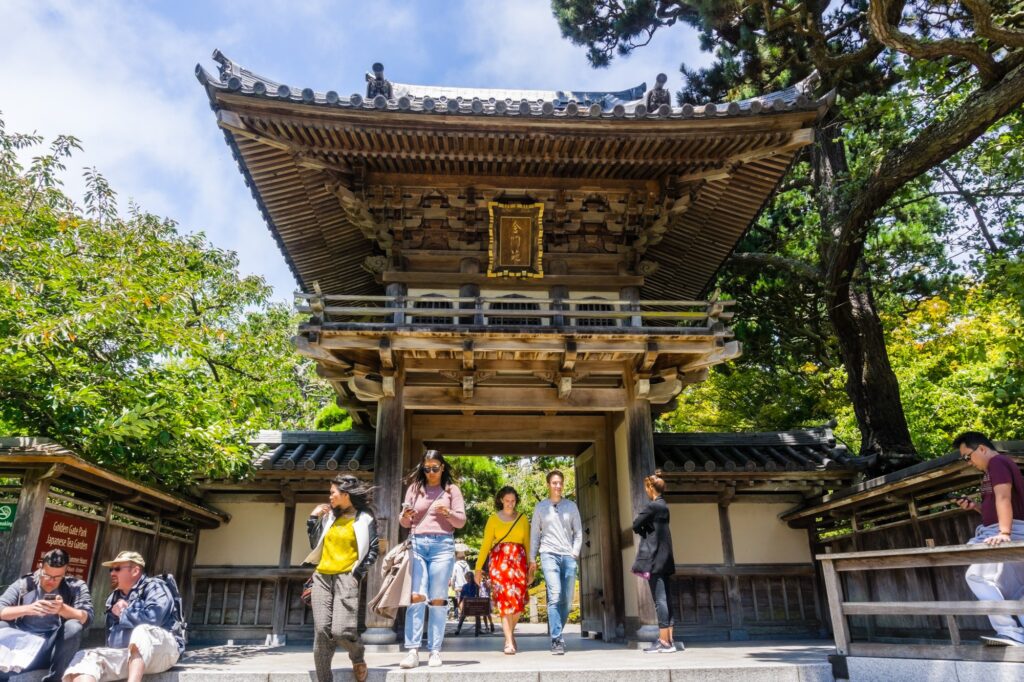
The Japanese Tea Garden in San Francisco is one of the most beautiful and historically significant places in Golden Gate Park. Hidden behind an ornate entrance near the de Young Museum, the garden brings together winding paths, stone lanterns, koi ponds, carefully trained pines, Japanese maples, a dramatic arched bridge, a pagoda, and a traditional Tea House.
It is also much more than a pretty garden.
The Japanese Tea Garden traces its origins to the 1894 California Midwinter International Exposition and is regarded as the oldest public Japanese garden in the United States. Its history is closely connected with Makoto Hagiwara and his family, who spent decades developing and caring for the garden before being forcibly removed during the incarceration of Japanese Americans in World War II.
Today, visitors can explore the garden, stop for tea and Japanese-inspired snacks, see spring cherry blossoms and brilliant autumn foliage, and combine the visit with several of Golden Gate Park’s major museums and gardens.
🌿 Japanese Tea Garden Quick Guide
Location: Golden Gate Park, San Francisco
Address: 75 Hagiwara Tea Garden Drive, San Francisco, CA 94118
Open: Daily
Opening time: 9:00 a.m.
March–October last entry: 5:30 p.m.
November–February last entry: 4:30 p.m.
Free hour for everyone: Monday, Wednesday, and Friday from 9:00–10:00 a.m.
Best known for: Japanese landscaping, Drum Bridge, pagoda, koi ponds, cherry blossoms, Tea House, stone lanterns, and fall color
Best spring bloom period: Often March and April
Time to allow: About 1–2 hours for most visitors
Hours and admission policies can change, so check the official Gardens of Golden Gate Park website before making a special trip.
📍 Where Is the Japanese Tea Garden?
The Japanese Tea Garden is located in the eastern half of Golden Gate Park at:
75 Hagiwara Tea Garden Drive
San Francisco, CA 94118
It sits directly beside the Music Concourse, near some of the park’s best-known cultural attractions.
The de Young Museum is immediately nearby, and the California Academy of Sciences is on the opposite side of the Music Concourse. The San Francisco Botanical Garden is also within easy walking distance.
That concentration of attractions makes the Tea Garden easy to include in a half-day or full-day Golden Gate Park itinerary.
🎟️ Japanese Tea Garden Admission
Admission is required for many visitors outside designated free periods.
General admission is currently free for:
- San Francisco residents
- Veterans
- Gardens of Golden Gate Park members
- Eligible Museums for All participants
The garden also offers a particularly useful option for visitors who do not fall into one of those categories:
Everyone receives free admission Monday, Wednesday, and Friday from 9:00 to 10:00 a.m.
That early free hour is also one of the best times to experience the garden when it feels quieter and less crowded.
Ticket prices and eligibility requirements can change, so confirm current rates through the official Gardens of Golden Gate Park website rather than relying on older travel guides.
⏰ Japanese Tea Garden Hours
The garden opens daily at:
9:00 a.m.
The last-entry time changes seasonally.
March Through October
Last entry is currently:
5:30 p.m.
November Through February
Last entry is currently:
4:30 p.m.
The garden closes after the final entry period, so arriving at the last-entry time will not give you a full leisurely visit.
For a more relaxed experience, try to arrive at least an hour or two before the final admission time.
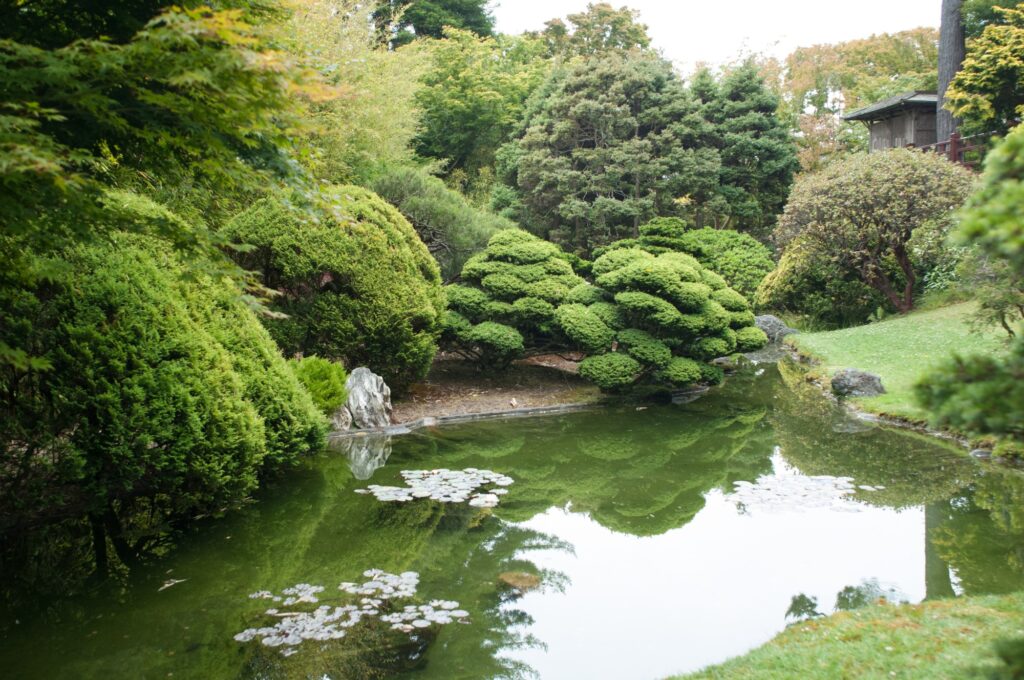
🌅 Best Time of Day to Visit
Early morning is probably the best overall time to visit the Japanese Tea Garden.
The first hour tends to be calmer, the light can be beautiful among the trees and ponds, and visitors on Monday, Wednesday, or Friday can take advantage of the free 9:00–10:00 a.m. admission period.
Later mornings and afternoons can become busier, particularly on:
- Weekends
- Holidays
- Sunny spring days
- Cherry blossom season
- Peak summer travel days
The garden is relatively compact, so crowds are much more noticeable here than in the enormous surrounding Golden Gate Park.
If photography and quiet exploration are important to you, arrive near opening.
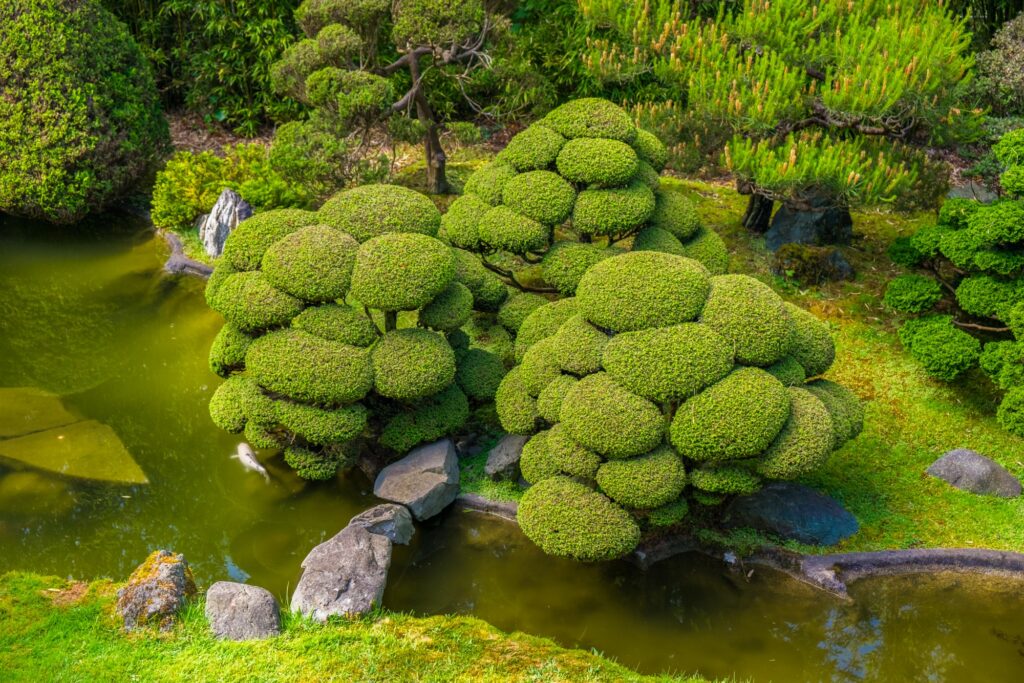
🌸 Best Time of Year to Visit
There really is no bad season, because the Japanese Tea Garden changes noticeably throughout the year.
Spring
Spring is the most famous season.
Cherry blossoms generally appear around March and April, though the precise timing depends on weather and the individual trees.
Spring also brings fresh foliage and flowering shrubs throughout the landscape.
If seeing cherry blossoms is your highest priority, keep in mind that bloom periods can be brief and difficult to predict far in advance.
Summer
Summer brings lush green foliage and comfortable conditions for wandering through the shaded garden.
San Francisco summers can be surprisingly cool and foggy, so bring a light layer even when visiting in July or August.
Fall
Autumn is an excellent alternative to spring.
Japanese maples provide some of the garden’s most striking seasonal color, adding shades of red, orange, and gold around the ponds, stonework, and pathways.
Winter
Winter is quieter and often less crowded.
Although the garden does not have the floral drama of spring or the foliage of fall, the evergreen pines, stones, water features, bridges, and architectural elements become easier to appreciate.
🌸 Cherry Blossoms at the Japanese Tea Garden
Cherry blossoms are among the garden’s most anticipated seasonal attractions.
Trees throughout the garden usually flower in March and April, creating pale clouds of blossoms against dark evergreens, stone lanterns, bridges, and traditional architecture.
The flowering period can vary from year to year.
Warm weather may bring earlier blooms, while cooler conditions can delay them.
Individual trees can also bloom at slightly different times, so there is not necessarily a single perfect “peak day.”
If you are traveling specifically for cherry blossoms, check recent updates shortly before visiting.
🌉 The Drum Bridge
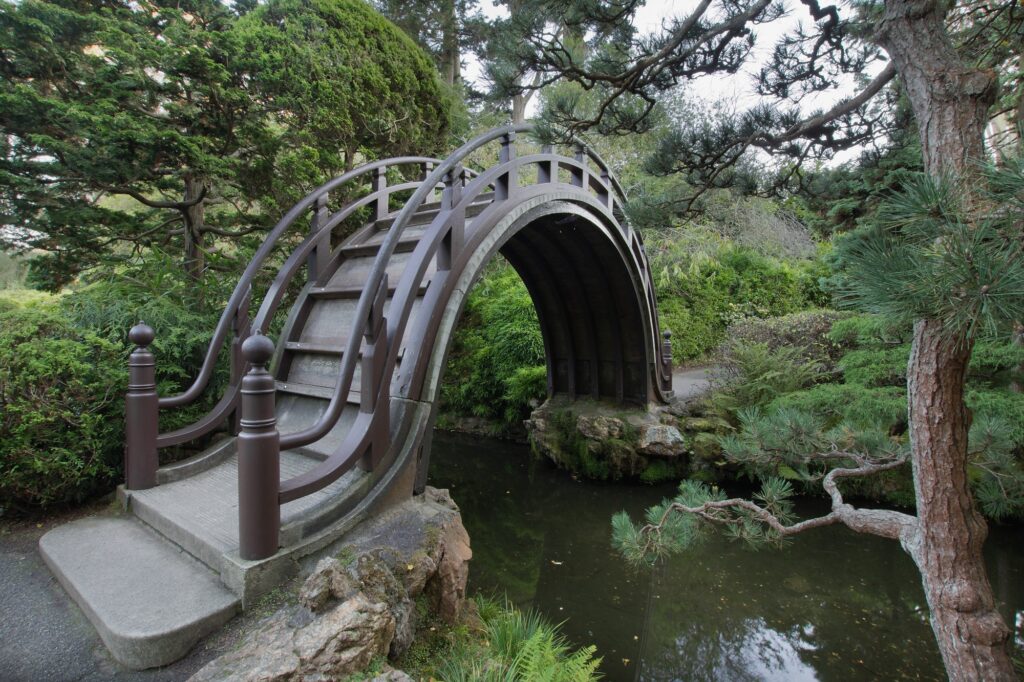
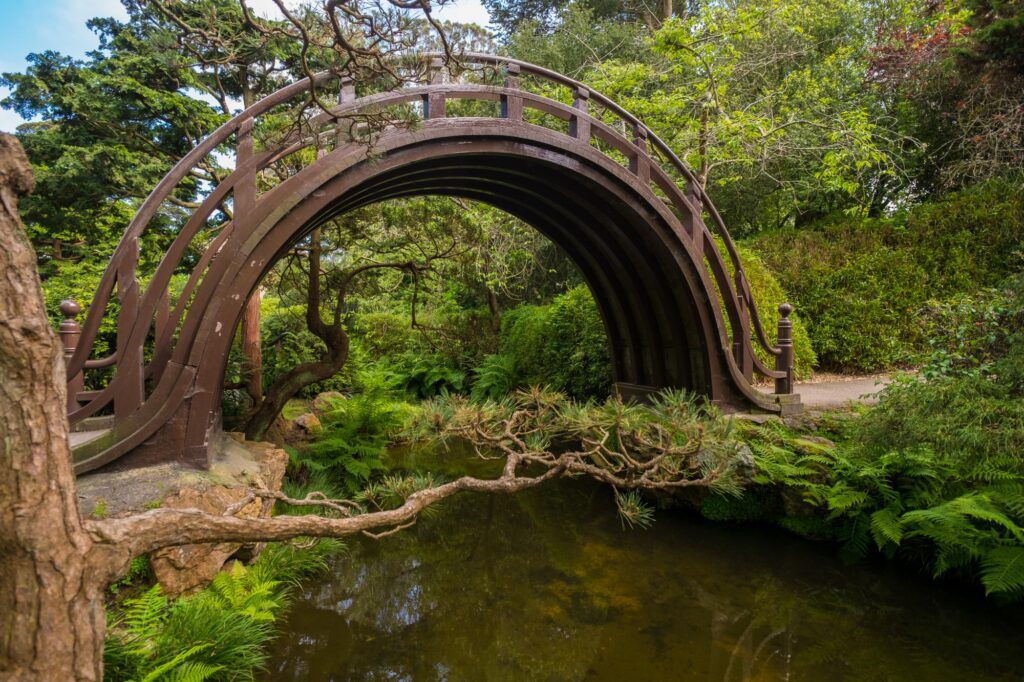
One of the most photographed features in the garden is the steep arched Drum Bridge, sometimes called the Moon Bridge.
Its dramatic curve creates an almost complete circular reflection when viewed with water beneath it, an effect associated with traditional East Asian garden design.
The bridge is much steeper than an ordinary pedestrian bridge.
Visitors climb its wooden crosspieces almost like steps, making it a memorable feature but not an accessible route for everyone.
Even if you choose not to cross it, the bridge is worth seeing from the surrounding paths.
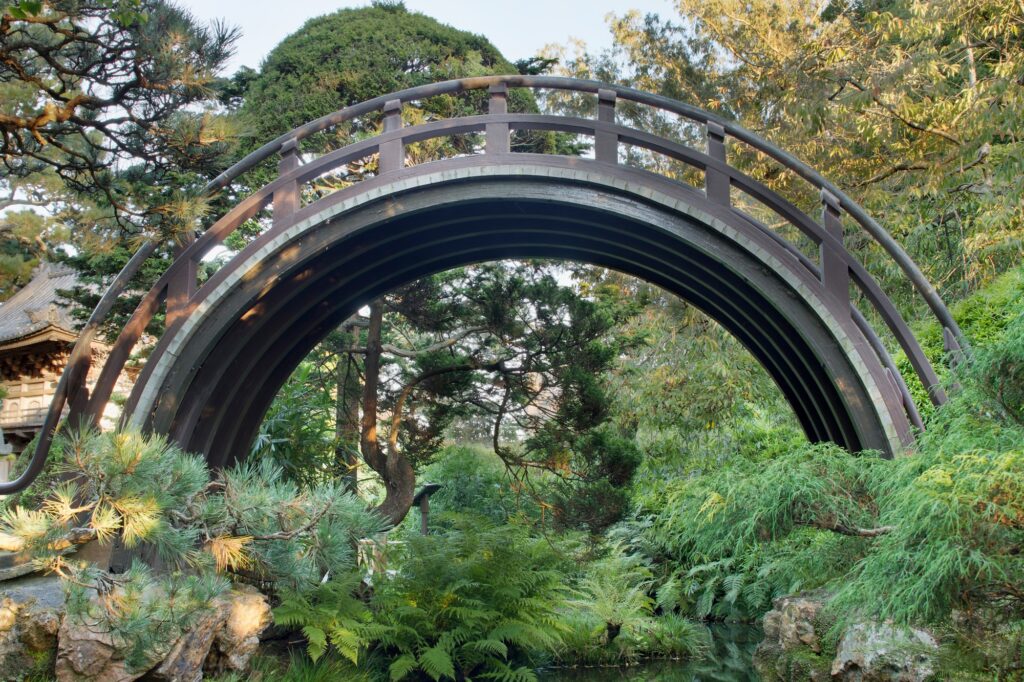
🏯 The Pagoda
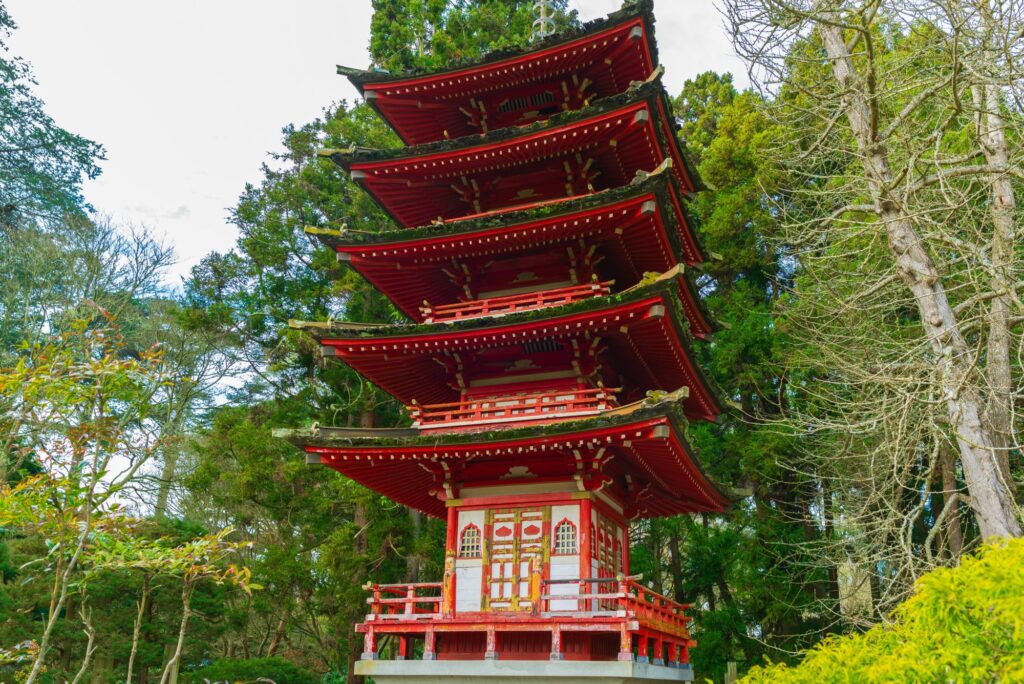
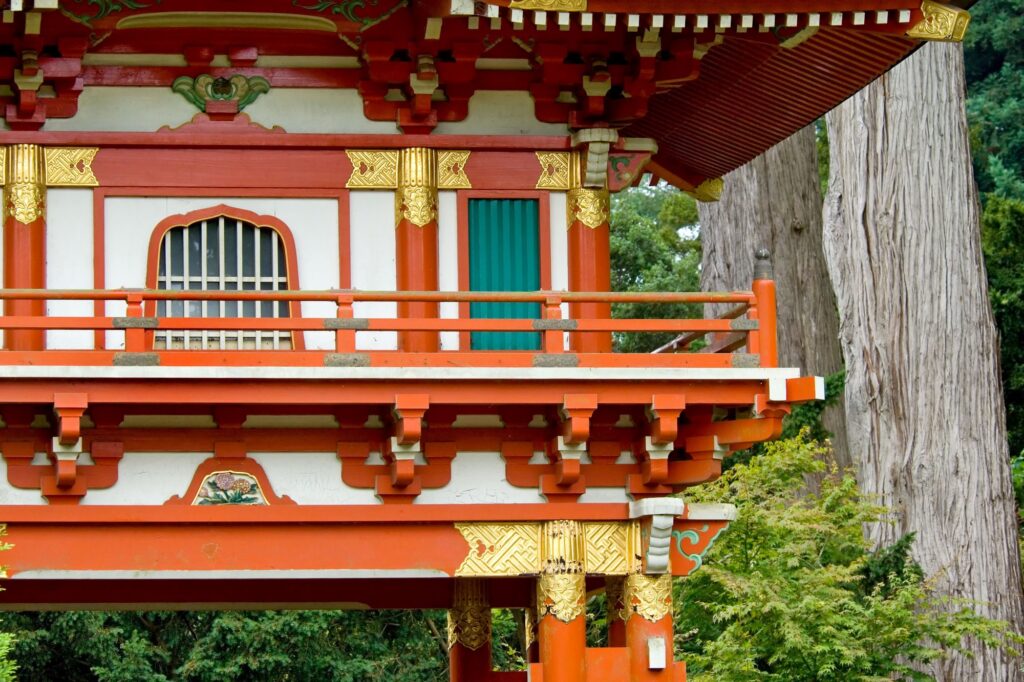
The tall red pagoda is one of the garden’s defining architectural landmarks.
Unlike the original 1894 garden, however, the pagoda came from a later San Francisco exposition. It was associated with the 1915 Panama-Pacific International Exposition and eventually became part of the Tea Garden.
A major restoration completed in 2022 renewed the historic structure.
The surrounding Pagoda Plaza was later redesigned with new landscaping, pathways, stonework, and Japanese black pines.
Today the pagoda rises above clipped shrubs and mature trees and creates one of the most recognizable views in the garden.
🪨 Stone Lanterns
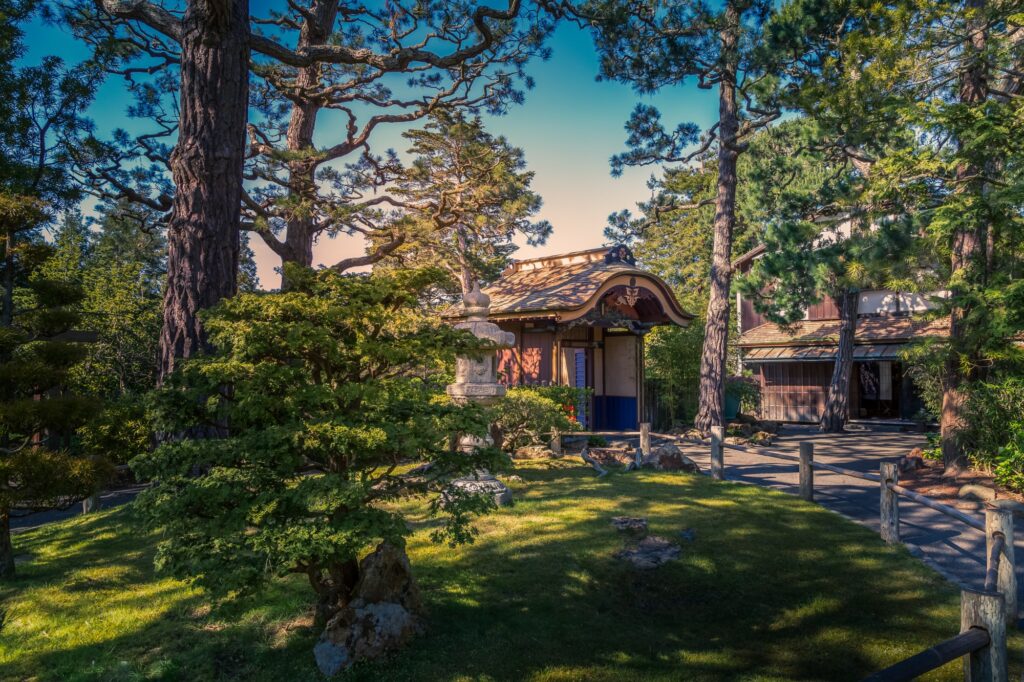
Stone lanterns appear throughout the Japanese Tea Garden.
Rather than functioning merely as decorations, lanterns are traditional elements of Japanese garden design and help create focal points along pathways and near water.
One of the most historically meaningful is the Lantern of Peace, presented in the postwar period as a symbol of friendship and reconciliation.
These quieter details are easy to miss if you move through the garden quickly.
Spend some time looking beyond the major bridge and pagoda and you will begin noticing carefully positioned stones, lanterns, plants, and changes in elevation throughout the landscape.
🐟 Koi Ponds
The garden’s ponds add movement and reflection to the landscape.
Koi swim beneath bridges and alongside rocks, plants, and carefully arranged banks.
The ponds help tie together many of the elements that make the garden visually distinctive:
- Bridges
- Reflections
- Lanterns
- Trees
- Rocks
- Fish
- Waterfalls
For photographers, the water often produces some of the most interesting compositions in the garden.
🪴 The Zen Garden
The Japanese Tea Garden also contains a dry landscape, or karesansui-style, garden.
Rather than relying on lush flowers or ponds, this type of landscape uses carefully arranged stones and raked gravel to create an abstract scene.
The contrast is striking.
After walking beside koi ponds, maples, and thick vegetation, the restrained stone-and-gravel space encourages you to slow down and look at form, texture, and composition.
🌲 Japanese Maples, Pines & Azaleas
Plants are as important to the garden as its structures.
Among the most characteristic plantings are:
- Japanese maples
- Carefully trained pines
- Azaleas
- Cherry trees
- Bamboo
- Mosses
- Evergreen shrubs
These plants are pruned and arranged to work with the stones, water, pathways, and architecture rather than simply filling flower beds.
The result changes significantly with the seasons.
Spring emphasizes blossoms.
Summer emphasizes foliage.
Fall emphasizes maple color.
Winter reveals the structure of branches, pines, rocks, and architecture.
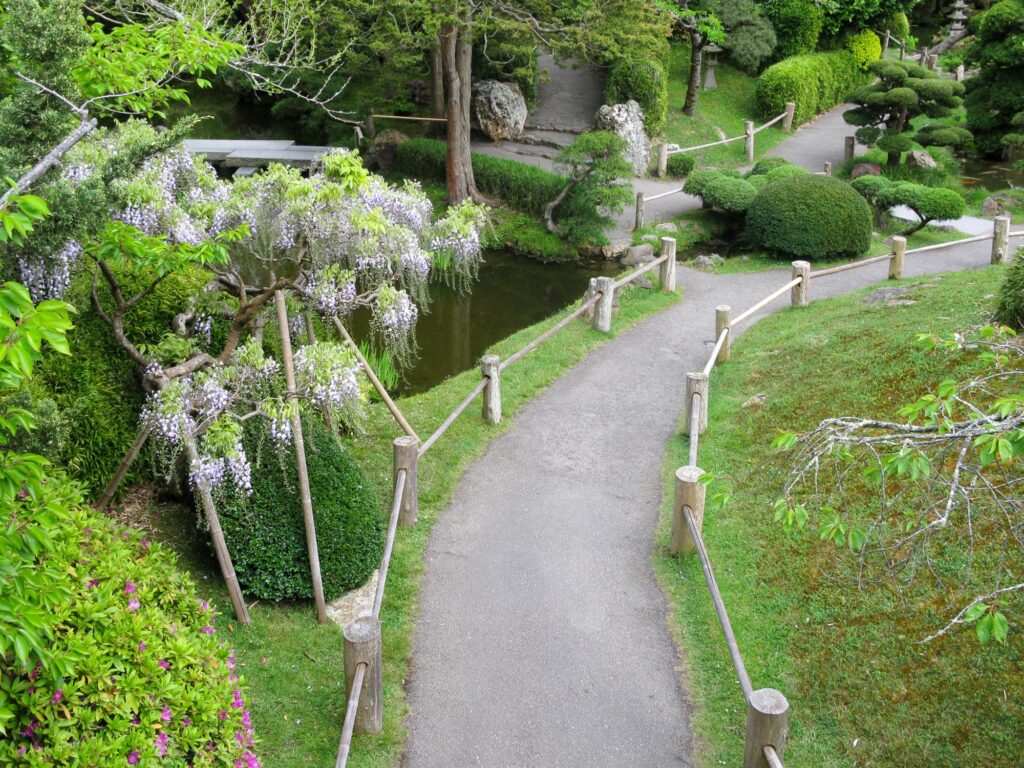
🚶 The Winding Paths
One reason the garden feels larger than it is comes from its winding network of paths.
Japanese gardens often avoid revealing everything at once.
Instead, a path bends around a tree, disappears behind a hill, climbs toward a bridge, or suddenly opens onto a pond or architectural feature.
That approach creates a sequence of views rather than one single panorama.
The best way to experience the garden is therefore to wander slowly rather than treating it as a checklist of landmarks.
🍵 The Japanese Tea House
A Tea House inside the garden gives visitors the chance to actually drink tea while surrounded by the landscape.
The menu typically includes Japanese teas and light snacks or sweets.
Depending on current offerings, visitors may find choices such as:
- Green tea
- Sencha
- Matcha
- Jasmine tea
- Genmaicha
- Japanese sweets
- Savory snacks
The exact menu can change.
The Tea House is particularly pleasant when the garden is not crowded, although seating can be limited during busy periods.
Tea House operating hours generally follow the garden’s seasonal schedule, but check directly before visiting if stopping for tea is an essential part of your plans.
🍵 What Tea Should You Try?
If you are new to Japanese tea, the Tea House is a fun place to try a traditional style.
Sencha is a classic everyday Japanese green tea with a fresh, grassy character.
Genmaicha combines green tea with roasted rice, producing a warm, toasted aroma.
Matcha is powdered green tea whisked into water rather than infused and removed like loose tea leaves.
For an overview of these styles, see Types of Green Tea: Sencha, Matcha, Gyokuro, Longjing & More.
🏛️ The Garden’s Origins in the 1894 World’s Fair
The Japanese Tea Garden began as part of the California Midwinter International Exposition of 1894.
The exposition transformed a large portion of what is now the Music Concourse area of Golden Gate Park.
Among its attractions was a Japanese Village and garden.
The original exhibit occupied a much smaller area than the later garden, but unlike most temporary fair attractions, it did not disappear completely when the exposition ended.
That survival was largely due to Makoto Hagiwara.
👨🌾 Makoto Hagiwara & the Garden
Makoto Hagiwara became the most important figure in the development of the Japanese Tea Garden.
After the exposition, Hagiwara became caretaker of the site and expanded the small fair exhibit into a much more elaborate permanent garden.
Over the following decades, he and his family devoted enormous effort to the property.
The Hagiwara family lived within the garden, operated its concessions, maintained the landscape, and helped add many of the features that shaped its identity.
Their relationship with the garden lasted for decades and became inseparable from its early history.
Today, the street running beside the garden is appropriately named Hagiwara Tea Garden Drive.
⚖️ Anti-Asian Discrimination & the Garden
The history was not always peaceful.
At the beginning of the 20th century, anti-Asian discrimination affected Hagiwara’s position with the city.
A San Francisco charter provision barring noncitizens from municipal employment temporarily displaced him from his role at the Tea Garden.
He later returned and continued managing and developing the site.
This history matters because the garden did not develop separately from the larger political and social conditions facing Japanese immigrants and Asian Americans in California.
Those pressures became even more devastating during World War II.
💔 The Hagiwara Family’s Forced Removal in 1942
Following the United States’ entry into World War II, Japanese Americans on the West Coast were subjected to forced removal and incarceration.
In 1942, the Hagiwara family was forced out of the Japanese Tea Garden along with roughly 120,000 other people of Japanese ancestry removed from their communities under wartime policies.
The city took over management of the garden.
The Hagiwara family home inside the garden was demolished, along with several other structures.
The family was not permitted to return to its former home and role after the war.
This chapter is essential to understanding the garden. The site represents Japanese artistic traditions and cultural exchange, but it also preserves the memory of a family whose decades of work were interrupted by one of the most serious violations of Japanese American civil rights in U.S. history.
🏷️ The Garden Lost Its Japanese Name
During World War II, the word Japanese was removed from the garden’s name.
For a period, it was simply known as the Tea Garden.
After the war, community advocacy helped restore its identity.
The official name Japanese Tea Garden was legally restored in 1953.
In later decades, additional recognition was given to the Hagiwara family’s role in creating the garden visitors know today.
🛣️ Hagiwara Tea Garden Drive
In 1986, the road beside the garden was renamed Hagiwara Tea Garden Drive.
The name serves as a permanent reminder that Makoto Hagiwara and his family were not incidental figures in the site’s history.
Their work transformed a temporary fair exhibit into a lasting San Francisco landmark.
🌿 The Sunken Garden
The Sunken Garden occupies an especially poignant location.
It was created on the site where the Hagiwara family home once stood before the structure was demolished during World War II.
Today, visitors may see it simply as another attractive portion of the landscape.
Knowing what once stood there adds a very different layer of meaning to the space.
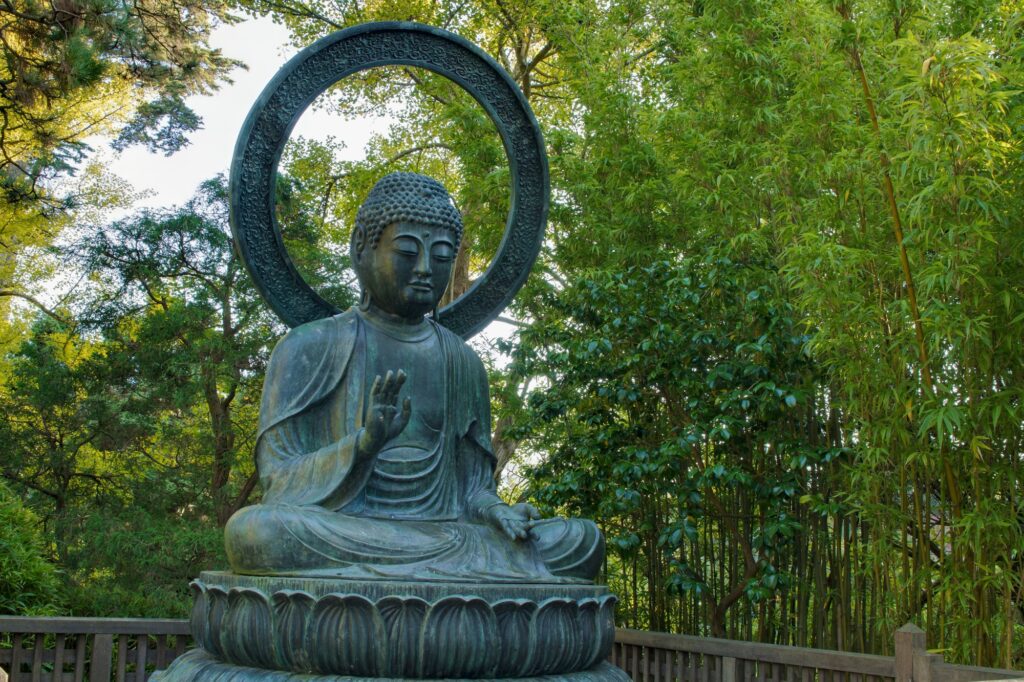
☸️ The Bronze Buddha
A large bronze Buddha statue was installed in the Japanese Tea Garden in the late 1940s.
It has since become another recognizable feature of the landscape.
Set among greenery, stones, and garden architecture, the statue contributes to the contemplative atmosphere of this part of the garden.
🏯 Hagiwara Gate
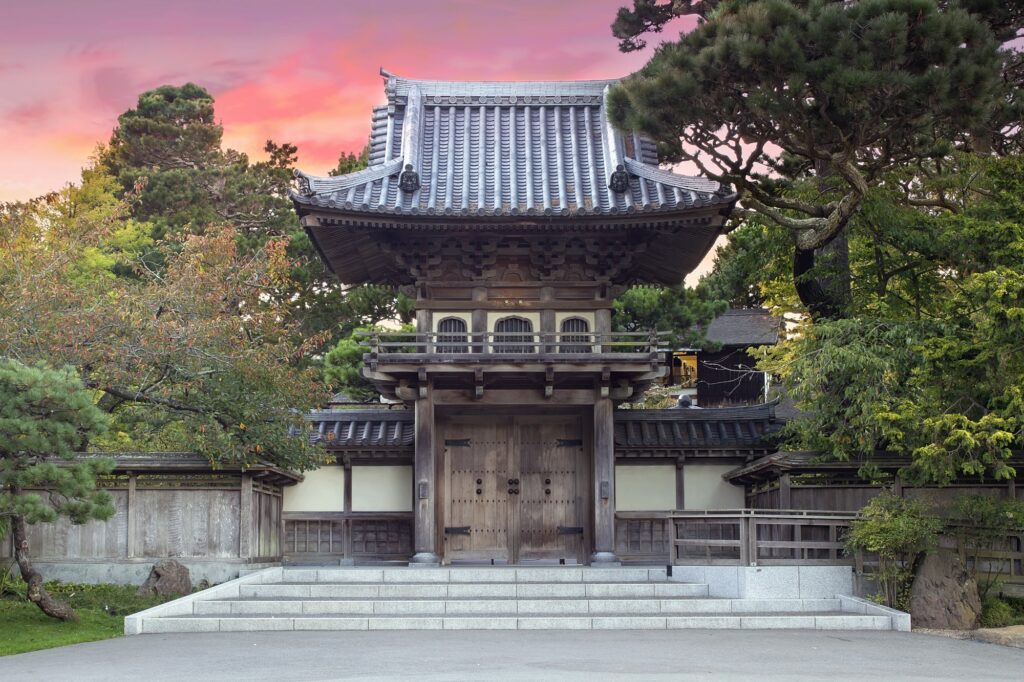
The Hagiwara Gate provides another visual link to the family most associated with the garden’s development.
Together with the renamed road and later commemorative efforts, it helps restore some of the historical recognition lost when the family was removed from the property.
📷 Best Places for Photos
Almost every section of the garden offers interesting compositions, but several areas stand out.
Look for:
- The Drum Bridge
- The pagoda framed by foliage
- Koi ponds and reflections
- Stone lanterns
- Cherry blossoms in spring
- Japanese maples in fall
- The Tea House
- Stepping-stone paths
- The Hagiwara Gate
- The Bronze Buddha
Early morning usually offers the best combination of softer light and fewer visitors.
Tripods are generally restricted without appropriate permission, so plan on handheld photography during an ordinary visit.
♿ Accessibility
Visitors with mobility limitations should plan carefully.
Because this is a historic landscape with:
- Steep slopes
- Steps
- Narrow pathways
- Bridges
- Uneven surfaces
much of the Japanese Tea Garden is not wheelchair accessible.
Official visitor information currently notes limited accessibility to the Tea House and restrooms.
If accessibility is important for your visit, check the latest accessibility information before arriving so you know which portions of the garden are reachable.
🚫 Strollers, Pets & Garden Rules
The Japanese Tea Garden has rules designed to protect its historic landscape and narrow pathways.
Current visitor guidance restricts:
- Strollers inside the garden
- Pets, except service animals
- Outside food and beverages
- Tripods without appropriate authorization
Rules can change, so check the official visitor guidelines when planning your trip.
🚋 Getting There by Public Transportation
Golden Gate Park is well served by San Francisco’s Muni system.
Several bus and streetcar routes serve the park and surrounding neighborhoods, making public transportation one of the easiest ways to visit.
The N-Judah streetcar and multiple bus lines provide access to areas near Golden Gate Park, although the amount of walking varies by route.
Transit can be especially convenient on busy weekends when parking around the park becomes more difficult.
🚗 Parking
The closest major parking facility is the Music Concourse Garage.
It serves the cluster of attractions surrounding the Music Concourse, including:
- Japanese Tea Garden
- de Young Museum
- California Academy of Sciences
Limited street parking is also available throughout parts of Golden Gate Park and surrounding neighborhoods.
Parking availability varies significantly according to the day, weather, and nearby events.
Arriving early is helpful if you plan to drive.
🚌 Golden Gate Park Shuttle
Golden Gate Park operates a free shuttle that connects several destinations in the eastern portion of the park.
One of its stops is near the Music Concourse, making it convenient for reaching the Japanese Tea Garden and nearby museums.
The shuttle schedule varies between weekdays, weekends, and holidays, so check the current timetable before relying on it.
⏳ How Long Does It Take to Visit?
Most visitors should allow:
1–2 hours
That gives you time to:
- Walk most of the paths
- Stop at the major garden features
- Take photographs
- Watch the koi
- Sit quietly for a few minutes
If you also want to eat or drink tea at the Tea House, give yourself additional time.
Visitors who are primarily interested in seeing the garden can move through in less than an hour, but rushing misses much of what makes Japanese garden design interesting.
🌿 Is the Japanese Tea Garden Worth Visiting?
Yes—especially if you enjoy gardens, Japanese culture, landscape design, photography, tea, or San Francisco history.
Its appeal comes from several layers at once.
It is a beautiful garden.
It is a surviving piece of the 1894 Midwinter Exposition.
It reflects decades of work by Makoto Hagiwara and his family.
It also preserves a difficult Japanese American history connected with wartime incarceration.
And unlike many historic attractions, it remains a living landscape that changes with every season.
🏛️ What to See Nearby
The Japanese Tea Garden sits in one of the best areas of Golden Gate Park for combining attractions.
de Young Museum
The de Young Museum is directly beside the garden and contains extensive collections of art from the Americas, Africa, Oceania, and beyond.
California Academy of Sciences
Across the Music Concourse, the California Academy of Sciences combines an aquarium, planetarium, natural history museum, rainforest, and living roof.
San Francisco Botanical Garden
The Botanical Garden contains plant collections from around the world and can easily occupy several additional hours.
Stow Lake Area
Farther west, the Stow Lake area provides walking paths, water views, bridges, and additional park scenery.
Together, these attractions can easily fill an entire day.
🗓️ A Half-Day Golden Gate Park Itinerary
A simple morning itinerary could look like this:
Arrive at the Japanese Tea Garden close to 9:00 a.m., particularly on a Monday, Wednesday, or Friday when the first hour is free.
Spend about 60–90 minutes exploring the garden.
Stop for tea if the Tea House appeals to you.
Then cross the Music Concourse to visit either the de Young Museum or California Academy of Sciences.
If you still have time, walk south toward the San Francisco Botanical Garden.
This keeps travel between attractions minimal.
🍵 Japanese Tea Garden in San Francisco vs. San Antonio
San Francisco is not the only major American city with a well-known Japanese Tea Garden.
San Antonio, Texas, has its own dramatically different garden built within a former limestone quarry.
The two sites have completely different histories and landscapes.
For the Texas garden, see Japanese Tea Garden in San Antonio: History, Highlights & Visitor Guide.
❓ Frequently Asked Questions
Where is the Japanese Tea Garden in San Francisco?
It is inside Golden Gate Park at 75 Hagiwara Tea Garden Drive.
Is the Japanese Tea Garden free?
San Francisco residents, veterans, qualifying Museums for All visitors, and Gardens members currently receive free general admission. Everyone can currently enter free from 9:00–10:00 a.m. on Mondays, Wednesdays, and Fridays.
What time does the Japanese Tea Garden open?
It currently opens daily at 9:00 a.m.
What time does it close?
Last entry is currently 5:30 p.m. from March through October and 4:30 p.m. from November through February. Check current hours before visiting.
How long should I spend there?
About 1–2 hours is enough for most visitors.
When do the cherry blossoms bloom?
Cherry trees generally flower during March and April, but exact timing varies from year to year.
Is there actually a Tea House?
Yes. The garden contains a Tea House where visitors can purchase tea and food.
Does the Tea House serve Japanese tea?
Yes. Offerings may include Japanese green teas and other tea styles, though the menu can change.
What are the garden’s main attractions?
Highlights include the Drum Bridge, pagoda, koi ponds, stone lanterns, Zen garden, Japanese maples, cherry trees, Bronze Buddha, Tea House, and Hagiwara-related historic features.
Is this the oldest Japanese garden in America?
It is widely recognized as the oldest public Japanese garden in the United States.
When was it created?
Its origins date to the Japanese Village created for San Francisco’s 1894 California Midwinter International Exposition.
Who was Makoto Hagiwara?
Hagiwara was the Japanese immigrant businessman and garden caretaker who played the central role in expanding and developing the garden after the exposition.
What happened to the Hagiwara family during World War II?
The family was forcibly removed from the garden during the wartime incarceration of Japanese Americans. Their home in the garden was subsequently demolished.
Is the Japanese Tea Garden wheelchair accessible?
Only portions are accessible. Much of the historic landscape includes slopes, stairs, bridges, and uneven paths that are not wheelchair accessible.
Can I bring a stroller?
Current garden rules do not allow strollers inside.
Can dogs enter?
Pets are not permitted, although service animals are allowed.
Can I bring food into the garden?
Outside food and beverages are currently restricted.
Where should I park?
The Music Concourse Garage is the closest major parking facility.
🌸 Final Thoughts
The Japanese Tea Garden is easy to appreciate simply as one of the prettiest corners of San Francisco.
But it becomes much more interesting when you know its history.
The bridges, ponds, pagoda, pines, maples, and stone lanterns grew from a temporary Japanese Village built for an 1894 exposition. Makoto Hagiwara and his family then spent decades transforming the site into a permanent garden before being forcibly removed during World War II.
That combination of beauty and difficult history makes the garden unusual.
Visit in spring for cherry blossoms, autumn for Japanese maple color, or early in the morning for a quieter walk. Stop at the Tea House if you have time, but leave room simply to wander.
This is not a garden best experienced by rushing from landmark to landmark.
Follow the curved paths, stop beside the koi ponds, look through the trees toward the pagoda, and notice how carefully each view unfolds.
That slower pace is part of what makes the Japanese Tea Garden one of Golden Gate Park’s most memorable places.
🔗 Related Articles
- Japanese Tea Garden in San Antonio: History, Highlights & Visitor Guide
- Types of Green Tea: Sencha, Matcha, Gyokuro, Longjing & More
- Best Water Temperature for Green Tea: Sencha, Matcha, Gyokuro & More
- Tea Recipes: Hot Tea, Iced Tea, Lattes, Matcha, Chai & More
- Tea Party Recipes: Sandwiches, Scones, Sweets & Drinks
📚 Sources & Further Reading
- Gardens of Golden Gate Park — Japanese Tea Garden Hours & Admission
- Gardens of Golden Gate Park — Tickets & Free Admission
- Gardens of Golden Gate Park — History
- San Francisco Recreation and Parks — Golden Gate Park Gardens
- San Francisco Recreation and Parks — Asian American and Pacific Islander Heritage
- San Francisco Recreation and Parks — Japanese Tea Garden Pagoda Restoration
- San Francisco Recreation and Parks — Redesigned Pagoda Plaza
- Japanese Tea Garden San Francisco — Tea House & Garden Information