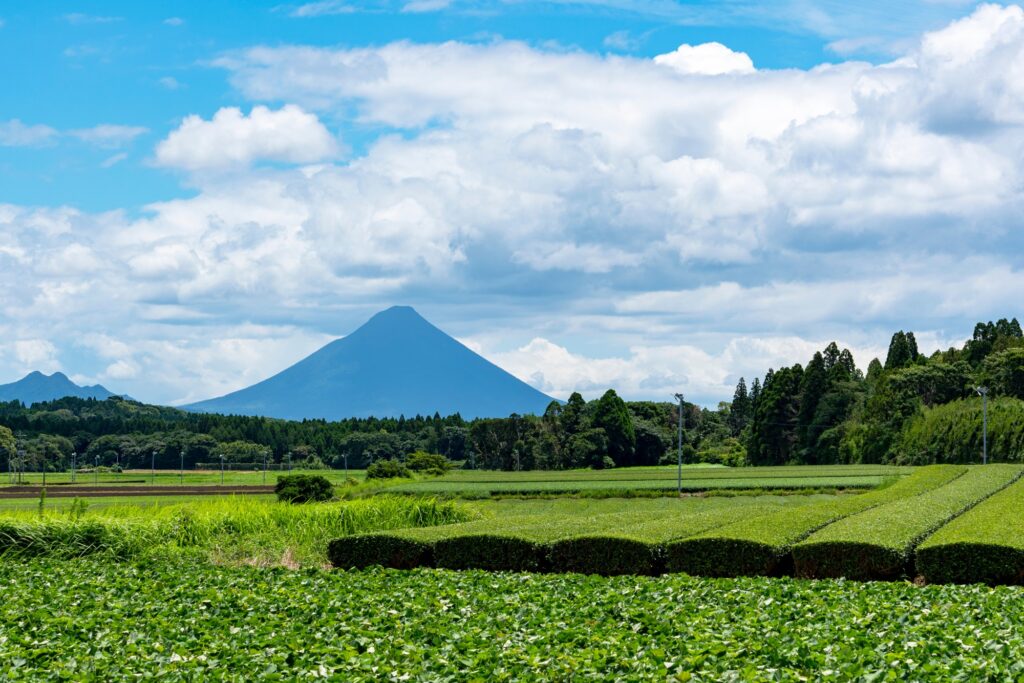
Japan is one of the world’s great tea-producing countries, best known for green teas that range from delicate and grassy to deeply savory, sweet, roasted, or intensely umami-rich. Although Japanese tea is often discussed as a single category, the flavor of the finished tea can vary dramatically depending on where it was grown, which cultivar was used, when it was harvested, and how the leaves were processed.
Tea is produced in many parts of Japan, but several prefectures stand out for their scale, history, and distinctive regional styles. Shizuoka and Kagoshima are two of the country’s largest producers, while Kyoto is especially famous for prestigious teas such as Uji matcha and gyokuro. Other important regions include Mie, Fukuoka, Miyazaki, Saga, Kumamoto, and Saitama.
Exploring Japanese tea by region is a wonderful way to understand why sencha from one part of the country can taste so different from sencha grown hundreds of miles away.
🍵 Shizuoka: Japan’s Great Tea-Growing Heartland
Shizuoka Prefecture, located between Tokyo and Nagoya, has long been one of Japan’s most important tea regions. Tea gardens stretch across broad plains, rolling foothills, and mountain valleys, with famous growing areas including Makinohara, Kawane, Tenryu, and the Abe River region.
The prefecture accounts for more than a third of Japan’s tea-growing area, and more than 20 distinct tea-producing districts are found within Shizuoka.
Shizuoka produces a wide variety of Japanese teas, including sencha, deep-steamed fukamushi sencha, gyokuro, tencha, matcha, black tea, and even small quantities of oolong.
The Makinohara Plateau is particularly associated with fukamushi tea. Longer steaming breaks the leaves down more thoroughly than standard sencha processing, producing a tea with a rich green color, fuller body, and relatively mellow astringency.
Mountain-grown teas from areas such as Kawane and Tenryu can be quite different, often emphasizing fragrance, clarity, and a more delicate character.
🌿 Kagoshima: Southern Japan’s Tea Powerhouse
At the southern end of Kyushu, Kagoshima has become one of Japan’s largest and most important tea-producing regions. Its long north-to-south geography creates a wide range of growing conditions, from cool mountain areas to warm coastal plains.
Kagoshima is Japan’s second-largest tea-producing prefecture, and the prefectural government notes that it accounts for roughly 35 percent of national tea production.
Because the climate is warmer than in many northern tea districts, harvesting can begin especially early. The island of Tanegashima, for example, is known for producing some of Japan’s earliest new-season teas.
Kagoshima grows many cultivars beyond the ubiquitous Yabukita, including Saemidori, Yutakamidori, Asatsuyu, and Okumidori. This cultivar diversity contributes to the wide range of flavors found in Kagoshima teas.
Many Kagoshima senchas are vivid green, full-bodied, sweet, and savory, particularly when produced using deeper steaming. Other teas can be lighter and more aromatic depending on cultivar, elevation, and processing.
🍃 Kyoto and Uji: Matcha, Gyokuro, and Japanese Tea History
Kyoto Prefecture occupies a special place in Japanese tea culture. The area around Uji, south of Kyoto city, has been associated with high-quality tea for centuries.
Uji is especially renowned for matcha, tencha, and gyokuro. These teas often involve shading the tea plants before harvest, reducing direct sunlight and altering the chemical composition of the leaves. The result is generally a richer concentration of savory umami and a softer balance between sweetness and bitterness.
Tencha is the tea traditionally ground into matcha. After harvesting and steaming, the leaves are dried without the rolling process used for sencha. The stems and veins are removed, and the remaining leaf material can then be stone-ground into a fine powder.
Gyokuro is also shaded before harvest but is rolled and processed as a loose-leaf tea. Good gyokuro can have an unusually concentrated combination of sweetness, marine notes, vegetal character, and umami.
Uji’s reputation is so strong that the name has become closely associated with premium Japanese green tea, although teas marketed under regional names can involve specific production and blending conventions rather than simply indicating where every leaf was grown.
🌱 Fukuoka: The Home of Yame Tea
Fukuoka Prefecture on the island of Kyushu is famous for Yame tea, particularly gyokuro.
The Yame area includes river valleys and mountainous terrain where fog and mist can reduce harsh sunlight. These growing conditions are especially favorable for producing tender leaves with pronounced sweetness and umami.
Yame gyokuro has earned an exceptional reputation within Japan and frequently performs well in national tea competitions. The region also produces sencha, matcha, and other shaded teas.
For tea drinkers who enjoy rich, savory green teas, Yame is one of Japan’s most interesting regions to explore.
🌄 Mie: Ise Tea and a Long Tea-Growing Tradition
Mie Prefecture lies west of Aichi and faces Ise Bay. Its teas are often sold under the regional name Ise-cha, or Ise tea.
Mie is one of Japan’s leading tea-producing prefectures and grows a substantial quantity of sencha as well as kabusecha.
Kabusecha, meaning “covered tea,” is shaded for a shorter period than gyokuro. This gives it a flavor that often falls somewhere between conventional sencha and heavily shaded teas, combining freshness with greater sweetness and umami.
The northern part of Mie, particularly around Yokkaichi and Suzuka, is important for tea cultivation. The region’s cool conditions and rich soils support teas with strong color, aroma, and body.
🌺 Miyazaki: Sencha and Kamairicha
Neighboring Kagoshima on Kyushu, Miyazaki is another highly regarded Japanese tea region.
One of its most interesting specialties is kamairicha, a pan-fired green tea. Most Japanese green tea is steamed shortly after harvesting, but kamairicha is heated in a hot pan instead.
This technique creates a markedly different aroma, often described as warm, nutty, sweet, or lightly roasted rather than intensely grassy.
Miyazaki also produces high-quality sencha and other steamed green teas. Mountainous tea gardens are common, allowing growers to take advantage of elevation and cooler conditions.
Kamairicha is especially worth trying because it reveals how dramatically processing can change the character of Japanese tea.
🫖 Saga: Ureshino Tea
Saga Prefecture is closely associated with Ureshino tea, produced around the town of Ureshino.
The area is particularly famous for tamaryokucha, sometimes called guricha. Unlike standard sencha, which is rolled into slender needle-like shapes, tamaryokucha leaves develop a distinctive curled or comma-like appearance.
Ureshino produces both steamed and pan-fired versions of tamaryokucha.
Pan-fired Ureshino tea may have soft roasted or nutty aromas, while steamed examples tend to retain more of the fresh vegetal character associated with Japanese green tea.
The tea-growing tradition around Ureshino stretches back centuries, making it both an important historical and contemporary tea region.
🌳 Kumamoto: Mountain-Grown Teas of Kyushu
Kumamoto, in central Kyushu, has mountainous terrain that provides excellent conditions for tea cultivation.
Many tea gardens are located at higher elevations, where cooler temperatures and frequent mist encourage slower growth. These conditions can contribute to fragrant, balanced teas.
Kumamoto produces sencha, tamaryokucha, and kamairicha, among other styles.
Some of the most distinctive teas come from smaller mountain farms, where traditional processing and regional cultivars can create teas with striking floral, nutty, or sweet aromas.
🌬️ Saitama: Sayama Tea and Japan’s Northern Tea Frontier
Saitama Prefecture, just north of Tokyo, is known for Sayama tea.
Sayama lies near the northern edge of Japan’s major commercial tea-growing zone. Winters are colder than in Shizuoka, Kyoto, or Kyushu, placing additional stress on the tea plants.
The region is traditionally associated with a finishing technique known as Sayama hiire, in which relatively strong final firing develops a rich, roasted aroma.
Sayama tea is often robust and full-bodied, making it distinctive compared with some of Japan’s lighter and more delicate green teas.
Because of its location near the Tokyo metropolitan area, Sayama also provides an accessible example of how far north tea can be commercially cultivated in Japan.
🌊 Aichi: Nishio Matcha
Aichi Prefecture is particularly famous for matcha production in Nishio.
Tea cultivation around Nishio has a long history, and the area specializes heavily in tencha, the raw material used to make matcha.
Before harvest, tea fields destined for tencha are shaded. After the leaves are picked, steamed, dried, and refined, the resulting tencha can be ground into matcha.
Nishio has become one of Japan’s best-known matcha-producing areas alongside Uji. Tea drinkers comparing matcha regions may notice differences in cultivar selection, blending, processing, and flavor style rather than a single universal “Nishio taste.”
⛰️ Nara: Tea from the Yamato Highlands
Nara Prefecture has a long history of tea growing, particularly in the eastern highlands.
Tea from the region is commonly sold as Yamato-cha. Higher-elevation gardens experience cool temperatures and significant day-to-night temperature changes, encouraging relatively slow leaf development.
Sencha is the dominant style, although other teas are also produced.
Yamato tea is often valued for its fragrance, refreshing character, and balance of sweetness and astringency.
🍂 Tokushima: Awa Bancha
Tokushima, on the island of Shikoku, offers one of Japan’s most unusual regional teas.
Awa Bancha is made using a fermentation process that differs dramatically from conventional Japanese green tea production. Leaves are boiled, rolled, and fermented before being dried.
The resulting tea can have a gently sour, earthy, or fruity character.
Awa Bancha represents an important reminder that Japanese tea culture is not limited to sencha and matcha. Local tea traditions can differ substantially from the steamed green teas most often associated with Japan internationally.
🧭 How Geography Shapes Japanese Tea
Japanese tea production extends across a surprisingly broad range of climates.
Southern areas such as Kagoshima enjoy warmer temperatures and longer growing seasons, allowing harvesting to begin earlier. Northern areas such as Saitama experience colder winters and shorter seasons.
Elevation also matters. Mountain gardens tend to be cooler and frequently mistier than lowland plantations. Slower growth can influence aroma, sweetness, and leaf chemistry.
Sunlight is another major factor. Some of Japan’s most famous teas—including matcha, gyokuro, and kabusecha—are deliberately shaded before harvest to encourage a sweeter, more umami-rich profile.
Cultivar selection adds even more variation. Yabukita remains extremely important, but growers increasingly work with cultivars such as Saemidori, Okumidori, Yutakamidori, Asatsuyu, Gokou, Samidori, and many others.
🍵 Where to Begin Exploring Japanese Tea
If you are new to regional Japanese tea, starting with a few contrasting teas can quickly reveal how diverse the country’s tea traditions are.
Try a classic Shizuoka sencha for a balanced introduction to Japanese green tea. Compare it with a rich Kagoshima fukamushi sencha to experience the fuller body created by deep steaming.
For intense sweetness and umami, explore Uji or Yame gyokuro. A good Uji or Nishio matcha provides another expression of shaded tea.
For something completely different, try Miyazaki or Ureshino kamairicha, whose pan-fired character contrasts sharply with steamed green tea.
You could also compare an aromatic mountain-grown tea from Kumamoto with a robust Sayama tea from Saitama.
🌱 Japan Is More Than Matcha and Sencha
Matcha and sencha may be the best-known Japanese teas internationally, but they represent only part of the country’s tea culture.
Shizuoka’s extensive tea gardens, Kagoshima’s cultivar diversity, Uji’s shaded teas, Yame’s gyokuro, Miyazaki’s kamairicha, Ureshino’s tamaryokucha, and Sayama’s strongly fired teas all demonstrate how local climate and processing traditions shape the final cup.
Learning where a Japanese tea comes from can therefore tell you a great deal about what to expect before you even brew it.
As you become familiar with names such as Uji, Shizuoka, Kagoshima, Yame, Ureshino, Sayama, and Nishio, Japanese tea begins to feel less like a single category and more like a map of distinct regional traditions waiting to be explored.
🔗 Related Articles
📚 Sources & Further Reading
- Japan Ministry of Agriculture, Forestry and Fisheries — Japanese Tea
- Shizuoka Prefecture — Tea Cultivation and Production
- Shizuoka Prefecture — Tea-Producing Regions of Shizuoka
- Shizuoka Prefecture — Tea Industry Information
- Kagoshima Prefecture — Kagoshima Tea Map and Regional Tea Areas