Yunnan is one of the most important tea regions in the world. Located in southwestern China, the province is closely associated with ancient tea trees, Pu-erh tea, large-leaf tea cultivars, and a tea culture that stretches back many centuries.
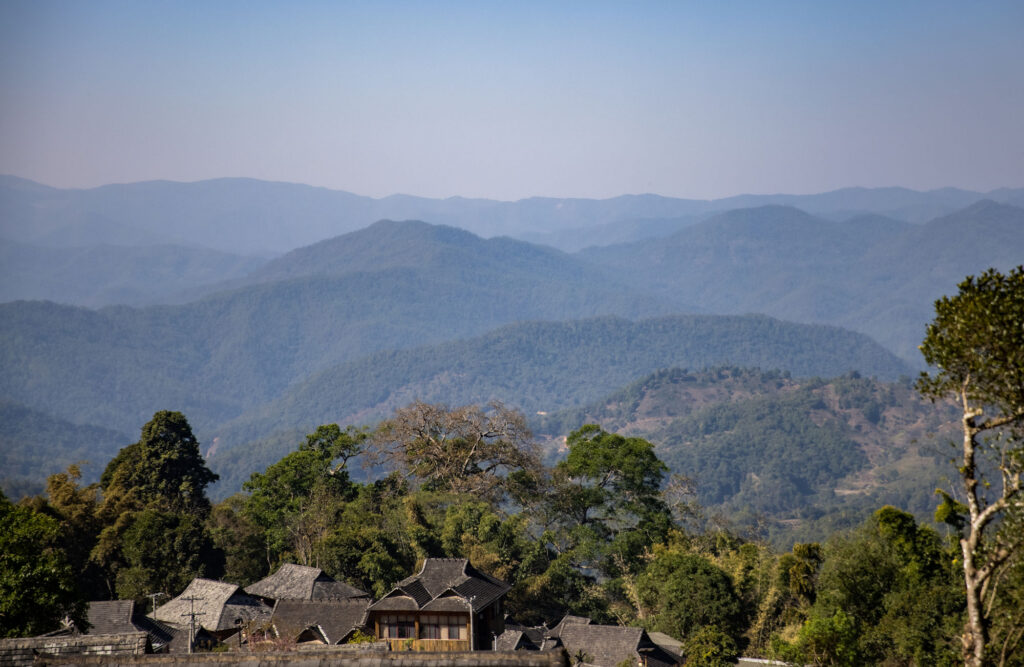
Its dramatic landscape includes mountains, subtropical forests, river valleys, and high plateaus. Tea is grown across several major regions, particularly Pu’er, Xishuangbanna, and Lincang, with famous mountain areas such as Jingmai, Yiwu, Bulang, Menghai, Bingdao, and others developing their own reputations.
Yunnan is best known for Pu-erh, but the province also produces excellent black tea, usually called Dian Hong, along with green, white, and experimental tea styles.
Understanding Yunnan tea means learning not only the tea categories, but also the mountains, villages, cultivars, and old-tree traditions behind them.
🍃 Why Yunnan Is So Important to Tea
Yunnan is frequently discussed in connection with the early history and diversity of the tea plant.
The province is home to both cultivated tea gardens and populations of old tea trees, including large-leaf varieties of Camellia sinensis. In some regions, tea trees are allowed to grow far larger than the low, tightly pruned bushes common in industrial plantations.
Yunnan’s warm, humid climate is balanced by mountainous terrain and wide differences in elevation. These conditions create numerous microclimates where tea trees can develop distinctive characteristics.
Perhaps nowhere is this relationship between tea and landscape more visible than Jingmai Mountain in Pu’er, where traditional old tea forests have been cultivated for more than a thousand years by local Blang and Dai communities. The Cultural Landscape of Old Tea Forests of the Jingmai Mountain in Pu’er was inscribed on the UNESCO World Heritage List in 2023.
🫖 Pu-erh: Yunnan’s Signature Tea
Yunnan is most closely associated with Pu-erh tea, a category traditionally made from tea leaves grown in the province.
Pu-erh begins with a rough green tea known as maocha. The leaves are harvested, briefly heated to slow enzymatic oxidation, rolled, dried, and then either sold loose or compressed into cakes, bricks, nests, or other shapes.
From there, Pu-erh is generally divided into two broad categories: sheng, or raw Pu-erh, and shou, or ripe Pu-erh.
Although both begin with similar material, the way they develop after processing creates very different teas.
🌱 Sheng Pu-erh: Raw Pu-erh
Sheng Pu-erh is the older traditional style.
After initial processing, the tea may be consumed while relatively young or stored for years or even decades. During storage, gradual chemical and microbial changes alter the flavor and aroma.
Young sheng can be fresh, floral, fruity, vegetal, bitter, sweet, and sometimes quite astringent.
With appropriate aging, it may become softer and deeper, developing notes that suggest dried fruit, wood, herbs, honey, camphor, or forest floor.
Age alone does not guarantee quality. The original leaf material, processing, storage environment, humidity, temperature, and airflow all affect how the tea develops.
🍂 Shou Pu-erh: Ripe Pu-erh
Shou Pu-erh is a much newer style developed during the twentieth century.
Its defining step is wo dui, often translated as wet piling. Tea leaves are piled, moistened, and carefully managed so that heat and microbial activity accelerate transformation.
The result is a dark tea that can develop some of the mellow qualities associated with naturally aged Pu-erh much more quickly.
Good ripe Pu-erh is often earthy, woody, smooth, and full-bodied. It may also show notes of cocoa, dried fruit, nuts, dates, or sweet wood.
Poorly stored or recently processed examples can sometimes have stronger fermentation aromas, which generally soften with time.
🌄 Xishuangbanna: One of Yunnan’s Great Tea Regions
Xishuangbanna, in southern Yunnan near the borders with Laos and Myanmar, is one of the province’s most famous tea-producing areas.
Its warm subtropical climate, mountains, forests, and long tea-growing history have made it especially important to Pu-erh.
Within Xishuangbanna are numerous famous mountains and villages whose names appear regularly on Pu-erh labels.
Among the best known are Yiwu, Bulang, Nannuo, Jinghong, Menghai, and Mengla.
Tea from each location can vary greatly depending on altitude, tree age, cultivar, and processing, so regional names provide clues rather than absolute guarantees of flavor.
🌿 Yiwu: Elegance and Sweetness
Yiwu is one of the most celebrated historic Pu-erh areas.
Located in eastern Xishuangbanna, it played an important role in historic tea trade routes and became associated with teas transported northward from Yunnan.
Yiwu teas are often described as relatively elegant and fragrant, with softer bitterness than some western Xishuangbanna teas.
Common tasting notes include flowers, honey, herbs, stone fruit, and lingering sweetness.
High-quality Yiwu sheng can initially feel gentle but develop considerable depth over repeated infusions.
The broader Yiwu area includes numerous villages and mountain locations, meaning there is no single universal Yiwu flavor.
⛰️ Bulang Mountain: Powerful Pu-erh
Bulang Mountain, in western Xishuangbanna, is famous for Pu-erh with a stronger, more assertive character.
Young Bulang teas can display pronounced bitterness and intensity, followed by returning sweetness known as hui gan.
Flavors may suggest herbs, flowers, wood, fruit, or minerals.
The region is also associated with long-established tea-growing communities, particularly the Blang people.
For tea drinkers who enjoy powerful sheng Pu-erh with strong structure and aging potential, Bulang is one of Yunnan’s most important names.
🌳 Lao Banzhang
Within the broader Bulang region lies Lao Banzhang, one of the most famous—and expensive—Pu-erh villages.
Tea from Lao Banzhang has developed a reputation for extraordinary intensity, bitterness, aroma, thickness, and lingering sweetness.
Because genuine Lao Banzhang tea commands very high prices, the name is also widely misused.
Anyone buying expensive tea labeled Lao Banzhang should pay close attention to provenance, producer reputation, and price.
The fame of Lao Banzhang illustrates how specific villages in Yunnan can become almost as important to Pu-erh buyers as vineyard names are to wine enthusiasts.
🌱 Nannuo Mountain
Nannuo Mountain, near Menghai, is another historic tea-growing area.
The mountain is home to numerous villages and old tea gardens, and its teas can display a broad range of styles.
Nannuo sheng is often aromatic and balanced, sometimes combining floral, fruity, honeyed, and lightly bitter notes.
Compared with some Bulang teas, it can feel more approachable while still offering substantial complexity.
Nannuo is a useful region to explore for drinkers beginning to compare mountain-specific Pu-erh.
🍵 Menghai: A Major Center of Pu-erh Production
Menghai County is one of Yunnan’s most important centers for Pu-erh production.
The area includes many famous tea mountains, but it is also known for its tea factories and the development of modern ripe Pu-erh processing.
Menghai-produced teas often appear throughout the global Pu-erh market, ranging from inexpensive everyday cakes to highly collectible releases.
The county’s combination of tea-growing areas and processing infrastructure has made Menghai one of the names most closely associated with modern Pu-erh culture.
🌄 Lincang: Mountains, Old Trees, and Famous Villages
Northwest of Xishuangbanna lies Lincang, another major Yunnan tea region.
Lincang contains extensive mountain tea areas, old tea trees, and a growing number of highly prized Pu-erh-producing villages.
The region is particularly associated with places such as Bingdao and Xigui.
Lincang teas can range from delicate and sweet to intense and structured, making it difficult to assign one flavor profile to the entire area.
Its prominence in specialty Pu-erh has increased considerably as buyers have become more interested in village-specific and old-tree teas.
❄️ Bingdao: Sweet and Highly Prized
Bingdao, in Lincang, is one of Yunnan’s most famous high-end tea origins.
The area is known for old tea trees and teas prized for sweetness, fragrance, and a smooth but persistent character.
Good Bingdao tea can have a cooling sensation, floral or fruity aromas, and a strong lingering sweetness.
As with Lao Banzhang, high prices have led to widespread use of the Bingdao name for teas that may originate from the wider area or elsewhere.
The term should therefore be treated cautiously when buying expensive tea.
🌿 Xigui: Fragrance and Strength
Xigui, another famous Lincang tea area, has developed a strong reputation among Pu-erh enthusiasts.
Its teas can combine fragrance and sweetness with more pronounced bitterness and structure.
Some examples show floral, fruity, mineral, or herbal characteristics alongside a strong returning sweetness.
Xigui is an interesting contrast with Bingdao because both are prestigious Lincang origins but can express different balances of power, aroma, and softness.
🌳 Jingmai Mountain: Old Tea Forests and Living Heritage
Jingmai Mountain, in Pu’er City, is one of the most culturally significant tea landscapes in Yunnan.
Unlike a conventional plantation dominated by rows of closely spaced bushes, the traditional tea forests of Jingmai integrate tea trees into a broader forest ecosystem.
UNESCO describes the landscape as a system of old tea groves, forests, villages, and plantations developed over more than a thousand years by the Blang and Dai peoples. Tea is traditionally cultivated beneath the forest canopy in a system adapted to the mountain’s subtropical monsoon environment.
The site was added to the UNESCO World Heritage List in 2023, recognizing not simply old tea trees but an entire cultural landscape connecting agriculture, ecology, traditional knowledge, villages, and spiritual practices.
Jingmai teas are often aromatic, floral, honeyed, and gently bitter, though character varies by village and processing.
🏞️ Pu’er City
The modern city of Pu’er shares its name with the famous tea category.
Historically, tea produced across a much wider portion of Yunnan moved through regional trading centers, and the relationship between the place name and tea name developed over centuries.
Today, Pu’er City includes important tea-producing districts and landscapes, including Jingmai Mountain.
It should therefore not be assumed that all Pu-erh tea is grown immediately around the modern city of Pu’er. Major production also occurs in Xishuangbanna, Lincang, and elsewhere in Yunnan.
🫖 Ancient Tea Trees and “Gushu”
One of the terms frequently encountered when exploring Yunnan tea is gushu, commonly translated as “ancient tree.”
The term is generally used for tea harvested from older, tree-form plants rather than conventional plantation bushes.
Old-tree tea has become highly desirable in the specialty Pu-erh market, where drinkers may associate it with greater depth, texture, complexity, and persistence.
However, there is no simple flavor test that proves a tea came from an ancient tree, and age claims can be difficult for consumers to verify.
Terms such as gushu, “old tree,” and specific age claims should therefore be considered alongside producer reputation and traceable origin rather than treated as guarantees of quality.
🍃 Yunnan Large-Leaf Tea
Much Yunnan tea is made from what is broadly described as Yunnan large-leaf tea, often associated with Camellia sinensis var. assamica.
The leaves tend to be larger than those of many tea cultivars grown farther north or east in China.
These plants are well suited to Yunnan’s warm environment and can produce teas with considerable strength, aroma, and chemical complexity.
Large-leaf material is particularly important to traditional Pu-erh production, but it is also used for black tea and other styles.
🖤 Dian Hong: Yunnan Black Tea
Yunnan is not only a Pu-erh region.
It is also famous for Dian Hong, the general name for Yunnan black tea. “Dian” is a traditional abbreviation for Yunnan, while hong cha means red tea in Chinese—the category English speakers usually call black tea.
Dian Hong can range from fine bud-heavy teas covered in golden hairs to stronger leaf grades intended for everyday drinking.
Typical flavors include malt, honey, cocoa, dried fruit, sweet potato, caramel, and spice.
The best examples can be remarkably smooth and naturally sweet.
🍯 Golden Yunnan Tea
Some Dian Hong teas contain large proportions of young golden-colored buds.
These teas are often marketed internationally under names such as Yunnan Gold, Golden Yunnan, or Golden Tips.
The abundant golden hairs on the buds give the dry tea a striking appearance.
Bud-heavy examples tend to be sweeter and softer than more robust leaf grades, with notes of honey, malt, cocoa, or dried fruit.
Marketing names vary considerably among tea sellers, so the appearance, harvest standard, and origin are often more informative than the English product name alone.
🌱 Yunnan Green Tea
Although it receives much less attention internationally, Yunnan also produces green tea.
One common category is Dian Lü, or Yunnan green tea.
Because large-leaf Yunnan material can have substantial bitterness and aroma, processing must be carefully managed to create a balanced green tea.
These teas may show vegetal, nutty, floral, or fruity characteristics while retaining more strength than many delicate eastern Chinese green teas.
Some young Pu-erh drinkers also enjoy comparing Yunnan green tea with fresh sheng Pu-erh because the early processing stages share certain similarities.
🤍 Yunnan White Tea
White tea production has also expanded in Yunnan.
Producers use local large-leaf cultivars and relatively simple withering-and-drying techniques to create teas that can taste quite different from traditional Fujian white tea.
Yunnan white teas are often sweeter and fuller-bodied, with flavors suggesting honey, dried flowers, hay, stone fruit, or tropical fruit.
Some are compressed into cakes and aged in a manner inspired by Pu-erh.
The category continues to evolve, making it one of the more interesting modern developments in Yunnan tea.
🌦️ How Yunnan’s Geography Shapes Tea
Yunnan’s tea country is extremely varied.
Elevation changes dramatically over short distances, while mountains create differences in rainfall, temperature, cloud cover, and exposure.
Subtropical valleys may be warm and humid, while higher mountain areas experience cooler temperatures and large differences between daytime and nighttime conditions.
Tea trees growing beneath a forest canopy may experience very different conditions from plants in open plantations.
These environmental differences combine with cultivar, tree age, harvest season, and processing to create highly localized teas.
That is why Pu-erh enthusiasts often talk about individual mountains and villages rather than simply “Yunnan tea.”
🧭 Tea Mountains and Terroir
The idea of terroir is particularly useful when exploring Yunnan.
Two sheng Pu-erh teas processed in nearly identical ways can taste surprisingly different if their leaves came from different mountains.
Some origins are associated with stronger bitterness, others with floral fragrance, sweetness, minerality, thickness, or cooling sensations.
At the same time, regional tasting descriptions should not be treated as rigid rules.
Processing, weather, storage, leaf quality, and even brewing method can easily change how a tea presents itself.
Mountain origin is therefore one piece of the puzzle rather than a guarantee of a particular flavor.
🚚 The Ancient Tea Horse Road
Yunnan tea was historically transported over long-distance trade routes often collectively known as the Tea Horse Road.
Tea traveled from Yunnan toward Tibet, Sichuan, Southeast Asia, and other destinations, often compressed into shapes that were easier to transport.
These trade networks helped spread Yunnan tea far beyond its place of origin.
The history of compressed Pu-erh is therefore connected not only with flavor and aging but also with the practical demands of transporting tea across difficult mountain terrain.
🍵 Where to Begin Exploring Yunnan Tea
Yunnan can seem intimidating because there are so many mountains, villages, factories, vintages, and styles.
A simple approach is to begin by comparing the main tea categories.
Start with a young sheng Pu-erh to experience freshness, bitterness, fragrance, and returning sweetness.
Then try a shou Pu-erh to experience the darker, smoother character created through wet-pile fermentation.
Add a Dian Hong to see how the same broad tea-growing region can create a rich and naturally sweet black tea.
From there, begin comparing Pu-erh origins. A Yiwu tea can provide a useful contrast with a stronger Bulang tea, while teas from Jingmai or Lincang introduce additional regional styles.
There is no need to begin with extremely expensive old-tree or famous-village teas. Well-made, reasonably priced teas from reputable producers are much more useful for learning.
🌏 A Tea Region Worth Exploring Slowly
Yunnan is not simply the birthplace of Pu-erh. It is an enormous and complex tea landscape shaped by mountains, forests, old tea trees, local communities, historic trade routes, and centuries of tea-making knowledge.
The bold teas of Bulang, elegant styles associated with Yiwu, famous villages of Lincang, and forest-grown teas of Jingmai Mountain all offer different expressions of Yunnan.
At the same time, Dian Hong, Yunnan white tea, and local green teas demonstrate that the province cannot be reduced to Pu-erh alone.
Learning names such as Xishuangbanna, Menghai, Yiwu, Bulang, Lincang, Bingdao, and Jingmai makes Yunnan tea much easier to navigate.
More importantly, it turns every cup into a connection with a particular mountain, landscape, and tea-making tradition.
🔗 Related Articles
📚 Sources & Further Reading
- UNESCO World Heritage Centre — Cultural Landscape of Old Tea Forests of the Jingmai Mountain in Pu’er
- UNESCO World Heritage Centre — Jingmai Mountain World Heritage Decision
- UNESCO World Heritage Centre — Jingmai Mountain Nomination Documents
- UNESCO World Heritage Centre — Jingmai Mountain Advisory Body Evaluation