Fujian is one of China’s most important and diverse tea-producing provinces. Few regions in the world are associated with so many famous tea styles. From the mineral-rich oolongs of the Wuyi Mountains to the floral Tieguanyin of Anxi and the delicate white teas of Fuding, Fujian has shaped both Chinese tea culture and the wider history of tea.
The province is especially significant for oolong tea, but its traditions also include white tea, black tea, jasmine tea, and green tea. Fujian’s mountainous terrain, humid subtropical climate, coastal influence, and long history of tea craftsmanship have created distinct local tea cultures that can differ dramatically from one county to the next.
For tea drinkers, learning Fujian’s major tea regions makes it much easier to understand names such as Da Hong Pao, Tieguanyin, Silver Needle, Lapsang Souchong, and Fuzhou jasmine tea.
⛰️ Wuyishan: The Home of Wuyi Rock Tea
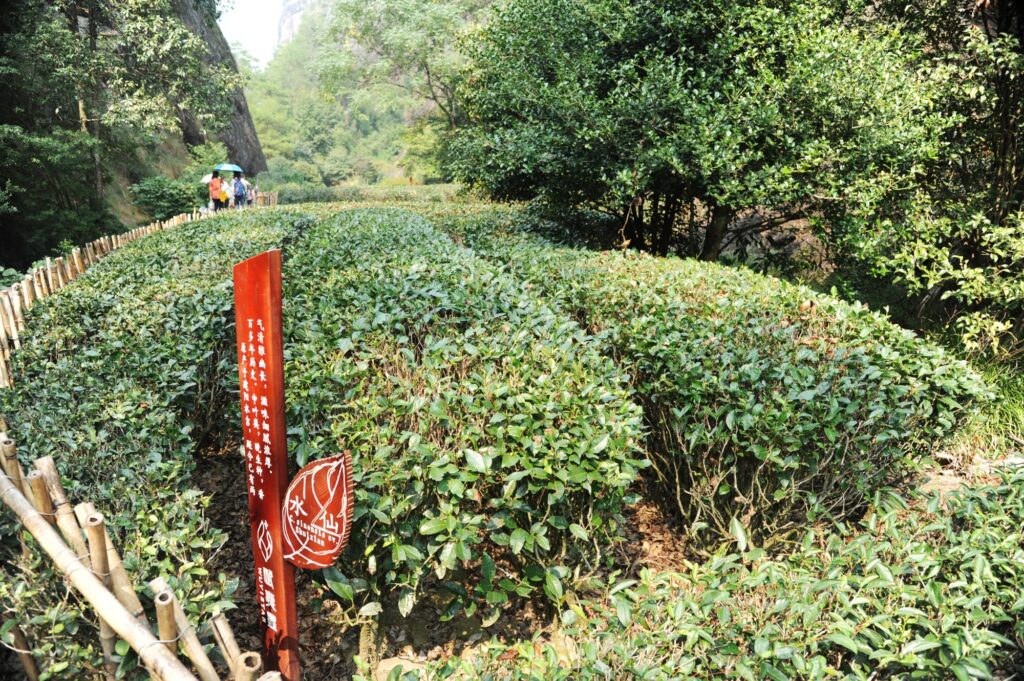
The Wuyi Mountains in northwestern Fujian are one of the most famous tea landscapes in China. This is the birthplace of Wuyi rock tea, or yancha, a family of roasted oolongs traditionally grown among the rocky valleys and cliffs of Wuyishan.
The region’s soils, misty mountain climate, and dramatic terrain are closely associated with the distinctive character traditionally called yan yun, often translated as “rock rhyme.” Fujian’s provincial government describes the hallmark of Wuyi rock tea as a combination of mineral character and floral aroma shaped by the area’s terroir and processing tradition.
Wuyi oolong is generally more oxidized and roasted than many modern southern Fujian oolongs. Good examples can show notes of roasted nuts, flowers, stone fruit, caramel, spice, cocoa, and minerals.
The region contains many tea cultivars and local varieties, producing a remarkable range of rock teas.
🔥 Da Hong Pao: Wuyi’s Most Famous Tea
Da Hong Pao, or Big Red Robe, is the most internationally recognizable Wuyi rock tea.
The name originally referred to celebrated mother tea bushes growing in the Wuyi Mountains, but today Da Hong Pao is also used for teas made from propagated plant material and blends designed to represent the traditional Wuyi style.
Da Hong Pao is typically roasted, aromatic, and full-bodied. Depending on how it is produced, flavors may suggest baked fruit, toasted grain, dark flowers, minerals, wood, and caramel.
The traditional craftsmanship used for Wuyi rock tea involves multiple stages, including withering, shaking, oxidation, firing, rolling, and roasting. Fujian recognizes this craft as part of its important intangible cultural heritage.
🌿 Rou Gui and Shui Xian
Although Da Hong Pao gets much of the attention, two of the most important Wuyi rock teas are Rou Gui and Shui Xian.
Rou Gui is especially prized for its powerful fragrance. Its name means “cinnamon,” and good examples may indeed show warm spicy notes reminiscent of cinnamon bark, though the tea is not flavored with spice.
Shui Xian tends to have a deeper, rounder character. Mature examples can be woody, floral, mineral, and slightly sweet.
Both teas vary significantly according to garden location, roasting level, and craftsmanship.
Exploring Rou Gui and Shui Xian alongside Da Hong Pao is one of the best ways to understand the diversity of Wuyi tea.
🌸 Anxi: The Home of Tieguanyin
In southern Fujian, Anxi County is famous as the birthplace of Tieguanyin.
Tieguanyin is an oolong tea traditionally made through a carefully controlled process involving withering, shaking, oxidation, fixation, rolling, and drying. Fujian’s provincial government identifies Anxi as the historic center of Tieguanyin production and notes that the traditional craft is recognized as national intangible cultural heritage.
Tieguanyin can vary dramatically depending on how it is processed.
Modern lighter styles may be intensely floral, fresh, and creamy, with aromas resembling orchids and lilacs.
Traditional roasted Tieguanyin tends to be deeper and warmer, with notes of toasted nuts, baked fruit, caramel, flowers, and minerals.
This difference is important because the name Tieguanyin refers both to a tea cultivar and to a style of tea.
🫖 Southern Fujian Oolong
Anxi is part of a broader southern Fujian oolong tradition.
Tea production in this part of the province often emphasizes tightly rolled leaves rather than the long twisted leaves typical of Wuyi rock tea.
Other cultivars grown in the region include Huang Jin Gui, Ben Shan, Mao Xie, and various aromatic local varieties.
Southern Fujian oolongs are often highly fragrant and can range from fresh and lightly oxidized to richly roasted.
Comparing an Anxi Tieguanyin with a Wuyi rock tea is an excellent way to experience two very different expressions of Fujian oolong.
🤍 Fuding: The Heart of Fujian White Tea
On the northeastern coast of Fujian lies Fuding, one of China’s most important white tea regions.
Fuding is strongly associated with traditional white tea production, particularly around the Taimu Mountain area. Its tea-making heritage was formally recognized internationally in 2025 when the Fuding White Tea Culture System was added to the FAO’s Globally Important Agricultural Heritage Systems.
White tea is processed much more simply than most other tea categories. Traditional production emphasizes withering and drying rather than rolling and intensive firing.
This relatively gentle processing allows the leaves to oxidize gradually while preserving much of their natural appearance.
Fuding’s most important tea cultivars include Fuding Da Bai Cha and Fuding Da Hao Cha.
🌱 Silver Needle, White Peony, Gong Mei, and Shou Mei
Fuding produces several major styles of white tea.
Baihao Yinzhen, commonly called Silver Needle, is made primarily from young buds covered in fine white hairs. It is generally the most delicate and prized traditional style.
Bai Mudan, or White Peony, contains both buds and young leaves, producing more body while retaining floral and sweet qualities.
Gong Mei and Shou Mei generally contain more mature leaves and can develop fuller, fruitier, or deeper flavors.
Fresh white tea can be light, floral, grassy, and gently sweet. With time, some white teas develop flavors associated with dried fruit, honey, herbs, and wood.
Fujian’s official cultural descriptions identify Silver Needle, White Peony, Gong Mei, and Shou Mei among the characteristic forms of Fuding white tea.
🌊 Zhenghe: Another Important White Tea Region
Fuding is the best-known Fujian white tea region, but Zhenghe is also historically important.
Zhenghe lies inland compared with Fuding and has a somewhat different climate and elevation profile.
Traditional Zhenghe white teas can be slightly darker, fuller, and more robust than some Fuding teas, though style depends heavily on cultivar and processing.
The comparison between Fuding and Zhenghe is useful for tea drinkers who want to understand that “Fujian white tea” is not a single flavor.
🔥 Wuyishan and Lapsang Souchong
Fujian also played a major role in the development of black tea.
The Wuyi region is traditionally associated with Lapsang Souchong, known in China as Zhengshan Xiaozhong.
Traditional versions are produced around Tongmu in the Wuyi Mountains. Some styles are dried or smoked over pinewood, producing the famously smoky aroma associated with Lapsang Souchong.
However, not all high-quality Zhengshan Xiaozhong is intensely smoky. Some examples emphasize fruit, honey, malt, and floral notes instead.
Fujian’s provincial government lists Lapsang Souchong among the province’s important geographically identified teas.
🍯 Jin Jun Mei
Another famous Wuyi black tea is Jin Jun Mei.
Developed much more recently than many traditional Fujian teas, Jin Jun Mei is made primarily from young buds and has become one of China’s prestigious black teas.
Its flavor can be honeyed, fruity, floral, malty, and sweet, sometimes with notes of cocoa or baked fruit.
Because genuine high-quality Jin Jun Mei requires a large quantity of carefully plucked buds, it can be expensive.
The popularity of Jin Jun Mei has also encouraged many imitations, so origin and producer information are worth checking when buying it.
🌼 Fuzhou: Jasmine Tea Tradition
Fujian is not only about oolong and white tea.
The provincial capital, Fuzhou, has a major tradition of jasmine tea production.
Jasmine flowers are repeatedly layered with finished tea so that the dry leaves absorb the flowers’ fragrance. Depending on the quality level, the scenting process may be repeated several times.
The goal of good jasmine tea is not simply to smell strongly of jasmine. The best versions integrate floral aroma with the underlying tea so that neither dominates completely.
Fuzhou’s jasmine tea scenting tradition has been recognized as an important element of Chinese intangible cultural heritage.
🍃 Songxi: Fujian Green Tea
Although Fujian is far more famous for oolong, white, and black tea, it also produces green tea.
Songxi, in northern Fujian, is one notable green tea area.
Songxi green tea appears among Fujian teas recognized as geographical indication products, demonstrating the province’s broader diversity beyond its best-known styles.
Fujian green teas tend to receive less international attention than Longjing from Zhejiang or Biluochun from Jiangsu, but they are an interesting part of the province’s tea heritage.
🌿 Zhangping Shuixian
One particularly distinctive Fujian tea is Zhangping Shuixian.
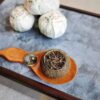
Produced around Zhangping in western Fujian, it belongs to the oolong family but is unusual because it is traditionally compressed into small square cakes.
The tea is made from the Shui Xian cultivar and can offer a fragrant combination of flowers, fruit, cream, and light roast.
Fujian recognizes the traditional craftsmanship of Zhangping Shuixian as part of its oolong tea heritage.
Its pressed form makes it visually different from both tightly rolled Anxi oolong and long-leaf Wuyi rock tea.
🗺️ Northern vs. Southern Fujian Tea
One useful way to understand Fujian tea is to divide the province broadly into northern and southern traditions.
Northern Fujian is most closely associated with the Wuyi Mountains and teas such as Da Hong Pao, Rou Gui, Shui Xian, Lapsang Souchong, and Jin Jun Mei.
These teas often emphasize roasting, mineral character, deeper oxidation, and complex aromatic development.
Southern Fujian, particularly Anxi, is famous for Tieguanyin and other ball-rolled oolongs.
Modern southern Fujian oolongs are often lighter, greener, and more floral, although traditional roasted versions remain important.
Northeastern Fujian, meanwhile, is especially associated with the white tea traditions of Fuding and Zhenghe.
Thinking of Fujian in these regional terms makes its enormous tea diversity much easier to understand.
🌦️ Why Fujian Is So Well Suited to Tea
Fujian’s geography is dominated by hills and mountains, with a humid subtropical climate and considerable variation in elevation.
Mountain slopes can experience frequent mist, cooler temperatures, and shifting sunlight conditions.
Different soils and microclimates have helped tea cultivars adapt to specific locations over generations.
Just as important is the province’s long history of processing innovation.
Many defining tea styles emerged not simply because of where tea grew but because Fujian tea makers developed techniques such as controlled oxidation, shaking, roasting, scenting, and natural withering.
In Fujian, terroir and craftsmanship are inseparable.
🍵 Where to Begin Exploring Fujian Tea
A good introduction to Fujian tea should include several contrasting styles.
Start with a light Anxi Tieguanyin to experience Fujian’s bright, floral oolong tradition.
Then try a Wuyi Rou Gui or Da Hong Pao to experience the deeper, roasted, mineral side of oolong.
A Fuding Bai Mudan provides a gentle introduction to white tea, while Silver Needle shows an even more delicate expression.
For black tea, compare Zhengshan Xiaozhong with a sweeter, bud-heavy Jin Jun Mei.
A cup of Fuzhou jasmine tea adds yet another dimension.
Trying these teas side by side makes it obvious why Fujian cannot be reduced to one signature flavor.
🌏 One Province, Many Tea Traditions
Fujian is extraordinary because so many fundamentally different tea traditions developed within one province.
The rocky mountains of Wuyishan gave rise to roasted oolongs and historic black teas. Anxi became synonymous with floral Tieguanyin. Fuding and Zhenghe developed some of the world’s most important white teas, while Fuzhou became famous for jasmine scenting.
This diversity makes Fujian one of the best places to explore tea by geography.
Once names such as Wuyi, Anxi, Fuding, Zhenghe, Fuzhou, and Zhangping become familiar, tea labels begin to reveal much more than just a style. They point toward landscapes, cultivars, processing traditions, and centuries of tea-making history.
🔗 Related Articles
📚 Sources & Further Reading
- Fujian Provincial People’s Government — Wuyi Rock Tea Craftsmanship
- Fujian Provincial People’s Government — Oolong Tea Processing and Anxi Tieguanyin
- Fujian Provincial People’s Government — Fuding White Tea Production Technique
- Fujian Provincial People’s Government — Fuding White Tea Culture System
- Foreign Affairs Office of Fujian — Fujian Tea and Anxi Tieguanyin
- Foreign Affairs Office of Fujian — Fuding White Tea and Fuzhou Jasmine Tea