Black tea is one of the most versatile beverages to serve with food. Its rich flavors, fragrant aromas, and pleasantly brisk character make it a natural companion for everything from a hearty breakfast to a delicate afternoon pastry or a savory evening meal.
But not all black teas taste alike, and choosing the right variety can make a surprising difference.
A strong, malty Assam pairs beautifully with eggs, aged cheese, and chocolate desserts, while a floral Darjeeling is better suited to fresh fruit, light sandwiches, and delicate cakes. Earl Grey brings citrus notes that complement buttery shortbread and lemon desserts, while smoky Lapsang Souchong can be an interesting partner for grilled meats.
The best black tea food pairings balance the intensity, flavor, and texture of the tea with the food you’re serving. Rich dishes often work well with full-bodied teas, while lighter meals benefit from more delicate varieties.
Whether you’re preparing breakfast, planning an afternoon tea party, or experimenting with tea as an alternative to wine at dinner, understanding a few simple pairing principles can help you choose a delicious combination.
Here’s a guide to the best foods to serve with black tea, including recommendations for different black tea varieties, savory meals, cheeses, desserts, and snacks.
🫖 Why Does Black Tea Pair So Well With Food?
Black tea has a distinctive flavor profile that makes it particularly adaptable to food pairing.
Like green, white, and oolong tea, it comes from the Camellia sinensis plant. Most black tea undergoes substantial oxidation during processing, which contributes to its deeper color, fuller body, and characteristic flavors.
Depending on the variety, black tea may taste malty, brisk, fruity, floral, woody, honeyed, roasted, or gently smoky.
These characteristics create opportunities to complement or contrast with different foods.
A malty Assam can enhance the toasted flavors of bread, biscuits, and roasted ingredients. A fruity Darjeeling may bring out the sweetness of berries or stone fruit. Earl Grey, flavored with bergamot, offers a citrus contrast to rich, buttery foods.
Black tea also contains polyphenols that contribute to astringency, the slightly drying sensation you may notice after taking a sip.
Moderate astringency can provide a pleasant contrast to creamy or fatty foods, although an excessively strong tea may overwhelm more delicate flavors.
The Tea and Herbal Association of Canada recommends black tea with foods such as roasted meats, blue cheese, honey-based desserts, and milk chocolate.
These examples demonstrate that black tea isn’t limited to breakfast or afternoon tea. With the right choice, it can accompany an entire meal.
🍽️ Best Black Tea Food Pairings at a Glance
If you’re looking for a quick recommendation, these combinations provide an excellent starting point.
| Black tea | Foods that pair well |
|---|---|
| Assam | Eggs, hearty breakfasts, cheddar, chocolate cake |
| English Breakfast | Buttered toast, bacon, scones, sandwiches |
| Irish Breakfast | Sausage, potatoes, strong cheeses, fruitcake |
| Darjeeling | Cucumber sandwiches, fruit tarts, light cakes |
| Ceylon | Chicken, ham, fresh fruit, honey desserts |
| Earl Grey | Shortbread, lemon cake, pastries, smoked salmon |
| Keemun | Mushrooms, roasted meat, dark chocolate |
| Lapsang Souchong | Smoked meats, barbecue, strong cheeses |
| Yunnan black tea | Roasted nuts, caramel, chocolate, savory pastries |
| Masala chai | Spiced dishes, oatmeal, gingerbread, carrot cake |
These are suggestions rather than strict rules. Individual teas vary considerably, even when they come from the same region or share the same name.
A delicate orthodox Assam may behave differently from a strong CTC Assam, while a first-flush Darjeeling can taste almost unrelated to a rich second-flush version.
Understanding those differences can help you create more thoughtful pairings.
🍞 Assam Tea Food Pairings
Assam is one of the best black teas for hearty foods.
Grown in northeastern India, Assam is particularly famous for its strong, malty character, substantial body, and deep amber color.
These characteristics make it well suited to meals that might overwhelm lighter teas.
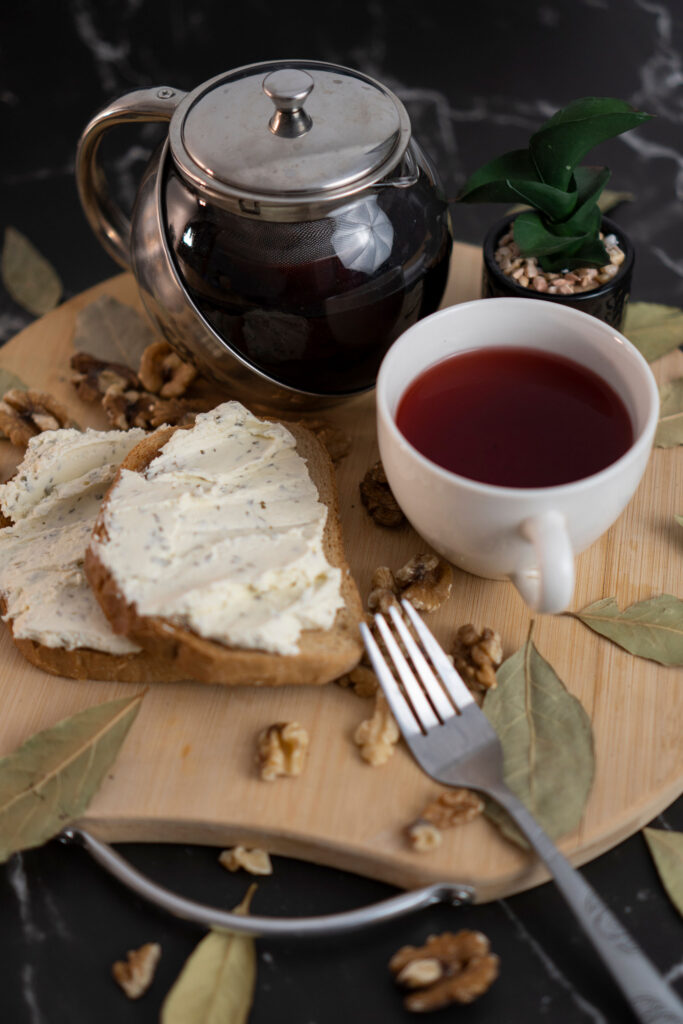
A traditional cooked breakfast is an excellent example. Eggs, bacon, sausage, mushrooms, potatoes, and buttered toast all work well with Assam’s rich flavor.
Assam also pairs beautifully with baked goods containing toasted grains, brown sugar, or warming spices. Oatmeal cookies, gingerbread, cinnamon rolls, and fruitcake can be particularly enjoyable.
For savory meals, try Assam with roasted beef, meat pies, or mature cheddar cheese.
Its substantial flavor can remain noticeable alongside rich ingredients, while its briskness provides contrast to creamy or buttery textures.
Chocolate is another excellent partner. A cup of Assam can complement brownies, chocolate cake, or a simple piece of milk chocolate.
If you’re using a strong CTC Assam, adding milk may create a smoother pairing, particularly for breakfast and sweet baked goods.
A high-quality orthodox Assam, on the other hand, is worth trying plain so you can appreciate its natural honey, caramel, and fruit notes.
Our Assam Black Tea Guide explores the different processing styles and flavors in greater detail.
🌸 Darjeeling Tea Food Pairings
Darjeeling is often considered one of the more delicate and aromatic styles of black tea.
Grown in the Himalayan foothills of India’s Darjeeling region, it is known for its floral, fruity, and sometimes muscatel characteristics.
The best food pairings depend partly on the harvest season.
First-flush Darjeeling is generally light, fresh, and floral. These qualities make it particularly suitable for cucumber sandwiches, fresh fruit, mild cheeses, and delicate pastries.
A light vanilla sponge cake or a simple butter cookie can be lovely with first-flush Darjeeling because neither food overwhelms the tea’s fragrance.
Second-flush Darjeeling usually has a fuller body and more pronounced fruity character. It often pairs well with fruit tarts, almond pastries, honey desserts, and richer baked goods.
The Foodpairing flavor research platform identifies ingredients such as apple, vanilla, cucumber, honey, and certain seafood as interesting partners for Darjeeling.
This makes Darjeeling a particularly versatile choice for afternoon tea, where sandwiches, fruit, and delicate desserts are often served together.
Because its fragrance is an important part of the experience, try Darjeeling plain before adding milk or sugar.
For more information about its different harvests, see our Darjeeling Black Tea Guide.
🍊 Ceylon Black Tea Food Pairings
Ceylon black tea comes from Sri Lanka and includes a wide range of regional styles.
Some Ceylon teas are bright, brisk, and citrusy, while others are richer, fuller-bodied, or gently floral.
This versatility makes Ceylon one of the easiest teas to incorporate into everyday meals.
Bright Ceylon teas can work beautifully with sandwiches, chicken dishes, lightly seasoned vegetables, and savory pastries.
They also complement fresh fruit and desserts containing citrus, honey, or berries.
For breakfast, Ceylon pairs well with toast, eggs, muffins, and pancakes. Its brisk character can create a pleasant contrast to butter, jam, and syrup.
Ceylon also makes an excellent iced tea for lunch or brunch.
A chilled, unsweetened Ceylon can be particularly refreshing with grilled chicken, ham sandwiches, or a summer meal featuring fresh vegetables.
Fuller-bodied varieties can handle richer foods, including roast lamb or beef, while delicate high-grown teas may be better suited to lighter dishes.
Because the flavor varies significantly by growing region, it’s worth experimenting with different Ceylon teas rather than assuming they all taste the same.
Our Ceylon Black Tea Guide explains how Sri Lanka’s tea-growing regions influence the finished cup.
🍋 Earl Grey Tea Food Pairings
Earl Grey is one of the most recognizable flavored black teas.
Its distinctive aroma comes from bergamot, a fragrant citrus fruit. The bergamot provides bright, floral, and citrusy notes that distinguish Earl Grey from unflavored black teas.
These qualities make Earl Grey particularly appealing with buttery baked goods and citrus desserts.
Shortbread is one of the best pairings. The richness of the butter contrasts with Earl Grey’s fragrant citrus character, creating a simple but satisfying combination.
Lemon cake, lemon cookies, orange loaf cake, and vanilla sponge are also excellent choices.
Earl Grey works particularly well with desserts that contain berries, since the bergamot can complement fruity flavors without adding additional sweetness.
However, Earl Grey isn’t limited to desserts.
It can also pair nicely with cucumber sandwiches, egg sandwiches, and smoked salmon served with cream cheese.
The citrus aroma provides an interesting contrast to creamy fillings and savory ingredients.
For a traditional afternoon tea featuring sandwiches, scones, and small pastries, Earl Grey is one of the most versatile options.
If you enjoy a stronger cup, choose an Earl Grey made with a full-bodied black tea base. For delicate pastries, a lighter blend may be preferable.
🔥 Keemun and Lapsang Souchong Food Pairings
Chinese black teas offer some particularly interesting possibilities for savory food pairing.
Keemun, produced in China’s Anhui Province, is known for its smooth, aromatic character. Depending on the tea, it may have notes of dried fruit, honey, cocoa, wood, flowers, or gentle smoke.
These qualities can complement roasted meats, mushrooms, savory pastries, and chocolate desserts.
Keemun is especially interesting with mushroom dishes because its woody and earthy characteristics can echo the deeper flavors of the food.
It can also pair beautifully with chocolate containing nuts or dried fruit.
Lapsang Souchong offers a very different experience.
Traditional smoked Lapsang Souchong is known for its distinctive pine-smoke aroma, making it one of the boldest black teas for pairing with food.
It can be particularly enjoyable with smoked salmon, barbecue, grilled meats, and strong cheeses.
The smoke in the tea reinforces similar flavors in the food, creating a rich combination.
However, not every Lapsang Souchong is smoked. Unsmoked versions can be fruity, sweet, and aromatic, requiring a different approach to pairing.
For strongly smoked varieties, begin with small portions and avoid very delicate foods that may become overwhelmed.
Our Keemun Black Tea Guide and Lapsang Souchong Tea Guide offer more information about these distinctive teas.
🍳 Best Black Tea Pairings for Breakfast
Breakfast is one of the most familiar occasions for enjoying black tea, and there are good reasons for its popularity.
Many traditional breakfast foods contain butter, eggs, toasted bread, meat, cheese, or sweet preserves. These ingredients pair naturally with the malty, brisk character of full-bodied black teas.
English Breakfast is one of the most flexible options.
Its balanced flavor works well with scrambled eggs, toast, bacon, sausage, baked beans, and other cooked breakfast foods.
Irish Breakfast is another excellent choice, particularly when you prefer a stronger tea with milk.
Assam is ideal for a substantial breakfast because its malty body can stand up to hearty savory dishes.
For a lighter breakfast of fresh fruit, toast, yogurt, or pastries, Darjeeling or a bright Ceylon may be more suitable.
If you’re serving croissants or scones with jam, Earl Grey can provide a lovely citrus contrast.
A simple way to choose is to consider how rich the breakfast will be. Hearty meals generally benefit from stronger teas, while delicate pastries and fruit often work better with lighter varieties.
🥪 Best Black Tea With Sandwiches and Light Lunches
Black tea isn’t just a breakfast beverage. It can also be an excellent accompaniment to sandwiches, quiches, and other light lunches.
For cucumber sandwiches, try first-flush Darjeeling or a lightly brewed Earl Grey.
Their delicate, aromatic characteristics complement the mild cucumber and creamy filling without overwhelming them.
Egg salad sandwiches work particularly well with Ceylon or English Breakfast. These teas offer enough body to accompany the richness of the eggs and mayonnaise.
Smoked salmon sandwiches can be especially enjoyable with Earl Grey because the bergamot provides a citrus contrast to the smoky fish.
For ham and cheese sandwiches, Ceylon or Assam may be better choices.
Their fuller flavors can accompany salty meat and cheese without disappearing beneath them.
Chicken salad sandwiches are particularly versatile. A balanced Ceylon, Darjeeling, or English Breakfast can all work depending on the seasonings.
If you’re serving several different sandwiches at an afternoon gathering, English Breakfast and Earl Grey make a practical two-tea selection.
Our Tea Sandwich Recipes provide additional ideas for pairing tea with savory finger foods.
🍗 Best Black Tea With Savory Meals
Although black tea is frequently associated with sweet treats, many varieties pair beautifully with savory dinners.
The Tea and Herbal Association of Canada recommends black tea with roasted or grilled beef and game, highlighting its suitability for substantial main courses.
Assam is a dependable choice for rich meat dishes because its strong flavor complements roasted and savory ingredients.
Keemun can be particularly interesting with mushrooms, roasted vegetables, and meats featuring gently smoky or earthy flavors.
Ceylon is versatile enough to accompany chicken, lamb, and dishes with moderately strong seasonings.
For grilled or smoked foods, traditional smoked Lapsang Souchong offers an adventurous pairing.
Its smoky aroma can complement barbecue, smoked meats, and roasted vegetables.
However, a lighter black tea may be preferable for delicate seafood.
Darjeeling, for example, can work with simply prepared fish, particularly when the dish includes citrus or fresh herbs.
The key is matching the strength of the tea to the intensity of the food.
A heavily roasted dish may overpower a delicate first-flush Darjeeling, while a very strong smoked tea could dominate a lightly seasoned fish.
🧀 Best Black Tea Pairings for Cheese
Tea and cheese can be surprisingly delicious together.
The richness, saltiness, and texture of cheese create interesting contrasts with the body and astringency of black tea.
For aged cheddar, Assam is one of the best starting points.
Its malty strength complements the cheese’s sharp, nutty flavor, while the tea’s briskness provides contrast to the richness.
Keemun is another excellent option, particularly with cheeses that have earthy or nutty characteristics.
For mild cheeses, Darjeeling or Earl Grey may be more suitable.
A light Darjeeling can complement fresh goat cheese or a mild creamy cheese without overwhelming its flavor.
Stronger blue cheeses require more careful matching.
The Tea and Herbal Association of Canada recommends black tea with blue cheese, and a substantial Assam or smooth Keemun can provide enough flavor to accompany the cheese.
Smoked Lapsang Souchong is another possibility for strong cheeses, particularly when you enjoy bold, smoky combinations.
However, its intense aroma may be too powerful for delicate cheeses.
If you’re preparing a cheese board, consider offering one lighter black tea and one robust variety so guests can experiment with different pairings.
🍫 Best Black Tea With Chocolate
Black tea and chocolate are natural companions because both offer complex flavors that can include fruit, nuts, roasted ingredients, and gentle bitterness.
For rich dark chocolate, Assam and Keemun are excellent starting points.
Assam’s malty strength complements deep cocoa flavors, while Keemun may contribute fruity, woody, or cocoa-like notes.
Milk chocolate pairs particularly well with a strong breakfast tea, especially when served plain or with a modest amount of milk.
The contrast between the tea’s briskness and the chocolate’s creamy sweetness can be particularly satisfying.
Earl Grey offers a different experience.
Its fragrant bergamot provides a citrus contrast to dark chocolate, making it especially enjoyable with chocolate containing orange or berries.
For chocolate truffles, brownies, or dense chocolate cake, a full-bodied Assam is often the simplest choice.
If the dessert contains toasted nuts, Keemun or a naturally sweet Yunnan black tea may also be worth trying.
Very high-cocoa chocolate can be quite bitter, so avoid automatically pairing it with the strongest, most astringent tea. A smooth, rounded black tea may produce a more balanced combination.
🍰 Best Black Tea With Cakes and Pastries
Black tea is an excellent companion for baked desserts, but the ideal variety depends on the cake’s richness and dominant ingredients.
Chocolate cake pairs beautifully with Assam because the tea’s malty strength complements cocoa and balances sweet frosting.
Lemon cake is a natural partner for Earl Grey. The bergamot aroma reinforces the dessert’s citrus character.
Vanilla sponge and light butter cakes often work well with Darjeeling or Ceylon, which provide flavor without overwhelming delicate ingredients.
Carrot cake is particularly enjoyable with masala chai because the tea’s cinnamon, cardamom, ginger, and other spices complement those commonly used in the cake.
For fruitcake, consider Assam or Irish Breakfast. Their fuller flavors can stand up to dried fruit, nuts, and warming spices.
Apple cake is another versatile choice.
A second-flush Darjeeling can complement its fruity sweetness, while a malty Assam works particularly well if the cake contains cinnamon or caramel.
For simpler pastries, such as croissants, madeleines, and lightly sweetened scones, Earl Grey and Darjeeling are excellent options.
The more delicate the cake, the more important it becomes to avoid overpowering it with a very strong tea.
For homemade ideas, see our Tea Cake Recipes.
🍪 Best Black Tea With Cookies and Biscuits
Cookies and black tea are one of the easiest combinations to enjoy, whether you’re planning a formal afternoon tea or simply taking a break.
Buttery shortbread is particularly good with Earl Grey.
The fragrance of bergamot contrasts with the richness of the butter while allowing the shortbread’s simple flavor to remain prominent.
Chocolate chip cookies pair beautifully with Assam or English Breakfast, especially when the cookies contain dark chocolate or brown sugar.
Oatmeal raisin cookies are another natural partner for Assam because of the shared toasted, malty qualities.
For lemon cookies, Earl Grey is an excellent choice.
Darjeeling works particularly well with delicate sugar cookies, vanilla biscuits, and almond cookies.
Ginger snaps, gingerbread cookies, and snickerdoodles can be especially enjoyable with masala chai.
Keemun is worth trying with chocolate or nut-filled biscuits, while Ceylon offers a flexible option for a mixed cookie tray.
If you’re serving several types of cookies, choose one familiar black tea and one more aromatic variety.
English Breakfast and Earl Grey provide a particularly useful combination.
For a homemade treat, try our Tea Cookies Recipe.
🌶️ Does Black Tea Pair Well With Spicy Food?
Black tea can complement spicy food, but the best choice depends on the ingredients and level of chili heat.
Ceylon is particularly useful because its bright, brisk character can provide an interesting contrast to strongly flavored dishes.
It can work well with spiced grilled meats, savory rice dishes, and foods containing aromatic herbs.
Keemun is another option, especially with rich dishes featuring roasted spices, mushrooms, or deeply savory sauces.
Assam can complement substantial curries and other heavily seasoned foods, although its strong astringency may not be appealing when the chili heat is very intense.
For creamy curries or spicy dishes with warming spices, black tea prepared with milk may be especially satisfying.
Masala chai can also complement foods containing cardamom, ginger, cinnamon, and similar aromatics, although a very peppery chai may add further pungency.
If your mouth is already burning from chili peppers, remember that plain tea is not necessarily an effective way to reduce the sensation.
Milk-based tea may be more comfortable because dairy can help reduce perceived capsaicin burn.
For very spicy meals, a smooth iced black tea or a gently prepared milk tea is often preferable to an extremely hot, strongly brewed infusion.
🥛 Should You Add Milk to Black Tea When Serving Food?
Adding milk changes the flavor, texture, and sometimes the ideal food pairing of black tea.
Robust varieties such as Assam, Irish Breakfast, and many English Breakfast blends often work particularly well with milk.
Their substantial body allows the tea flavor to remain noticeable after the milk is added.
A creamy cup of Assam can be delicious alongside buttered toast, scones, chocolate chip cookies, or a rich breakfast.
Milk may also soften the perceived astringency of black tea, making it more approachable with some foods.
However, delicate black teas are often worth tasting plain.
First-flush Darjeeling, for example, may lose much of its floral fragrance when milk is added.
Keemun and high-quality orthodox Assam can also reveal subtle flavors that are easier to appreciate without milk.
Earl Grey can be enjoyed either way, depending on the strength of the blend and personal preference.
The simplest approach is to taste the tea plain first, then decide whether milk would improve the combination.
🍯 Should You Sweeten Black Tea With Food?
Sugar and honey can complement black tea, but they also change how the tea interacts with food.
If you’re serving a sweet dessert, an unsweetened black tea may provide a more interesting contrast than a heavily sweetened cup.
For example, rich chocolate cake paired with plain Assam allows the tea’s briskness to balance the sweetness of the frosting.
A cup of sweetened Assam with a simple breakfast, on the other hand, may feel particularly comforting.
Honey can complement naturally honeyed or fruity teas, including some Darjeeling and orthodox Assam varieties.
However, adding too much sweetener can hide the delicate flavors that make those teas distinctive.
Lemon is another common addition to black tea.
A little lemon can brighten some black teas, but it may compete with the natural citrus fragrance of Earl Grey or overwhelm a delicate Darjeeling.
If you’re exploring food pairings, begin with the tea plain. Once you’ve tasted the combination, experiment with milk, sugar, honey, or lemon if you prefer.
🌡️ How to Brew Black Tea for Food Pairing
Proper brewing is important because bitterness and astringency can strongly influence how black tea tastes with food.
Even a tea that should complement a particular dish may taste unpleasant if it’s brewed too strongly.
The UK Tea & Infusions Association provides slightly different recommendations for individual black teas, but most fall within approximately three to five minutes of steeping.
For many full-bodied black teas, water around 195–212°F is a useful starting point.
Delicate Darjeeling teas, particularly some first-flush styles, may benefit from somewhat cooler water.
Here’s a simple guide:
| Black tea | Water temperature | Starting steep time |
|---|---|---|
| Assam | 200–212°F | 3–4 minutes |
| English Breakfast | 200–212°F | 3–5 minutes |
| Ceylon | 195–212°F | 3–4 minutes |
| Earl Grey | 195–212°F | 3–4 minutes |
| Darjeeling | 185–205°F | 3–4 minutes |
| Keemun | 195–205°F | 3–4 minutes |
| Lapsang Souchong | 195–212°F | 4–5 minutes |
These are starting guidelines rather than fixed requirements. Always consider the producer’s recommendations for the particular tea.
If your tea tastes unpleasantly bitter, try shortening the steeping time before changing the variety.
If it tastes weak beside a rich meal, consider using slightly more tea leaves rather than leaving them steeping indefinitely.
You may also find that tea tastes different as it cools. Floral, fruity, and honeyed aromas can sometimes become easier to appreciate once the cup is no longer extremely hot.
Our How to Brew Tea Guide and Best Water Temperature for Tea provide more detailed preparation advice.
🍽️ How to Create a Black Tea and Food Tasting
One of the most enjoyable ways to explore black tea food pairings is to organize a small tasting.
You don’t need a complicated menu or expensive ingredients.
Begin with three black teas that have noticeably different flavor profiles.
Assam, Darjeeling, and Earl Grey are excellent choices because they represent malty, floral-fruity, and citrus-flavored styles.
Next, choose a few simple foods that complement different aspects of the teas.
You might include shortbread, dark chocolate, mild cheddar, fresh fruit, and a small savory sandwich.
Brew each tea separately and serve modest tasting portions.
Begin with the lighter Darjeeling, move to Earl Grey, and finish with the fuller Assam.
Try a small bite of food, followed by a sip of tea.
Notice how the tea changes your perception of the food. Does it emphasize sweetness? Bring out fruit or toasted flavors? Create a pleasant contrast with richness or saltiness?
Then try the tea first and the food afterward.
You may discover that the order changes your impression.
Plain water and neutral crackers can help refresh your palate between combinations.
For a larger gathering, consider incorporating the tasting into an afternoon tea menu with sandwiches, scones, cookies, and small cakes.
Our Tea Party Menu Ideas for Adults offers additional inspiration.
⚖️ How to Choose the Right Black Tea for Any Meal
When choosing black tea for food, begin with the intensity of the meal.
Strongly flavored foods such as roast beef, aged cheddar, chocolate cake, and heavily spiced dishes generally work best with teas that have enough body to remain noticeable.
Assam, Keemun, and robust breakfast blends are useful starting points.
For lighter foods such as cucumber sandwiches, fresh fruit, mild cheese, and delicate pastries, consider Darjeeling or a lighter Ceylon.
Next, look at the dominant flavors.
Rich, buttery dishes may benefit from a brisk tea that provides contrast.
Citrus desserts are natural partners for Earl Grey, while roasted foods may work beautifully with Keemun or smoked Lapsang Souchong.
Fruit desserts can be particularly enjoyable with Darjeeling because of its floral and fruity characteristics.
Texture matters as well.
A creamy cheese or buttery pastry may feel pleasantly balanced by a lightly astringent tea, while an already dry biscuit might be more enjoyable with a smoother, less brisk infusion.
Finally, think about how you’re serving the tea.
Adding milk can change a bold breakfast tea into a softer, creamier beverage, while serving the same tea plain creates a stronger contrast with rich foods.
There is no single perfect pairing for every meal. The goal is to choose a tea that makes the food more enjoyable while allowing the tea’s own character to remain noticeable.
❌ Common Mistakes When Pairing Black Tea With Food
One of the most common mistakes is assuming that all black teas taste essentially the same.
A strong Assam, delicate first-flush Darjeeling, bright Ceylon, and smoked Lapsang Souchong can produce dramatically different tasting experiences.
Choosing a tea based only on the words black tea may result in a combination that’s too strong, too delicate, or simply mismatched.
Another common mistake is overbrewing.
A very astringent cup may overwhelm delicate foods or create an unpleasantly dry combination with certain desserts.
Adding too much milk or sugar can also obscure the tea’s natural flavors.
This is particularly noticeable with aromatic teas that are intended to be enjoyed plain.
Pairing very delicate food with an intensely smoked tea may be another disappointment. Although smoked Lapsang Souchong works beautifully with some roasted meats and strong cheeses, it can dominate mild sandwiches or light cakes.
Finally, avoid treating pairing recommendations as absolute rules.
Tea flavor varies with origin, harvest, processing, and brewing. Food recipes also vary, so a combination that works with one chocolate cake or cheese may not work equally well with another.
Use pairing recommendations as starting points and let your own palate guide the final choice.
💚 Final Thoughts
Black tea is one of the most versatile drinks to enjoy with food, offering a remarkable range of flavors that can complement everything from a simple breakfast to an elaborate dessert.
For hearty breakfasts, roasted meats, strong cheeses, and chocolate desserts, Assam is an excellent starting point. Its malty, full-bodied character works particularly well with rich foods.
Darjeeling offers a lighter alternative, making it ideal for fresh fruit, delicate cakes, cucumber sandwiches, and mild cheeses.
Ceylon is wonderfully flexible, pairing with breakfast foods, chicken dishes, pastries, and fruit-based desserts.
Earl Grey brings fragrant citrus notes that complement shortbread, lemon cake, vanilla pastries, and certain savory sandwiches.
For more adventurous combinations, Keemun and Lapsang Souchong can be especially interesting with mushrooms, roasted meats, chocolate, and smoked foods.
The most useful principle is to match the intensity of the tea to the food, then consider whether you want complementary flavors or an appealing contrast.
But don’t feel limited by traditional recommendations. A favorite black tea may reveal completely different qualities when served with an unfamiliar dish.
Experiment with a few combinations, pay attention to how the flavors interact, and enjoy discovering how much a thoughtfully chosen cup of black tea can add to a meal.
🔗 Related Articles
- Black Tea Guide: Types, Flavor, Caffeine & How to Brew It
- Assam Black Tea: Flavor, History & How to Brew It
- Darjeeling Black Tea: Flavor, Flushes & How to Brew It
- Ceylon Black Tea: Flavor, Caffeine, Benefits & How to Brew It
- The Rich Flavors and Origins of Keemun Black Tea
- Discover the Rich and Smoky Flavors of Lapsang Souchong Tea
- Tea Comparisons: How Different Types of Tea Compare
- Tea by Goal/Occasion: How to Choose the Right Tea for the Moment
- Tea Sandwich Recipes: 15 Easy Finger Sandwiches for Afternoon Tea
- Tea Cake Recipes: 5 Easy Cakes & Bakes for Afternoon Tea
- Tea Cookies Recipe: Buttery Vanilla Cookies for Afternoon Tea
- Tea Party Menu Ideas for Adults: Sandwiches, Scones, Sweets & Tea
- How to Brew Tea: Water Temperature, Steeping Times & Brewing Methods
- Best Water Temperature for Tea: A Complete Brewing Guide by Tea Type
📚 Sources & Further Reading
- Tea and Herbal Association of Canada — Cooking & Pairing
- Foodpairing — A Primer on Tea Pairings
- UK Tea & Infusions Association — The Perfect Brew
- Tea Class — Cup Meets Plate: Pairing Food With Tea
- T Ching — Tea and Food Pairing: An Introduction