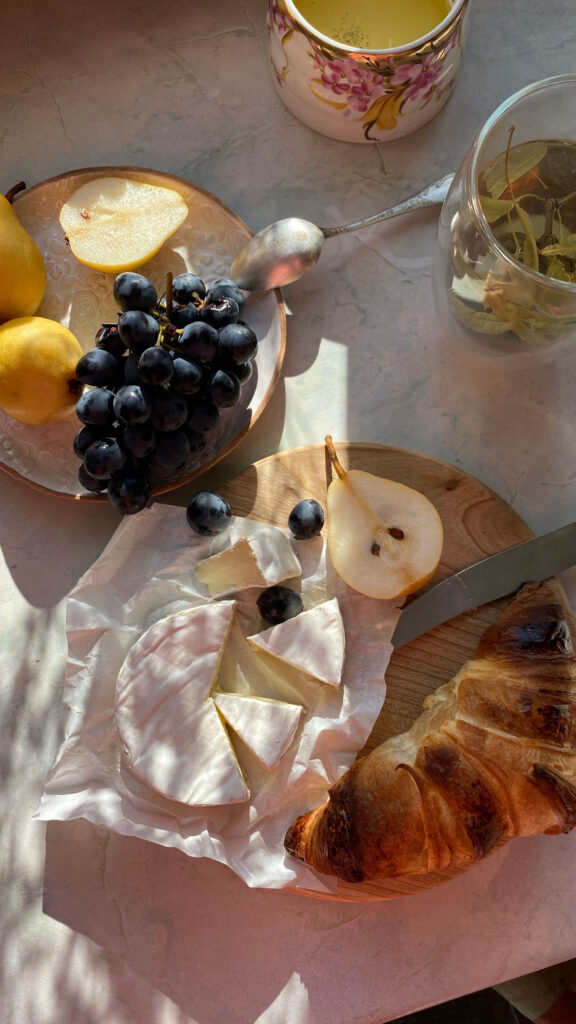
Tea and cheese might not be the first combination that comes to mind when planning a tasting or putting together a cheese board. Wine has traditionally received most of the attention, but tea offers an equally interesting range of flavors that can complement everything from creamy Brie to sharp aged cheddar.
A delicate green tea can highlight the freshness of goat cheese, while a roasted oolong brings out the nutty flavors of aged Gouda. Strong black teas can stand up to pungent blue cheese, and earthy pu-erh makes a surprisingly satisfying partner for mature cheeses.
The warmth of tea also creates an interesting contrast with the cool, creamy texture of cheese. Depending on the pairing, the tea may emphasize sweetness, balance saltiness, or bring out flavors that weren’t immediately noticeable.
The best tea to pair with cheese depends on the cheese’s intensity, texture, saltiness, and age. Fresh, mild cheeses generally work well with lighter teas, while strong, aged cheeses can handle more robust varieties.
Whether you’re planning an afternoon tea party, creating a cheese board for guests, or simply exploring new flavor combinations, here’s how to pair different teas with your favorite cheeses.
🧀 Why Do Tea and Cheese Pair So Well?
Tea and cheese have more in common than you might expect.
Both offer remarkable flavor diversity. The taste of cheese depends on factors such as the type of milk, cultures, aging conditions, and production methods. Tea develops its character through growing conditions, harvesting, oxidation, roasting, fermentation, and other processing techniques.
These differences create opportunities to match complementary flavors.
A roasted oolong with toasted, nutty characteristics may enhance similar notes in an aged cheese. A fresh green tea with grassy or vegetal qualities can complement the tanginess of young goat cheese.
Contrast is equally important.
Tea contains polyphenols that can contribute astringency, creating a drying sensation in the mouth. When paired with a creamy cheese, a brisk tea can provide an appealing contrast to the richness.
The temperature of the tea also changes the experience. A warm cup can soften the texture of some cheeses as you taste them, making their creamy or buttery qualities more noticeable.
According to the Tea and Herbal Association of Canada, different categories of tea lend themselves to different cheeses. Its pairing recommendations include green tea with Gouda, oolong with Brie or Camembert, black tea with blue cheese, and pu-erh with aged cheddar.
These aren’t strict rules, but they demonstrate how versatile tea can be as a partner for savory foods.
🫖 Best Tea and Cheese Pairings at a Glance
If you’re looking for a quick recommendation, these combinations are excellent starting points.
| Cheese | Best tea pairings |
|---|---|
| Brie | Light oolong, hojicha, Darjeeling |
| Camembert | Hojicha, Darjeeling |
| Fresh goat cheese | Longjing green tea, sencha |
| Aged cheddar | Assam, ripe pu-erh |
| Mild cheddar | English Breakfast, Ceylon |
| Gouda | Roasted oolong, Darjeeling |
| Gruyère | Roasted oolong, pu-erh |
| Parmesan | Gyokuro, roasted oolong |
| Blue cheese | Assam, Keemun, Lapsang Souchong |
| Mozzarella | White tea, light green tea |
| Burrata | White tea, delicate oolong |
| Ricotta | White tea, jasmine green tea |
| Feta | Sencha, light oolong |
| Manchego | Keemun, roasted oolong |
| Cream cheese | Earl Grey, jasmine green tea |
The best pairing will depend on the specific cheese and tea. A young Gouda tastes very different from an aged Gouda, just as a lightly oxidized oolong may have little in common with a heavily roasted one.
Use these suggestions as a starting point for experimenting.
🤍 Best Tea With Brie and Camembert
Brie and Camembert are soft-ripened cheeses known for their creamy interiors and distinctive edible rinds.
Depending on their age and production, they may have buttery, mushroom-like, earthy, or slightly nutty flavors.
These characteristics make them particularly interesting partners for oolong and roasted green tea.
Light Oolong Tea
A lightly oxidized oolong can complement the creamy texture of Brie without overwhelming its delicate flavor.
Some Taiwanese oolongs have naturally floral, buttery, or sweet characteristics that work particularly well with mild, creamy cheeses.
A smooth Jin Xuan oolong, sometimes called milk oolong, can be an appealing choice because of its naturally creamy flavor profile.
The tea and cheese reinforce one another’s softer characteristics, creating a gentle, balanced pairing.
Hojicha
Hojicha is a Japanese roasted green tea with toasted, nutty, and sometimes caramel-like notes.
These flavors can complement the earthy, mushroom-like characteristics of Camembert or a more mature Brie.
Palais des Thés specifically recommends roasted hojicha with soft-ripened cheeses, including Brie and Camembert.
This is an excellent pairing to try if you prefer teas with a warmer, less grassy flavor.
Darjeeling
Darjeeling offers a different approach.
Its floral and sometimes fruity notes can provide a refreshing contrast to creamy cheese.
A delicate first-flush Darjeeling may work especially well with mild Brie, while a fuller second-flush tea can accompany a richer, more mature cheese.
You can explore the differences in our Darjeeling Black Tea Guide.
🌿 Best Tea With Goat Cheese
Fresh goat cheese, often called chèvre, has a distinctive tangy flavor and a creamy, sometimes crumbly texture.
Depending on the cheese, you may notice grassy, citrusy, mineral, or gently earthy characteristics.
Green tea is one of the most natural partners for fresh goat cheese because its fresh, vegetal flavors can complement these qualities.
Longjing Green Tea
Longjing, also known as Dragon Well, is a Chinese green tea traditionally produced using pan-firing techniques.
Its flavor can include gentle vegetal, nutty, chestnut-like, and toasted notes.
These characteristics make it particularly appealing with fresh goat cheese.
The cheese’s tanginess provides a contrast to the tea’s smoother qualities, while their shared fresh and vegetal notes create a sense of harmony.
Palais des Thés recommends Longjing with goat cheese, highlighting the way the tea’s vegetal and mineral character complements the cheese.
Sencha
Japanese sencha is another good option.
Its grassy, fresh, and sometimes savory flavor can balance the richness of creamy goat cheese.
Sencha is especially interesting with goat cheese served alongside cucumbers, fresh herbs, or lightly dressed greens.
If the cheese is strongly flavored with garlic or pepper, a more robust tea may be necessary.
Light Oolong
A floral oolong can be lovely with milder goat cheeses, particularly those accompanied by honey, pears, or other fruit.
Its gentle sweetness can soften the impression of tanginess without completely hiding the cheese’s character.
For a simple tasting, begin with plain fresh chèvre and a lightly brewed Longjing.
🧡 Best Tea With Cheddar Cheese
Cheddar is one of the most familiar cheeses, but its flavor varies considerably depending on how it is made and aged.
Young cheddar is generally mild, smooth, and creamy, while mature cheddar can become sharper, nuttier, more savory, and sometimes crumbly.
That difference matters when choosing tea.
Assam With Aged Cheddar
Assam is an excellent match for sharp cheddar.
Its strong, malty flavor provides enough intensity to accompany a cheese with substantial character.
A well-aged cheddar may have nutty, tangy, and deeply savory notes that work nicely with the richness of a robust Assam.
The tea’s briskness can also provide a contrast to the cheese’s buttery texture.
For this pairing, try Assam plain before adding milk. Milk can soften the tea’s astringency, which changes how it interacts with the cheese.
Learn more in our Assam Black Tea Guide.
Pu-erh With Mature Cheddar
Pu-erh offers a completely different experience.
Ripe pu-erh, also called shou pu-erh, is often earthy, woody, smooth, and full-bodied.
These qualities can complement the deeper flavors of mature cheddar, particularly varieties with nutty or savory characteristics.
The Tea and Herbal Association of Canada specifically identifies pu-erh and aged cheddar as a recommended pairing.
For beginners, a smooth ripe pu-erh is often a more approachable starting point than a particularly bitter young raw pu-erh.
Our Pu-erh Tea Guide explains the differences between these styles.
English Breakfast With Mild Cheddar
If you’re serving mild or medium cheddar, English Breakfast is a practical choice.
Its balanced black tea flavor complements the cheese without requiring a particularly specialized tea.
This pairing is especially convenient for afternoon tea sandwiches, cheese scones, and simple cheddar with crackers.
🟡 Best Tea With Gouda and Gruyère
Gouda and Gruyère are excellent partners for teas with roasted, nutty, or fruity characteristics.
Aged Gouda can develop flavors reminiscent of caramel, butterscotch, toasted nuts, and savory crystals.
Gruyère often has a rich, nutty, slightly sweet character that becomes more pronounced with aging.
These qualities make roasted oolong particularly appealing.
Roasted Oolong
Roasted oolong can have notes of toasted nuts, baked grain, caramel, wood, and dried fruit.
These flavors naturally complement the deeper characteristics of aged Gouda and Gruyère.
A roasted Dong Ding oolong or traditional roasted Tieguanyin can be especially interesting with these cheeses.
The combination emphasizes the toasted and nutty notes shared by the tea and cheese.
For a more mature Gouda with pronounced caramel flavors, a darker roasted oolong may be especially satisfying.
Second-Flush Darjeeling
Second-flush Darjeeling often has a fuller body than first-flush tea, with fruity, muscatel, and sometimes honey-like qualities.
These flavors can provide a pleasant contrast to aged cheeses.
Palais des Thés recommends summer Darjeeling with aged Comté, Gruyère, and Beaufort, making it a useful option for a selection of Alpine-style cheeses.
Pu-erh
A smooth ripe pu-erh can also work well with aged Gruyère or Comté.
Its earthy depth complements the cheese’s richness, creating a more savory combination than the fruity contrast offered by Darjeeling.
If you’re creating a cheese board with several aged cheeses, roasted oolong is one of the most versatile teas to include.
💙 Best Tea With Blue Cheese
Blue cheeses are among the most challenging cheeses to pair because their flavors can be intense.
Depending on the variety, blue cheese may be creamy, salty, tangy, peppery, earthy, or quite pungent.
Roquefort, Stilton, and Gorgonzola also differ significantly from one another, so a pairing that works beautifully with one may be less successful with another.
In general, blue cheese benefits from tea with enough body to remain noticeable.
Assam Black Tea
Assam is an excellent starting point.
Its malty, full-bodied flavor can accompany a moderately strong blue cheese without disappearing beneath it.
A mild, creamy Gorgonzola may pair particularly well with a smooth Assam.
For a stronger blue cheese, experiment with a more substantial black tea, but avoid making it so astringent that the combination becomes harsh.
Keemun Black Tea
Keemun is a Chinese black tea that can have smooth, gently smoky, fruity, or cocoa-like qualities.
These characteristics offer an interesting contrast to the salty, tangy flavor of blue cheese.
Palais des Thés recommends black teas from Qimen, the region associated with Keemun, and Assam with blue-veined cheeses.
A smooth Keemun may be particularly appealing if you prefer a less aggressively malty black tea.
Lapsang Souchong
Lapsang Souchong offers a more adventurous combination.
Traditional smoked versions have a distinctive smoky aroma that can stand up to the pronounced character of some blue cheeses.
The smoke contrasts with the cheese’s saltiness and pungency, creating a particularly bold tasting experience.
However, smoked tea can easily overwhelm milder cheeses.
Begin with a small amount of a relatively strong blue cheese and a moderately brewed tea before committing to a larger serving.
🧂 Best Tea With Parmesan and Other Hard Cheeses
Hard cheeses such as Parmesan, Pecorino, and aged Manchego often have concentrated flavors.
They may taste nutty, salty, savory, sharp, or distinctly umami-rich.
Because of this intensity, the best pairing isn’t necessarily the strongest tea. Sometimes a more savory tea can complement the cheese particularly well.
Gyokuro With Parmesan
Gyokuro is a Japanese shade-grown green tea known for its concentrated umami character.
High-quality gyokuro can taste deeply savory, with a smooth, sometimes almost broth-like quality.
This makes it an intriguing companion for Parmigiano-Reggiano, which also has a pronounced savory character.
Rather than creating contrast, the combination emphasizes the umami qualities of both.
Because gyokuro is delicate in its own way, use small pieces of cheese and avoid pairing it with strongly flavored accompaniments during the first tasting.
Roasted Oolong With Manchego
Manchego is a Spanish sheep’s milk cheese that develops nuttier, sharper flavors as it ages.
A medium-roasted oolong can complement these characteristics through its toasted and sometimes honeyed notes.
Keemun black tea is another interesting choice, particularly with a mature Manchego.
Pu-erh With Aged Alpine Cheeses
Pu-erh can be particularly enjoyable with mature Comté, Gruyère, and other aged cheeses that have substantial savory depth.
Its earthy character creates a different experience from the fresher, more vegetal qualities of green tea.
For a varied cheese board, consider offering both a green tea and a roasted or fermented tea so guests can compare the contrast.
🌸 Best Tea With Mozzarella, Burrata, and Ricotta
Fresh cheeses generally have milder flavors and softer textures than aged cheeses.
Mozzarella is known for its gentle milky taste, burrata has a particularly rich, creamy interior, and ricotta is soft and mildly sweet.
Because these cheeses are relatively delicate, strong black teas can easily dominate them.
White tea is one of the most appealing choices.
Its gentle floral, hay-like, fruity, or honeyed notes can complement fresh cheese without competing with the milky flavors.
The Tea and Herbal Association of Canada recommends white tea with Fior di Latte, a style of fresh mozzarella.
A lightly oxidized oolong is another good choice, especially with burrata.
Its floral or creamy characteristics can enhance the cheese’s richness while keeping the pairing delicate.
For ricotta served with honey, fresh berries, or fruit preserves, jasmine green tea can provide a fragrant contrast.
These combinations are especially suitable for spring and summer cheese boards featuring fresh ingredients.
🧀 Best Tea With Feta and Other Salty Cheeses
Feta has a distinctive tangy, salty flavor that makes it quite different from Brie, mozzarella, or mild cheddar.
Its flavor can be particularly pronounced when made from sheep’s milk or a blend of sheep’s and goat’s milk.
A fresh green tea can provide an interesting contrast.
Sencha is one option because its vegetal and sometimes savory characteristics work with the cheese’s tanginess.
A lightly oxidized oolong may offer a softer pairing, especially when the feta is served with cucumbers, olives, or fresh herbs.
If you’re serving feta in a salad, consider the other ingredients as well.
Tomatoes, lemon dressing, olives, and herbs can all influence the overall flavor.
A strongly flavored dressing may require a more robust tea than plain feta would.
For the clearest tasting experience, begin with a small piece of cheese and tea before adding accompaniments.
🌿 Can You Pair Herbal Tea With Cheese?
Yes. Herbal infusions can be enjoyable with cheese, particularly if you prefer to avoid caffeine.
However, they have different flavor characteristics from traditional black, green, white, and oolong teas.
Rooibos is one of the most versatile options.
Its smooth, naturally sweet, woody flavor can complement mild cheddar, Gouda, and some nutty cheeses.
A roasted rooibos blend may be particularly interesting with aged Gouda or cheeses served alongside dried fruit.
Peppermint is a more challenging pairing because its refreshing flavor can dominate delicate cheeses.
However, it may provide an interesting contrast to mild, creamy cheese, especially when the accompanying foods include cucumber or fresh herbs.
Chamomile is another option for mild cheeses. Its soft floral and apple-like characteristics may work with fresh ricotta or a gentle goat cheese.
Ginger infusion can be enjoyable with cheeses served alongside fruit or chutney, although its spiciness may be overwhelming with very delicate varieties.
These combinations are more experimental than traditional tea pairings, so begin with small portions and let personal preference guide you.
Pure rooibos, peppermint, chamomile, and ginger infusions are naturally caffeine-free, but commercial blends may include caffeinated ingredients.
⚖️ How to Choose the Right Tea for Any Cheese
You don’t need to memorize dozens of combinations to enjoy pairing tea with cheese.
The simplest approach is to consider three characteristics: intensity, flavor, and texture.
Start with intensity.
A mild fresh cheese generally works best with a lighter tea, while an aged or strongly flavored cheese can handle a more robust infusion.
For example, a delicate white tea may complement fresh mozzarella beautifully but become almost impossible to taste alongside strong blue cheese.
Next, think about flavor.
Look for similarities such as roasted oolong with nutty aged Gouda or vegetal green tea with grassy goat cheese.
You can also create contrasts.
A brisk black tea may balance the richness of a creamy cheese, while a floral oolong can provide a gentler counterpoint to a tangy variety.
Finally, consider texture.
Creamy cheeses often benefit from teas with enough freshness or astringency to create contrast. Firm, aged cheeses may work well with richer, deeper teas that complement their concentrated flavors.
These principles are helpful guidelines, but they’re not guarantees. The same tea may pair differently with two cheeses of the same general type.
The most interesting discoveries often come from tasting several possibilities side by side.
🌡️ Should You Serve Tea Hot or Cold With Cheese?
Both hot and cold tea can work with cheese, but warm tea offers a particularly interesting tasting experience.
The warmth can slightly soften cheese in the mouth, changing the way its texture and flavors are perceived.
This is especially noticeable with soft cheeses such as Brie and Camembert.
However, the tea shouldn’t be so hot that you can’t comfortably taste it.
Allow freshly brewed tea to cool to a pleasant drinking temperature before pairing it with cheese.
Cold tea offers a different experience.
A chilled jasmine green tea can be refreshing with fresh goat cheese, while cold-brewed oolong may work well with a summer cheese board.
Cold tea can also be useful for outdoor gatherings, especially when you’re serving mild cheeses with fruit and vegetables.
However, chilled tea may express its aromas differently from hot tea, so the same pairing can taste noticeably different.
If you’re exploring a tea-and-cheese combination for the first time, begin with warm tea and experiment with iced versions later.
🫖 How to Brew Tea for Cheese Pairings
Brewing the tea properly is important because excessive bitterness or astringency can interfere with the cheese’s flavor.
The ideal temperature and steeping time depend on the tea variety.
For most robust black teas, water around 195–212°F and a steeping time of approximately three to five minutes are useful starting points.
Many green teas benefit from cooler water, often around 160–185°F, with shorter steeping times.
Oolong varies considerably depending on oxidation and roasting. Some delicate oolongs benefit from moderately hot water, while darker roasted styles can handle temperatures closer to boiling.
White tea also varies by style, so follow the instructions for the particular leaves you’re using.
Pu-erh often responds well to hot water and may be brewed using several short infusions rather than one long steep.
For cheese tasting, it’s usually best to begin with the tea served plain.
Milk, sugar, honey, and flavored syrups can change the relationship between tea and cheese, sometimes obscuring the characteristics you want to explore.
Once you’ve tasted the plain tea with cheese, you can experiment with additions if you prefer.
Our Best Water Temperature for Tea and How to Brew Tea Guide offer more detailed brewing recommendations.
🧀 How to Create a Tea and Cheese Tasting Board
A tea-and-cheese tasting board is a lovely alternative to a traditional wine-and-cheese gathering.
You don’t need a large selection to make it interesting. In fact, starting with three cheeses and three teas allows you to appreciate the differences more easily.
Choose cheeses with contrasting flavors and textures.
A simple tasting might include fresh goat cheese, creamy Brie, and aged cheddar.
Then prepare three teas that offer different characteristics.
Longjing green tea, lightly oxidized oolong, and Assam black tea would create an excellent range from fresh and vegetal to floral and malty.
Arrange the cheeses on a board with small labels identifying each variety.
Provide separate cups for the teas, or serve small tasting portions so guests can explore the combinations without drinking several full cups.
Begin with the mildest cheese and lightest tea, then gradually move toward stronger flavors.
Take a small bite of cheese and allow it to soften in your mouth before sipping the tea.
Notice how the tea changes your impression of the cheese.
Does it emphasize creaminess? Bring out nuttiness? Make the cheese seem saltier or more mellow?
Then try the tea first, followed by the cheese, and see whether the experience changes.
Plain crackers or bread and water can help refresh the palate between combinations.
For a simple tasting, try these three pairings:
- Fresh goat cheese with Longjing: A fresh, vegetal combination with gentle contrast.
- Brie with light oolong: A soft, creamy pairing with delicate floral notes.
- Aged cheddar with Assam: A bold pairing that balances richness and malty strength.
If you’re hosting a larger afternoon gathering, our Tea Party Menu Ideas for Adults can help you incorporate a cheese tasting into a broader menu.
🍐 What Else Should You Serve With Tea and Cheese?
A good cheese board doesn’t need many accompaniments, but a few thoughtfully chosen ingredients can enhance the experience.
Fresh fruit is a natural addition.
Pears and apples work well with cheddar, Gouda, Brie, and many other cheeses. Grapes and berries can complement softer varieties, particularly when paired with floral or fruity teas.
Dried apricots, figs, and dates are particularly enjoyable with aged cheeses, although their sweetness can change how the tea tastes.
Plain crackers and crusty bread provide a neutral base and help refresh the palate.
Nuts can also be a good addition, especially almonds and walnuts, which complement roasted oolong and aged cheeses.
Honey is another possibility, particularly with goat cheese or Brie, but use it sparingly during a tasting.
Too much sweetness can make it difficult to appreciate subtle tea flavors.
For a more savory presentation, consider cucumber slices, fresh herbs, or small tea sandwiches.
Our Tea Sandwich Recipes include several cheese-based options that can fit naturally into an afternoon tea menu.
Keep the board refrigerated until shortly before serving. Allowing cheese a little time to lose its refrigerator chill can improve the tasting experience, but don’t leave perishable cheeses at room temperature for more than two hours, or one hour when temperatures exceed 90°F.
❌ Common Mistakes When Pairing Tea With Cheese
One of the most common mistakes is choosing a tea that’s much stronger than the cheese.
A delicate mozzarella or fresh ricotta can easily become overwhelmed by a heavily smoked or intensely brewed black tea.
The opposite problem can happen with strong cheeses.
A subtle white tea may disappear alongside a pungent blue cheese or very mature cheddar.
Another mistake is overbrewing the tea.
Excessive bitterness or astringency can make a pairing unpleasant, even when the tea variety would otherwise complement the cheese.
Temperature also matters. Tea that’s too hot may be uncomfortable to drink, while cheese served directly from a very cold refrigerator may have muted flavors and a firmer texture.
Strongly flavored accompaniments can interfere as well.
Garlic crackers, spicy chutneys, pickles, and heavily seasoned nuts may dominate both the tea and cheese, making the pairing more difficult to appreciate.
For your first tasting, begin with plain cheese, properly brewed tea, and neutral crackers.
Once you’ve discovered combinations you enjoy, introduce other ingredients.
💚 Final Thoughts
Tea and cheese make a surprisingly versatile combination, offering an opportunity to explore flavors beyond the familiar world of wine pairings.
For fresh goat cheese, begin with Longjing or another gentle green tea. Their vegetal characteristics complement the cheese’s tangy freshness.
Soft cheeses such as Brie and Camembert pair beautifully with light oolong, Darjeeling, and roasted hojicha.
For aged cheddar, Gouda, and Gruyère, stronger teas such as Assam, roasted oolong, and pu-erh can provide the depth needed to complement richer flavors.
Blue cheeses work particularly well with substantial black teas, including Assam and Keemun, while hard, umami-rich cheeses such as Parmesan can create interesting combinations with savory green teas.
If you prefer something caffeine-free, rooibos offers a versatile starting point for milder and nuttier cheeses.
The most important principle is balance. Pair delicate cheeses with gentler teas, robust cheeses with fuller-bodied varieties, and look for flavors that either complement or contrast with one another.
But the best pairings aren’t always the most predictable.
Try a few small combinations, pay attention to how the flavors change, and enjoy discovering which teas bring out your favorite qualities in different cheeses.
A beautiful cup of tea, a few thoughtfully selected cheeses, and a little curiosity are all you need for an enjoyable tasting experience.
🔗 Related Articles
- Oolong Tea Guide: Types, Flavor, Caffeine, Brewing & Benefits
- Assam Black Tea: Flavor, History & How to Brew It
- Darjeeling Black Tea: Flavor, Flushes & How to Brew It
- Pu-erh Tea Guide: Types, Flavor, Caffeine & How to Brew It
- Tea Comparisons: How Different Types of Tea Compare
- Tea by Goal/Occasion: How to Choose the Right Tea for the Moment
- Tea Party Menu Ideas for Adults: Sandwiches, Scones, Sweets & Tea
- Tea Sandwich Recipes: 15 Easy Finger Sandwiches for Afternoon Tea
- Best Water Temperature for Tea: A Complete Brewing Guide by Tea Type
- How to Brew Tea: Water Temperature, Steeping Times & Brewing Methods
📚 Sources & Further Reading
- Tea and Herbal Association of Canada — Cooking & Pairing
- Palais des Thés — Tea & Cheese Pairings
- Eater — Pair Tea With Cheese to Unlock the Elusive Third Flavor
- Culture Cheese Magazine — The Best Warming Pairing: Tea and Cheese
- The Cheese Professor — How to Pair Tea and Cheese
- Gault&Millau — The Art of Pairing Tea and Cheese
- FoodSafety.gov — Food Safety for Perishable Foods