Few places are as closely associated with Japanese tea as Uji. Located just south of Kyoto, Uji has been connected with tea cultivation and tea culture for centuries, and its name has become synonymous with some of Japan’s most prestigious green teas.
Uji is especially famous for matcha, gyokuro and sencha. The region played an important role in developing techniques that changed Japanese tea permanently, including shaded cultivation and the processing method that eventually produced modern sencha. Tea from Uji also became closely linked with the development of chanoyu, the Japanese tea ceremony, and was once prized by shoguns, feudal lords and influential tea masters.
Today, Uji remains one of the most fascinating tea destinations in Japan. Its importance is not simply historical. Tea producers throughout southern Kyoto continue making exceptional teas using techniques that have evolved over generations, while Uji’s tea shops, teahouses and cultural institutions preserve a direct connection between the tea field and the cup.
🍵 What Is Uji Tea?
The term Uji tea, or Uji-cha, is broader than it may initially appear.
It does not necessarily mean that every tea leaf was grown within the modern boundaries of Uji City. Under the definition adopted by the Kyoto tea industry, Uji tea can be produced from tea grown within Kyoto, Nara, Shiga and Mie prefectures, regions historically connected with the Uji tea trade, provided the tea is finished and processed within Kyoto Prefecture by a Kyoto-based tea business. Tea grown within Kyoto Prefecture is given priority.
This reflects the way the Uji tea industry developed historically. Tea cultivation gradually spread from Uji into surrounding areas, while merchants and processors in Kyoto continued to select, blend and finish the teas.
For tea drinkers, this means that the words “Uji tea” describe a regional tea tradition and production system rather than simply one tiny geographic point.
🏯 A Tea Tradition With Centuries of History
Tea reached Japan from China long before Uji became famous, but Uji’s rise began during the medieval period.
Tea cultivation in the Uji area is traditionally connected with the Buddhist monk Myōe, who received tea seeds associated with the Zen monk Eisai and helped spread tea cultivation around Kyoto. Historical records confirm Uji as an established tea-producing area by the 14th century.
At first, tea from Toganoo in Kyoto was considered especially prestigious, but Uji tea steadily developed its reputation. By the middle of the Muromachi period, Uji had become recognized as a source of exceptionally high-quality tea.
Tea was also moving beyond its earlier role as a medicinal or monastic beverage. Aristocrats, warriors and wealthy merchants increasingly treated tea as a cultural pursuit, and competitions known as tea contests became popular among elite drinkers.
As Japan’s tea culture became more sophisticated, Uji was positioned perfectly to become one of its centers.
🍃 Uji and the Development of the Tea Ceremony
The rise of Uji tea was closely connected with the development of chanoyu, the Japanese tea ceremony.
During the Muromachi and later Sengoku periods, tea gatherings evolved away from extravagant competitions toward the quieter aesthetic that eventually became associated with wabi-cha. Tea masters such as Murata Jukō and, later, Sen no Rikyū helped shape the values of restraint, simplicity and close attention that became fundamental to Japanese tea culture.
High-quality powdered tea was essential to this new style of tea preparation, and Uji became one of its most prestigious sources.
Under rulers such as Oda Nobunaga, Toyotomi Hideyoshi and Tokugawa Ieyasu, tea ceremony became closely connected with political and social status. Uji matcha acquired an especially elite reputation and became sought after by Japan’s ruling class.
That connection between Uji and tea ceremony remains strong today.
🌿 Shaded Tea Cultivation Changed Japanese Tea
One of Uji’s most important contributions to Japanese tea was the development of shaded cultivation.
Tea growers discovered that covering the tea plants before harvest altered the character of the leaves. By limiting direct sunlight, the plant maintains more of its amino acids, including theanine, while the development of some bitter and astringent compounds is reduced.
The result can be a tea with deeper sweetness, stronger umami and a rich green color.
Traditional Uji cultivation used structures built over the tea fields and covered them with materials such as reeds and straw. Modern growers may also use synthetic coverings, although highly traditional methods survive for premium teas.
This cultivation technique became fundamental to both tencha—the leaf used for matcha—and gyokuro.
🌱 What Is Ohishita Cultivation?
Traditional shaded tea gardens are sometimes described using the term ōishita, referring to tea cultivated beneath covering structures.
Rather than placing material directly on the leaves, traditional structures create a canopy above the plants. The amount of light can be progressively reduced as harvest approaches.
The practice requires additional labor and careful timing, but it dramatically changes the chemistry of the growing leaf.
The resulting tea tends to emphasize sweetness and savory umami rather than the sharper bitterness that can develop under stronger sunlight.
For anyone trying to understand why premium Uji matcha and gyokuro taste so different from ordinary green tea, shaded cultivation is one of the most important pieces of the puzzle.
🍵 Uji Matcha
Matcha is the tea most internationally associated with Uji.
True matcha begins with tencha. The tea plants are shaded before harvest, and the young leaves are picked and quickly steamed to stop oxidation. Unlike sencha, however, tencha is not rolled into needle-like shapes.
Instead, the leaves are dried relatively flat. Stems and veins are removed during finishing, leaving the tender leaf material that can be ground into matcha.
Traditionally, high-quality tencha is slowly ground using stone mills to produce an exceptionally fine powder.
Because the whole leaf is consumed rather than simply infused and removed, matcha creates an unusually concentrated tea experience. Good Uji matcha can be intensely green, creamy and deeply savory, with sweetness, vegetal notes and relatively controlled bitterness.
🪨 Why Stone-Ground Matcha Is So Fine
Traditional matcha grinding is intentionally slow.
Grinding too aggressively can generate heat, potentially affecting aroma, flavor and color. Stone mills reduce the finished tencha leaves into an extraordinarily fine powder little by little.
The result should feel almost silky between the fingers.
When whisked properly with hot water, that powder forms a suspension rather than dissolving like sugar. The fine particles remain distributed throughout the bowl and create matcha’s characteristic body and foam.
The grinding process is one reason high-quality matcha requires so much work even after the tea leaves have already been grown and processed.
🍃 Uji Gyokuro
Gyokuro is another of Uji’s great teas.
Like premium tencha, gyokuro is shaded before harvest. The leaves are then steamed, rolled and dried using a process more similar to sencha production.
The finished leaves are dark green and slender.
Good gyokuro can have an extraordinary flavor profile. The tea may be intensely savory, sweet, vegetal and almost broth-like, with a lingering umami character that can surprise people encountering it for the first time.
Gyokuro is generally brewed very differently from ordinary green tea. Cooler water, a relatively high proportion of leaf and a small volume of water can produce an extremely concentrated infusion.
Rather than drinking a large mug quickly, gyokuro is often enjoyed in small servings.
🌊 Why Gyokuro Can Taste So Savory
The unusual savoriness of gyokuro is closely connected with shading.
When tea plants grow under reduced sunlight before harvest, the chemical balance of the leaves changes. Amino acids associated with sweetness and umami remain more prominent, while the development of some catechins responsible for bitterness and astringency is reduced.
Brewing the leaves at relatively low temperatures emphasizes those amino acids.
The result can taste almost unlike what newcomers expect from green tea. Instead of being primarily grassy or bitter, high-quality gyokuro can suggest sweet greens, seaweed, broth and an intense savory richness.
It is one of the clearest examples of how cultivation technique changes flavor.
🌿 Uji Sencha
Although matcha often receives the most attention, Uji also played an essential role in the development of sencha.
During the Edo period, tea producer Nagatani Sōen, from the Ujitawara area of southern Kyoto, developed a method of steaming, rolling and drying tea leaves that became foundational to modern sencha production.
This method helped create a tea that was fresh, fragrant and easier to prepare as loose leaf than powdered matcha.
Sencha spread rapidly and eventually became the everyday green tea of Japan.
Uji sencha can vary considerably depending on cultivar, growing location and processing, but good examples often balance fresh vegetal aromas with sweetness, gentle astringency and a clean finish.
For tea drinkers who find gyokuro overwhelmingly rich or matcha too concentrated, sencha can provide an excellent introduction to Uji tea.
🍵 Tencha: The Tea Behind Matcha
Tencha deserves to be understood as more than simply “matcha before grinding.”
It has its own distinctive production method.
After shaded leaves are harvested, they are steamed and dried without undergoing the rolling stages used for sencha or gyokuro. This leaves the finished tea relatively flat and fragile.
During later processing, stems and veins are removed. The remaining leaf material becomes finished tencha and can then be ground into matcha.
Tencha itself can also be steeped as loose-leaf tea, although it is considerably less common for consumers to encounter it that way.
Tasting unground tencha can be fascinating because it reveals the flavor of matcha’s raw material without the intensity created by consuming the entire powdered leaf.
🌱 Kabusecha and Other Shaded Teas
Uji’s tea culture is not limited to matcha, gyokuro and sencha.
Tea drinkers may also encounter kabusecha, a partially shaded tea that sits stylistically between conventional sencha and more heavily shaded gyokuro.
The word kabuse refers to covering. Kabusecha is typically shaded for a shorter period than gyokuro, creating a tea that retains some of sencha’s refreshing character while developing additional sweetness and umami.
The exact style varies by producer.
Exploring sencha, kabusecha and gyokuro side by side is one of the best ways to understand how increasing shade can transform Japanese green tea.
🗺️ Uji Tea Extends Beyond Uji City
The historic Uji tea region includes much of southern Kyoto Prefecture.
Important tea-producing areas include Wazuka, Ujitawara, Kyōtanabe, Kizugawa and Minamiyamashiro, among others.
Each contributes differently to the broader Uji tea tradition.
Wazuka is particularly famous for sweeping tea-covered hillsides and is one of southern Kyoto’s important tea-growing communities. Ujitawara occupies a special place in sencha history because of Nagatani Sōen. Kyōtanabe has an especially strong reputation for gyokuro.
Uji City itself remains the cultural and commercial symbol at the center of the tradition, but understanding the surrounding Yamashiro region gives a much more accurate picture of where Uji tea actually comes from.
⛰️ Wazuka and the Landscape of Uji Tea
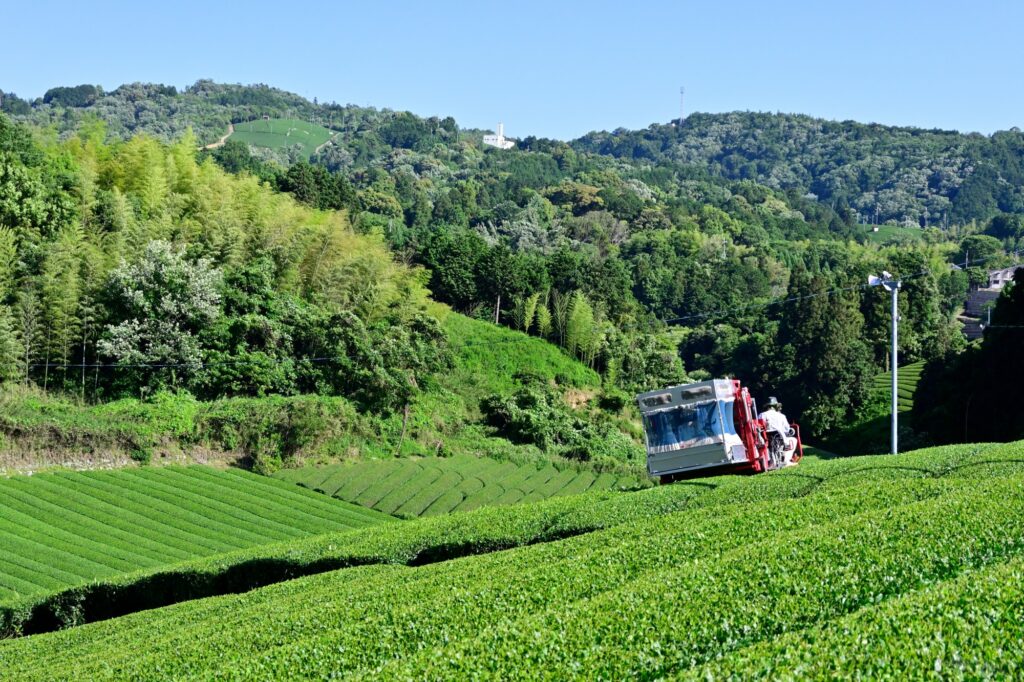
Wazuka offers some of the most striking tea scenery in Kyoto Prefecture.
Tea fields curve along hillsides in carefully maintained rows, creating landscapes that make the agricultural origins of tea impossible to forget.
The surrounding terrain, rainfall, mist and temperature patterns help create favorable conditions for tea farming, while generations of growers have adapted individual fields to particular cultivars and styles.
For visitors accustomed to seeing tea only as dried leaves in a package, standing beside an active tea field changes the way the drink feels.
Every cup begins as agriculture.
Uji tea may be culturally prestigious, but it starts with farmers working in fields.
🌱 Ujitawara and the Birth of Modern Sencha
Ujitawara is one of the most historically important places in Japanese tea.
It was here that Nagatani Sōen developed the tea-making technique commonly associated with the birth of modern sencha during the 18th century.
Instead of producing tea in the older styles then available, Nagatani refined a process involving steaming and carefully rolling the leaves while drying them.
The resulting tea was fragrant, vividly colored and enormously successful.
That innovation transformed Japanese tea drinking. Sencha eventually spread throughout the country and became far more widely consumed than matcha.
This means that the Uji region influenced not only elite tea ceremony but also the everyday cup of green tea found in Japanese homes.
💚 Kyōtanabe and Gyokuro
Kyōtanabe is particularly associated with high-grade gyokuro.
The area’s producers have preserved intensive shaded cultivation and processing practices designed to create tea with concentrated umami and sweetness.
Traditional gyokuro production is demanding. Creating the shade structures, managing the plants beneath them, harvesting high-quality leaves and carefully processing those leaves require considerable skill.
That effort helps explain why fine gyokuro can command high prices.
When buying Uji gyokuro, looking for more specific place names such as Kyōtanabe can provide additional clues about the tea’s origin.
🌸 First Harvest Tea
The first spring harvest is especially important in Japanese tea.
Young shoots emerging after winter can produce teas with strong aroma, sweetness and freshness. The season around hachijūhachiya, the 88th night counted from the traditional beginning of spring, has long been associated with new tea.
In southern Kyoto, the precise harvest date varies with weather, location, cultivar and tea style.
Tencha and gyokuro producers must also account for the period of shading before harvest.
Fresh spring tea can be extraordinarily aromatic, but the idea that every first-harvest tea is automatically superior is too simple. Skilled cultivation and processing matter just as much as timing.
👃 What Does Uji Tea Taste Like?
There is no single flavor called “Uji.”
A Uji sencha may taste fresh, vegetal and lightly sweet. A shaded kabusecha may offer deeper umami. Gyokuro can become intensely savory and rich, while matcha may combine sweetness, creamy texture and pronounced green vegetal flavors.
Cultivar also matters.
Different tea plant varieties can emphasize floral, nutty, vegetal, marine or sweet characteristics. Harvest date, shading, fertilizer, processing and storage all influence the final cup.
What tends to connect premium Uji teas is an emphasis on refinement and balance rather than overwhelming bitterness.
High-quality shaded examples are particularly prized for the relationship between sweetness, umami and aroma.
🌱 Cultivars Matter More Than Many Tea Drinkers Realize
Japanese tea is often sold by style—sencha, gyokuro or matcha—without much discussion of cultivar.
Yet the specific variety of Camellia sinensis can have a major effect on flavor.
Yabukita is Japan’s most widespread tea cultivar and can certainly appear in the Uji region, but Kyoto is also associated with cultivars selected specifically for high-quality shaded teas.
Names such as Samidori, Asahi and Gokō may appear on premium Uji matcha and gyokuro.
These cultivars can produce noticeably different aromatic and flavor profiles.
Once a tea drinker becomes comfortable distinguishing sencha from gyokuro or matcha, exploring cultivar is an excellent next step.
🍵 How to Brew Uji Sencha
Sencha generally benefits from water well below boiling.
Very hot water extracts bitterness and astringency rapidly, while somewhat cooler water can create a sweeter and more balanced cup.
A good starting point is roughly 70–80°C, or about 158–176°F, although individual teas may respond differently.
Use enough leaf to allow the character of the tea to emerge, steep briefly and drain the teapot completely so the leaves do not continue brewing between infusions.
High-quality sencha can often be infused several times.
The second infusion usually needs much less time because the leaves are already warm and open.
💧 How to Brew Uji Gyokuro
Gyokuro requires a different approach.
For a traditional concentrated preparation, use substantially cooler water than you would use for ordinary sencha. Temperatures around 40–60°C, or approximately 104–140°F, can emphasize sweetness and umami.
Use a relatively generous quantity of leaf and only a small amount of water.
Allow the first infusion enough time to develop before pouring every drop into small cups.
The resulting tea may be extremely concentrated.
Gyokuro does not need to be consumed this way every time, but trying the traditional low-temperature approach at least once reveals why the tea has such an extraordinary reputation.
Later infusions can generally use somewhat warmer water and shorter brewing times.
🍵 How to Prepare Uji Matcha
Matcha is prepared rather than steeped.
For a straightforward bowl of usucha, or thin tea, sift a small amount of matcha into a tea bowl to break up clumps. Add hot water that has cooled below boiling and whisk briskly with a bamboo chasen until the tea is evenly suspended and a fine layer of foam develops.
Water that is too hot can exaggerate bitterness.
The exact proportions depend on personal preference and the matcha being used.
Higher-quality matcha can also be prepared as koicha, or thick tea, using considerably more matcha and less water. Instead of whisking vigorously into foam, the tea is slowly kneaded into a dense, glossy consistency.
Koicha is intense and is generally reserved for very high-quality matcha.
🥄 Why Water Temperature Matters So Much
Few variables change Japanese green tea as dramatically as water temperature.
Higher temperatures extract bitterness and astringency more quickly. Lower temperatures emphasize amino acids associated with sweetness and umami.
That is why gyokuro can be brewed at temperatures that would seem surprisingly cool to someone accustomed to black tea.
Sencha is more forgiving, while matcha sits somewhere outside the normal infusion rules because the leaf itself remains in the bowl.
Learning to control temperature makes it possible to adjust a tea rather than simply deciding whether you like it after one attempt.
If a Japanese green tea tastes harsh, cooler water is usually one of the first adjustments worth trying.
🛍️ How to Choose Uji Tea
When shopping for Uji tea, start by deciding what experience you want.
For an everyday green tea, sencha provides a refreshing balance of sweetness, vegetation and gentle astringency.
For deeper umami without going all the way to gyokuro, consider kabusecha.
Gyokuro is ideal when you want a concentrated tasting experience rather than a large casual mug.
For matcha, intended use matters enormously. A tea for whisking and drinking straight should generally have a smoother and more refined profile than matcha intended primarily for lattes, baking or desserts.
Look for information about harvest, cultivar, producer and growing location when available. Detailed labeling does not automatically guarantee better tea, but it gives you more useful information about what you are buying.
📦 Freshness Matters With Matcha
Matcha is particularly sensitive to air, heat, moisture and light.
Once opened, its vivid aroma and color gradually decline. Buying enormous packages may appear economical, but it makes little sense if the tea becomes stale before you can finish it.
Smaller containers are often a better choice for high-quality drinking matcha.
Keep the container tightly sealed and protected from warmth, moisture and strong odors.
Unopened premium matcha may be refrigerated according to the producer’s recommendations, but condensation is a concern. If tea has been chilled, allow the sealed container to reach room temperature before opening it.
Freshness can make the difference between matcha that tastes lively and sweet and matcha that seems dull or excessively bitter.
🍰 Uji Matcha Beyond the Tea Bowl
Modern Uji is filled with matcha foods.
Visitors encounter matcha ice cream, parfaits, cakes, soba, chocolates and an extraordinary range of other green creations.
Purists sometimes distinguish sharply between tea intended for ceremony and matcha used as a food ingredient, and the distinction is useful. Extremely expensive drinking matcha is generally wasted in a heavily sweetened recipe, while inexpensive culinary matcha may taste too harsh when whisked with water alone.
Still, matcha’s expansion into food has played an important role in introducing the flavor to a global audience.
Someone who begins with a matcha latte may eventually become curious about tencha, cultivars and traditional whisked tea.
Tea culture has always changed.
🏯 Tea in Uji Is More Than a Drink
Uji’s importance comes from the fact that tea exists there as agriculture, craft, commerce and culture at the same time.
Fields produce the leaves. Farmers cultivate them. Processors steam, roll, dry and finish them. Tea merchants evaluate and blend them. Tea schools preserve preparation techniques, while shops and teahouses introduce those traditions to new drinkers.
The city itself is closely linked with Japanese cultural history beyond tea, but tea remains one of the most visible threads connecting past and present.
For anyone interested in how a regional product can influence an entire national culture, Uji is a remarkable example.
🌿 Uji Tea Today
Uji tea continues to evolve.
Traditional tea ceremony remains an important market for premium matcha, while worldwide interest in matcha has created enormous new demand. Producers who historically specialized in gyokuro or sencha have increasingly explored tencha production, and modern machinery has changed parts of cultivation and processing.
At the same time, growers and tea merchants continue preserving methods that give Uji tea its identity.
This tension between tradition and change is not new. Uji itself helped transform Japanese tea repeatedly—from medieval powdered tea, to shaded cultivation, to sencha and gyokuro.
Innovation is part of the tradition.
❤️ Why Uji Matters
Uji’s reputation is not based on one famous tea.
It represents several turning points in Japanese tea history.
The region helped establish premium matcha as a central part of tea ceremony. Its growers developed sophisticated shading techniques that transformed leaf chemistry and flavor. Nagatani Sōen’s innovations helped create modern sencha, while later tea makers developed gyokuro into one of Japan’s most luxurious loose-leaf teas.
Those traditions remain visible today in a single region.
Drink Uji sencha and you encounter one branch of Japanese tea history. Brew gyokuro and another appears. Whisk matcha and you connect with a culture of powdered tea that has shaped Japanese aesthetics for centuries.
That is what makes Uji so compelling.
It is not simply a place where excellent tea is grown.
It is one of the places where Japanese tea became what it is today.
🔗 Related Articles
- Japanese Tea Regions Guide: Shizuoka, Uji, Kagoshima, Yame & More
- World’s Best Tea Regions: China, India, Japan, Sri Lanka & Beyond
📚 Sources & Further Reading
- Kyoto Prefectural Tea Industry Chamber — Learn About Uji Tea
- Kyoto Prefectural Tea Industry Chamber — History and Culture of Uji Tea
- Kyoto Prefectural Tea Industry Chamber — Types of Uji Tea
- Kyoto Prefectural Tea Industry Chamber — How Uji Tea Is Made
- Kyoto Prefectural Tea Industry Chamber — How to Brew and Enjoy Uji Tea
- Kyoto Prefectural Tea Industry Chamber — Uji Tea Q&A
- Uji City — History of Uji Tea
- Kyoto Prefecture — History of Tea Production in Kyoto
- Kyoto Prefecture — Uji Tea and the Yamashiro Region