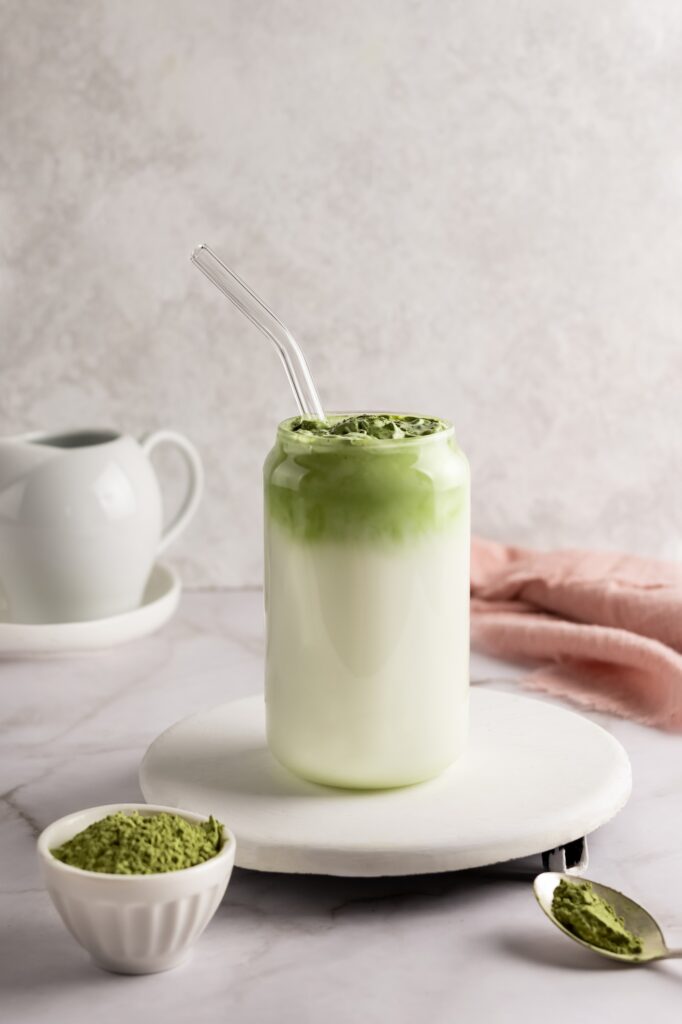
A Dalgona Matcha Latte combines creamy milk with a thick, fluffy layer of sweetened whipped matcha for a drink that looks almost as good as it tastes. The contrast is what makes it fun: cold, smooth milk sits underneath a cloud of vibrant green matcha cream, and the two gradually swirl together as you drink.
Unlike classic dalgona coffee, matcha does not contain the same ingredients that allow instant coffee, sugar, and water to whip so easily into a stable foam. For a more reliable homemade version, this recipe uses heavy whipping cream to create the fluffy matcha topping.
The result is creamy, lightly sweet, earthy, and distinctly matcha-forward. You can serve it over ice for a refreshing afternoon drink or leave out the ice for a softer, creamier latte.
🍵 Dalgona Matcha Latte at a Glance
- Prep Time: 10 minutes
- Total Time: 10 minutes
- Servings: 1
- Difficulty: Easy
- Best Served: Cold
- Main Flavor: Creamy, earthy, lightly sweet matcha
🥛 Ingredients
For the Whipped Matcha
- 1 teaspoon matcha powder
- 2 tablespoons cold heavy whipping cream
- 1 tablespoon granulated sugar or powdered sugar
- 1/4 teaspoon vanilla extract, optional
For the Latte
- 3/4 to 1 cup cold milk
- 1 cup ice
- Additional sweetener, optional
Optional Garnishes
- Light dusting of matcha
- Drizzle of honey
- Vanilla syrup
- Pinch of cinnamon
🧰 Equipment
You will need:
- Small mixing bowl
- Fine-mesh sieve
- Electric hand mixer, milk frother, or whisk
- Measuring spoons
- Tall glass
- Spoon
An electric mixer makes the whipped layer fastest, but a handheld frother can work well for a single serving.
You can also whisk by hand, although it requires more time and effort.
🍃 What Is Matcha?
Matcha is a powdered Japanese green tea traditionally made from tencha, tea leaves that are shaded before harvest, steamed, dried without being rolled, and then ground into a fine powder.
Unlike ordinary loose-leaf green tea, matcha is not steeped and removed from the water. The finely powdered leaf becomes part of the finished drink.
That gives matcha its distinctive concentration of flavor and its vivid green appearance.
Traditional matcha preparation involves whisking the powder with hot water until it becomes evenly suspended and develops a fine foam. A latte takes the same basic ingredient in a much creamier direction.
☁️ What Is a Dalgona Matcha Latte?
The drink was inspired by dalgona coffee, the whipped-coffee trend made from instant coffee, sugar, and hot water.
The matcha version borrows the layered presentation but needs a slightly different technique.
Instant coffee can whip into a surprisingly stable foam when combined with sugar and water. Plain matcha does not behave quite the same way.
That is why this recipe uses heavy whipping cream as the structure for the topping. Once whipped, the cream becomes light enough to float on cold milk while the matcha supplies the characteristic green color and earthy tea flavor.
The finished drink is essentially part matcha latte, part lightly sweetened matcha cream.
🫖 How to Make a Dalgona Matcha Latte
1. Sift the Matcha
Place 1 teaspoon matcha powder through a small fine-mesh sieve into your mixing bowl.
This takes only a few seconds but makes a noticeable difference.
Matcha is an extremely fine powder and tends to form compressed clumps in storage. Those clumps can remain visible in whipped cream if they are not broken apart before mixing.
Sifting gives you a smoother, more evenly colored topping.
2. Add the Cream and Sugar
Add:
- 2 tablespoons cold heavy whipping cream
- 1 tablespoon sugar
- 1/4 teaspoon vanilla, if using
Cold cream whips more readily than warm cream, so keep it refrigerated until you are ready to begin.
Powdered sugar incorporates especially easily, but ordinary granulated sugar also works.
3. Whip Until Fluffy
Beat the matcha mixture until it becomes thick, light, and spoonable.
With a small electric mixer, this may take only a couple of minutes.
A handheld frother may require a little longer.
If whisking by hand, expect to put in considerably more effort.
Stop when the topping forms soft to medium peaks. It should be thick enough to mound on a spoon and sit on top of the milk rather than immediately sinking into it.
Avoid whipping so long that the cream becomes grainy or starts moving toward butter.
4. Fill a Glass With Ice
Fill a tall glass generously with ice.
The ice helps create the dramatic layered effect because it keeps the milk cold and provides additional support beneath the whipped matcha.
If you prefer a drink without ice, you can leave it out and use thoroughly chilled milk instead.
5. Pour in the Milk
Add 3/4 to 1 cup cold milk.
Leave enough space at the top for the whipped matcha.
You can use dairy milk, oat milk, soy milk, almond milk, or another milk you enjoy.
For the creamiest texture, whole milk or oat milk are especially good choices.
6. Spoon the Matcha on Top
Carefully spoon the whipped matcha over the milk.
Spread it gently across the surface instead of pushing it down into the drink.
You should end up with a clear layer of pale milk underneath and vivid green matcha cream on top.
For presentation, dust the top very lightly with additional matcha.
7. Stir Before Drinking
The layers look beautiful, but the drink tastes best once at least some of the matcha has been mixed into the milk.
Use a straw or long spoon to swirl the whipped topping gradually into the latte.
You can mix it completely for an evenly creamy matcha drink or leave some of the whipped layer floating on top.
🥄 Why Sift the Matcha?
Matcha does not dissolve in liquid in the same way that sugar does.
It is finely powdered tea leaf, so whisking suspends the tiny particles throughout the liquid or cream.
If clumps are present before mixing, they can become stubborn little pockets of concentrated matcha.
Sifting helps prevent that problem.
It also helps create a more even color throughout the whipped topping.
If you regularly make matcha drinks, a tiny fine-mesh tea strainer is one of the simplest useful tools you can own.
🥛 What Milk Works Best?
The best milk depends mostly on the texture and flavor you want.
Whole Milk
Whole milk creates a rich, smooth latte and softens matcha’s grassy and slightly bitter characteristics.
2% Milk
This creates a somewhat lighter drink while still providing good creaminess.
Oat Milk
Oat milk is one of the best plant-based choices for matcha because it is usually creamy without having an especially aggressive flavor.
Soy Milk
Soy milk also provides plenty of body and works well with matcha’s vegetal character.
Almond Milk
Almond milk makes a lighter latte with a mild nutty flavor.
Coconut Milk
Coconut milk creates a distinctly tropical version.
If you like that combination, try the related Iced Whipped Matcha Latte With Coconut Milk.
🌱 What Matcha Should You Use?
You do not need the most expensive matcha in the store for this recipe.
Milk, cream, sugar, and vanilla soften some of the finer differences among very high-end matchas.
Look for a matcha that:
- Has a fresh green color
- Smells clean and vegetal
- Has a flavor you enjoy
- Is intended for drinking
- Does not taste excessively stale or harsh
A good everyday matcha is usually ideal.
Be cautious about relying entirely on marketing terms such as “ceremonial grade.” The term is widely used outside Japan but is not a universal standardized Japanese quality grade.
For a milk-based recipe, flavor matters more than the wording printed on the front of the package.
🌡️ Do You Need Hot Water?
Not for this version.
Because the matcha is sifted directly into heavy cream and whipped, there is no need to create a separate hot-water concentrate.
That makes this recipe especially quick.
If you prefer a less rich matcha topping, you can first whisk the matcha with a very small amount of warm water and then fold that concentrate into lightly whipped cream.
When preparing matcha with water, approximately 175–180°F is a useful range. There is generally no need to pour vigorously boiling water directly over good matcha.
🍬 How Sweet Should It Be?
One tablespoon of sugar creates a dessert-like but still distinctly matcha-flavored topping.
You can reduce the amount if you prefer stronger, more earthy tea flavor.
For a sweeter coffee-shop-style drink, add extra syrup to the milk rather than loading all of the sweetness into the whipped topping.
Good options include:
- Vanilla syrup
- Simple syrup
- Honey
- Maple syrup
- Brown sugar syrup
Liquid sweeteners mix especially easily into cold milk.
🍦 Vanilla Dalgona Matcha Latte
Vanilla softens matcha’s vegetal character and makes the drink taste especially creamy.
Add 1/4 teaspoon vanilla extract to the whipped matcha.
You can also add a teaspoon of vanilla syrup to the milk.
Do not add too much. Matcha should still be the dominant flavor.
🍯 Honey Dalgona Matcha Latte
For a gentle floral sweetness, add a little honey.
Because honey can make the whipped cream heavier, I prefer leaving the cream recipe largely unchanged and stirring 1–2 teaspoons honey into the milk.
Then spoon the matcha cream over the top.
The honey and matcha combine as the drink is stirred.
If you want an even simpler drink without the whipped topping, try Iced Matcha Green Tea With Honey.
🍁 Maple Dalgona Matcha Latte
Maple syrup and matcha are surprisingly good together.
Stir 1–2 teaspoons pure maple syrup into the milk before adding the whipped topping.
Oat milk works particularly well with this variation.
The maple contributes a warmer caramel-like sweetness without masking the matcha completely.
🍓 Strawberry Dalgona Matcha Latte
Add 2 tablespoons strawberry purée to the bottom of the glass.
Then add:
- Ice
- Milk
- Whipped matcha
Before stirring, the drink will have pink, white, and green layers.
Use ripe strawberries blended with just enough sugar to make a spoonable purée.
Strawberry and matcha work well because the fruit’s sweetness contrasts with matcha’s earthy, vegetal flavor.
🥥 Coconut Dalgona Matcha Latte
Use coconut milk instead of dairy milk.
For a drink rather than a dessert, choose a pourable coconut milk beverage rather than thick canned coconut cream.
Coconut gives the latte a noticeably tropical character and works especially well when the drink is served over plenty of ice.
A little maple syrup or vanilla can round out the combination.
🤎 Brown Sugar Matcha Latte
Brown sugar gives matcha a deeper caramel-like sweetness.
Make a quick syrup by stirring equal parts brown sugar and hot water until dissolved.
Allow it to cool, then drizzle 1–2 teaspoons around the inside of the glass before adding the ice and milk.
Top everything with the whipped matcha.
This variation is particularly good if you enjoy boba-shop-style drinks.
🧋 Add Boba Pearls
You can also turn the recipe into a whipped matcha boba latte.
Add approximately 1/4 cup cooked and sweetened tapioca pearls to the bottom of the glass.
Top with ice and milk, then add the whipped matcha.
Serve with a wide straw.
For detailed cooking instructions, see Boba Pearls: What They Are, How They’re Made & How to Cook Them.
🧊 Can You Make It Without Ice?
Yes.
Use very cold milk and skip the ice entirely.
The drink will be richer because melting ice will not dilute it.
You can also serve it slightly warmer, but whipped cream holds its structure best over cool rather than hot milk.
For a truly hot matcha latte, a conventional steamed-milk recipe works better than this whipped version.
🌱 Can You Make It Dairy-Free?
The milk portion is easy to make dairy-free.
The whipped topping requires a little more adjustment because regular heavy cream is doing most of the structural work.
One option is a plant-based whipping cream designed specifically for whipping. Use it just as you would dairy cream, following the manufacturer’s directions.
Another common approach is aquafaba—the liquid from cooked or canned chickpeas—which can be whipped into a foam and combined with sugar and matcha.
Plant-based ingredients vary considerably, so the texture may not be identical to the dairy version.
For the simplest reliable dairy-free result, choose a commercial plant-based whipping cream that specifically says it can be whipped.
❌ Why Isn’t My Matcha Whipping?
Several things can go wrong.
The Cream Is Too Warm
Cold cream whips much more reliably.
Place the bowl and beaters in the refrigerator for several minutes if your kitchen is warm.
The Cream Has Too Little Fat
Use heavy whipping cream rather than ordinary milk or half-and-half.
Milk alone will not create the same stable topping.
You Haven’t Whipped Long Enough
An electric mixer can create peaks quickly, while a handheld frother or manual whisk may require more time.
You Added Too Much Liquid
Extra water, syrup, or extract can thin the mixture.
Keep liquid additions small.
You Overwhipped It
If the mixture becomes grainy, you may have whipped the cream too far.
Stop once it is fluffy and capable of holding soft or medium peaks.
🟢 Why Is My Dalgona Matcha Bitter?
Matcha naturally has some bitterness, but the finished latte should still taste balanced.
Possible causes include:
- Using too much matcha
- Using stale or harsh matcha
- Too little milk
- Too little sweetener for your preference
For this recipe, 1 teaspoon matcha is a good starting point.
If you love a strong tea flavor, increase it gradually rather than doubling the amount immediately.
🥄 Can You Make the Whipped Matcha Ahead?
You can prepare it a short time in advance and refrigerate it, but the texture is best when freshly whipped.
If it sits too long, the topping may soften or begin to separate.
For parties, prepare the ingredients and glasses ahead of time, then whip the matcha shortly before serving.
The actual whipping takes only a few minutes.
☕ Does a Dalgona Matcha Latte Have Caffeine?
Yes.
Matcha comes from Camellia sinensis, the same tea plant used to produce other true teas, and naturally contains caffeine.
The amount in your drink depends primarily on how much matcha you use and the particular matcha itself.
Using one teaspoon will generally give you less caffeine than a latte made with two teaspoons.
If you are sensitive to caffeine, start with a smaller serving and avoid treating the drink as caffeine-free simply because it does not contain coffee.
🍵 Dalgona Matcha vs. Regular Matcha Latte
A regular matcha latte blends whisked matcha directly into milk.
A Dalgona Matcha Latte keeps the tea in a separate whipped topping before serving.
| Regular Matcha Latte | Dalgona Matcha Latte |
|---|---|
| Matcha mixed into milk | Matcha whipped into creamy topping |
| Smooth throughout | Layered |
| Lighter texture | Richer and creamier |
| Fast everyday drink | More dessert-like |
| Easy to drink through a straw | Best stirred gradually |
If you want the simpler everyday version, see our Iced Matcha Latte Recipe.
📝 Recipe Card
Dalgona Matcha Latte
Servings: 1
Prep Time: 10 minutes
Total Time: 10 minutes
Ingredients
Whipped Matcha
- 1 teaspoon matcha powder
- 2 tablespoons cold heavy whipping cream
- 1 tablespoon granulated or powdered sugar
- 1/4 teaspoon vanilla extract, optional
Latte
- 3/4 to 1 cup cold milk
- 1 cup ice
- Additional sweetener, optional
Instructions
- Sift the matcha into a small mixing bowl.
- Add the cold heavy cream, sugar, and vanilla if using.
- Beat with an electric mixer, frother, or whisk until fluffy and able to hold soft to medium peaks.
- Fill a tall glass with ice.
- Pour the cold milk over the ice.
- Spoon the whipped matcha over the milk.
- Dust lightly with additional matcha if desired.
- Stir the layers together before drinking.
❓ Frequently Asked Questions
Can matcha, sugar, and water whip like dalgona coffee?
Not as reliably as instant coffee. For a stable, fluffy matcha topping, heavy whipping cream or another ingredient capable of forming a foam is much easier to work with.
What matcha should I use for a latte?
Choose a fresh, good-tasting matcha intended for drinking. You do not need the most expensive matcha available because milk and cream soften some of its subtle flavors.
Can I make Dalgona Matcha without an electric mixer?
Yes. A handheld milk frother or ordinary whisk can work, although hand whisking takes longer.
Why should matcha be sifted?
Matcha powder tends to form small compressed clumps. Sifting helps create a smoother whipped topping.
Can I use oat milk?
Yes. Oat milk is an excellent choice for the latte base and creates a particularly creamy plant-based drink.
Can I make the whipped layer with oat milk?
Ordinary oat milk will not whip like heavy cream. Use a plant-based product specifically designed for whipping if you want a dairy-free topping.
Can I make this hot?
You can serve it over warm milk, but the whipped topping holds up better over cold milk. For a hot drink, a traditional matcha latte is usually the better method.
Does matcha contain caffeine?
Yes. Matcha is green tea and naturally contains caffeine.
Can I make this less sweet?
Absolutely. Reduce the sugar in the whipped topping or leave additional sweetener out of the milk.
💚 Final Thoughts
A Dalgona Matcha Latte is less about complicated tea preparation and more about texture.
The bottom of the glass gives you cold, creamy milk. The top gives you a thick cloud of sweet matcha cream. Once stirred together, those two layers become a rich iced matcha latte with a texture much more indulgent than the everyday version.
The biggest trick is not trying to force matcha to behave exactly like instant coffee.
Use cold heavy whipping cream for the topping, sift the matcha first, whip only until the mixture becomes light and spoonable, and build the drink over plenty of cold milk and ice.
From there, you can experiment with vanilla, honey, maple syrup, strawberry, coconut milk, brown sugar, or even boba pearls.
And when you want something quicker, your regular iced matcha latte will still be waiting.
🔗 Related Articles
- Iced Matcha Latte Recipe: Creamy, Easy & Café-Style
- Refreshing Iced Whipped Matcha Latte With Coconut Milk
- Refreshing Iced Matcha Green Tea With Honey
- Matcha Cupcakes With Matcha Buttercream Frosting
- Creamy Matcha Tea Ice Cream
- Matcha Recipes & Guides
📚 Sources & Further Reading
- Japan Matcha Association — What Is Matcha?
- JETRO — How to Make Hot Matcha
- Global Japanese Tea Association — How to Prepare Matcha
- Kyoto Prefectural Tea Industry Chamber — How to Brew and Enjoy Uji Tea
- Food Network — How to Turn Almost Any Powder Into a Dalgona Coffee Variation
- Food Network — Whipped Cream