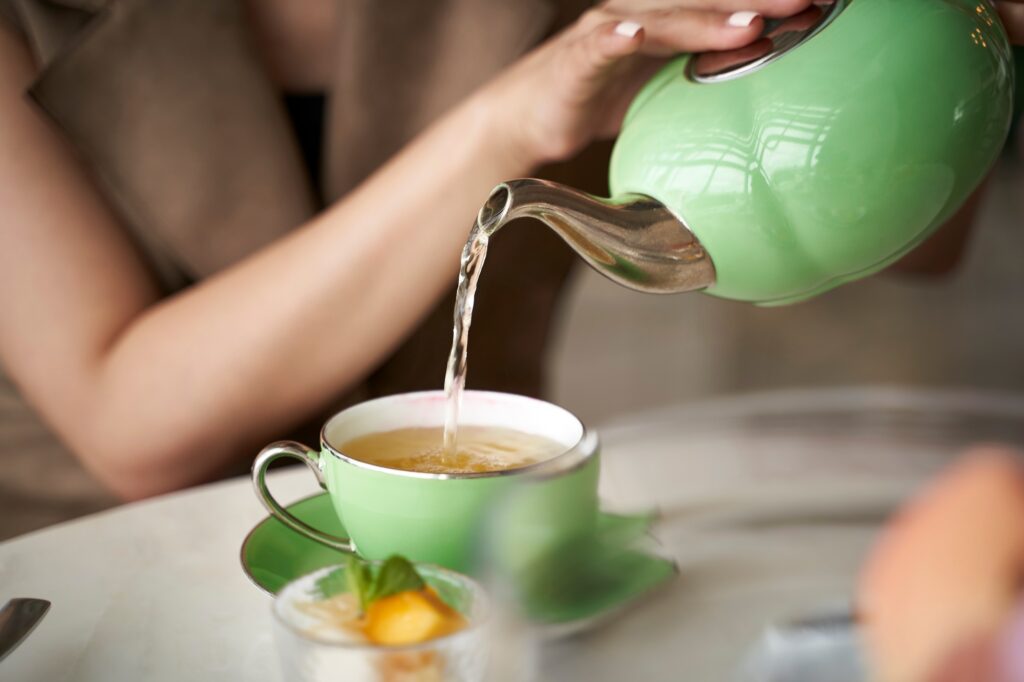
A teapot that leaves a trail down its spout can make a simple cup of tea surprisingly messy. Sometimes a small change in pouring technique helps. In other cases, leaves, a blocked air hole, overfilling, or the shape of the spout is responsible.
The classic “teapot effect” happens when liquid follows the underside of the spout instead of separating cleanly into the cup. It is especially noticeable during a slow, hesitant pour or as the stream dwindles. However, tea escaping around the lid or through a crack is a different problem.
Start by finding where the liquid first appears. Then try the appropriate adjustment rather than assuming the whole teapot needs replacing.
🔍 First, Find Where the Drip Starts
Let the teapot cool, empty it, and dry the outside before inspecting it. Look at the spout, lid seating, body, and any removable strainer. Do not continue testing a pot with a visible crack or damaged handle.
| What you notice | What to check |
|---|---|
| Tea follows the underside of the spout during pouring | Pouring motion, spout shape, and residue |
| The stream is clean, but a drop falls after you stop | How you finish the pour and liquid remaining at the lip |
| Tea escapes around the lid | Fill level, lid fit, and assembly |
| The stream gurgles or repeatedly surges | Air entry and possible obstructions |
| Flow becomes uneven when loose leaves reach the spout | Built-in strainer, infuser, and trapped leaves |
| Liquid seeps through the body or a joint | Structural damage rather than pouring technique |
A wet base does not necessarily show where the problem began. Liquid can travel down the outside before collecting underneath, so watch the first point that becomes wet.
🫖 Why Liquid Clings to a Teapot Spout
Pouring depends on how the moving liquid interacts with the spout’s surface and edge. Surface wetting, capillary effects, flow speed, and geometry all influence whether the stream leaves the lip cleanly.
At a sufficiently low flow, some liquid can stay attached to the edge and turn underneath it. Once that route is wet, tea may continue down the outside instead of reaching the cup.
This is why an extremely cautious trickle can sometimes produce more dribbling than a controlled, continuous stream. It also explains why two teapots can behave differently even when you pour them in much the same way.
The practical aim is a comfortable, steady pour—not the fastest possible flow. A pot should let you serve tea without an awkward wrist position or an uncontrolled rush.
✋ Start With These Pouring Adjustments
Pour in one smooth motion
Position the cup on a stable surface and begin tilting the pot smoothly until a continuous stream forms. Avoid hovering at the point where only occasional drops creep over the lip.
Keep the stream directed into the cup and the teapot steady. There is no universal pouring angle: the right position depends on the pot’s shape, fill level, and spout.
Practice with cool water first. If a slightly more continuous pour helps, repeat that motion during normal use while allowing for the weight and heat of the filled pot.
Finish the pour promptly and smoothly
As the cup approaches the desired level, return the teapot upright while keeping the spout over the cup. Lingering at a shallow angle can leave a thin stream running along the lip.
KINTO gives similar advice for its CAST teapot: use one steady pouring motion and tilt the pot back promptly when finished.
You do not need to snap your wrist or shake out the final drops. A small amount of liquid may remain at the lip even after a good pour, and a saucer or tray can catch an occasional residual drop.
Avoid tipping farther than you can control
If you have to tilt the teapot steeply before tea appears, stop and check the fill level, spout passage, and lid arrangement. Continuing to tip can send liquid toward the lid opening or make the lid shift.
Secure the lid according to the maker’s instructions. If it requires support during pouring, use the recommended grip and avoid covering an air hole.
A teapot that is too heavy or awkward for your hand may be difficult to pour neatly even when its spout is well made.
💧 Check Whether the Teapot Is Overfilled
Filling to the brim leaves little room for liquid to move as you tilt the pot. Tea may reach the lid opening before you establish a manageable stream through the spout.
Follow any maximum-fill mark or working-capacity guidance supplied by the manufacturer. Remember that a listed capacity can sometimes mean the amount held when a vessel is filled right to the top; it is not necessarily the most comfortable serving level.
If there is no guidance, compare your usual fill with a smaller amount during a cool-water test. Start around half full so the pot is easier to handle, then assess whether the problem changes at a higher, sensible level below the rim.
Allow room for any infuser and make sure the lid sits as intended. Do not force a lid down over a misplaced basket or trapped tea-bag string.
🧼 Remove Leaves and Residue From the Pouring Path
Check the entrance to the spout, any built-in strainer holes, removable mesh, and the pouring lip. A few leaves caught in a narrow passage can interrupt the stream or make it leave the spout unevenly.
Clean the cooled pot according to its material and the manufacturer’s directions. Where suitable, use a soft, narrow brush that fits without forcing it into the spout. Rinse thoroughly after using an approved cleaner.
For removable mesh, remove trapped leaves rather than treating every brown mark as a blockage. Discoloration alone does not prove that the filter is obstructed.
Cleaning methods vary. Unglazed clay, enamel-lined cast iron, glazed ceramic, and glass should not automatically receive the same detergent, soaking treatment, or abrasive cleaning. Our guide to cleaning a teapot properly explains the material differences.
If the removable basket needs attention, see How to Clean a Tea Infuser.
🌬️ Check the Lid’s Air Hole
As tea leaves the pot, air must enter to replace it. A snug, wet lid can restrict that air supply. If air has to bubble back through the spout, the stream may gurgle, surge, or spatter.
Many teapots have a small air hole in the lid. Inspect it while the pot is cool and remove accessible residue gently. Do not enlarge it with a drill or scrape it with a hard metal point.
Also check that your hand, a tea cozy, or another accessory is not covering the opening while you pour.
A teapot without an obvious lid hole is not automatically defective; air may enter through another part of its design. Follow the maker’s instructions for the lid, seals, and any alignment marks.
Avoid experimenting by loosening or lifting a hot lid during pouring. Check its fit and assembly before refilling the pot.
🏺 Consider the Spout’s Shape and Condition
The spout’s opening, curvature, and finished edge affect how liquid separates. A rounded or poorly finished pouring point may encourage dribbling, and damage at the lip can change how a previously reliable pot pours.
Inspect the cooled spout in good light. Look for a chip, crack, or a rough irregularity at the pouring point, especially if the problem began after a knock.
Do not file or sand a finished ceramic spout to make it sharper. Altering the edge can damage the glaze or weaken the material. Cracks and damaged handles also require more than a change in technique.
Small manufacturing differences can affect performance. KINTO notes that its partly handmade glass teapots can vary slightly and recommends contacting the company when significant dripping makes a pot difficult to use.
If a clean, intact pot has always dribbled despite controlled pouring, its design may be the limiting factor.
🧪 Try This Cool-Water Comparison Test
Use an intact teapot that has cooled completely. Cool water makes practice easier, although it may not behave exactly like hot tea.
- Dry the outside and set a cup on a tray or in a sink. This helps you see where fresh water first appears.
- Fill the pot approximately halfway. Fit the lid and any required components correctly.
- Pour a short, steady stream. Watch whether water leaves the lip cleanly, follows underneath, or escapes around the lid.
- Return the pot upright with the spout still over the cup. Notice whether the problem occurs during the stream or only afterward.
- Change one thing and repeat. Try a smoother motion, a different sensible fill level, or cleaning an obstruction you identified.
If dripping disappears with plain water but returns during tea service, check leaves, infuser placement, your normal fill level, and how you hold the lid. Temperature and the liquid itself can also affect the comparison.
For glassware, avoid sudden temperature changes: allow a hot pot to cool before adding cool test water.
❓ Common Questions About Dripping Teapots
Does a final drop mean the teapot is faulty?
Not necessarily. A drop can remain at the lip after the main stream stops. Frequent liquid running down the outside, a badly interrupted stream, or leakage through the body deserves closer attention.
Judge how the pot performs during normal use, rather than expecting every surface to remain completely dry.
Will butter or oil on the spout stop dripping?
Water-repellent surfaces feature in research on the teapot effect, but that does not establish a suitable home treatment for food-contact teaware.
Skip improvised coatings, waxes, and household water-repellent products. Cleaning, controlled pouring, and checking the pot’s condition are more practical starting points.
Are glass teapots more likely to drip than ceramic ones?
Material alone does not give a reliable answer. Spout geometry, surface finish, individual manufacturing differences, and pouring technique also matter.
See Glass vs. Ceramic Teapots for the broader differences in everyday use.
🛍️ When Is It Worth Replacing the Teapot?
If the teapot is damaged, stop using it for hot tea and ask the maker about appropriate replacement parts or replacement of the vessel.
For an intact pot, try cleaning, correct assembly, a sensible fill level, and a controlled pour first. If those changes do not make it comfortable to use, contact the retailer or maker with a description of the problem. A short cool-water pouring video can help show where the liquid goes.
When choosing another pot, consider handle comfort, lid security, usable capacity, and evidence of a clean pour. Appearance and material are only part of the decision. Our teapot buying guide covers those practical features.
🔗 Related Articles
- How to Clean a Teapot Properly: Remove Tea Stains, Residue, and Odors
- How to Clean a Tea Infuser: Remove Stains, Buildup, and Trapped Tea Leaves
- How to Choose a Teapot: Materials, Sizes & Best Teapots for Every Tea
- Glass vs. Ceramic Teapots: Which Is Better for Tea?
📚 Sources & Further Reading
- TU Wien: Why Teapots Always Drip
- Acta Physica Polonica A: Investigation of the Teapot Effect
- Vince Pitelka: Theory and Mechanics of the Teapot
- KINTO: Why Does My Teapot Drip Every Time I Pour?
- KINTO: Reducing Drips From the CAST Teapot
- KINTO: Understanding Product Capacity
- KINTO: Caring for Glassware
- KINTO: Cleaning Strainers and Mesh